
LaseMD Ultra
A 1927 nm fractional thulium laser is used to treat selected areas of the scalp.
A needle-free, in-office treatment that combines LaseMD Ultra fractional thulium laser technology with topical KeraFactor serum for selected patients with thinning hair.
The laser creates controlled microscopic channels in the scalp before KeraFactor is applied topically to the treatment area.
At Dermatology Circle, KeraLase is considered after evaluating the cause, pattern and stage of hair loss — not simply because thinning is visible.
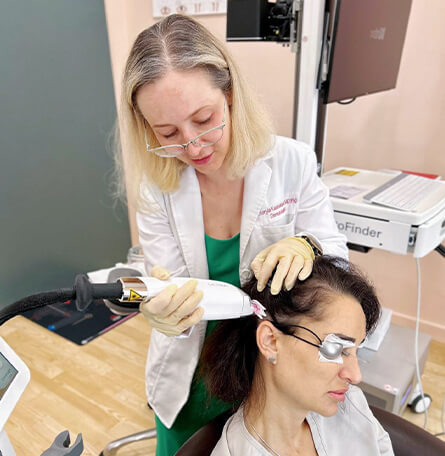
KeraLase combines fractional laser scalp treatment with topical delivery of KeraFactor serum.
It is used as an adjunctive hair-restoration treatment rather than as a replacement for diagnosing and treating the underlying cause of hair loss.
A 1927 nm fractional thulium laser is used to treat selected areas of the scalp.
Fractional laser treatment temporarily increases scalp permeability.
The proprietary serum is applied topically immediately after laser treatment.
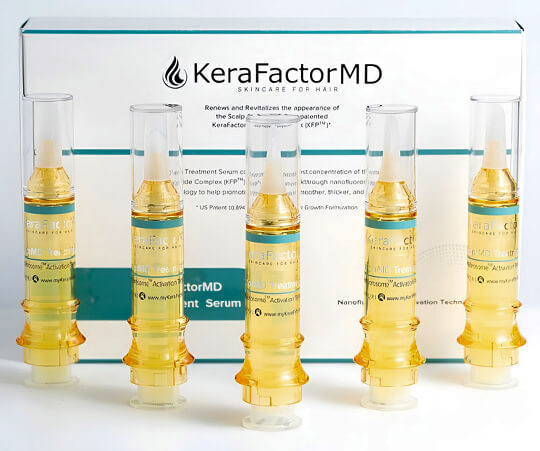
The treatment uses fractional laser energy to prepare the scalp before KeraFactor is applied topically.
The scalp, pattern of thinning and selected treatment areas are reviewed before the procedure.
LaseMD Ultra delivers controlled 1927 nm fractional laser energy across the treatment area.
KeraFactor is applied topically immediately after the laser portion of treatment.
Temporary scalp redness, warmth or sensitivity may occur, but significant downtime is generally not expected.
KeraLase is not equally appropriate for every type or stage of hair loss.
It is generally considered when viable follicles remain and the underlying reason for thinning has already been identified.
Selected men and women with androgenetic alopecia may consider KeraLase as an adjunctive treatment.
Androgenetic alopeciaRegenerative adjuncts are generally more logical while viable follicles remain.
KeraLase may complement an established medical hair-loss treatment plan rather than replace it.
When shedding is active, the possible trigger should be evaluated before an adjunctive procedure is selected.
Telogen effluviumActive inflammatory disease requires control of the underlying process first. KeraLase should not replace therapy intended to prevent permanent follicular loss.
KeraLase and PRP use different treatment mechanisms and should not be ranked as universally better or worse.
The choice depends on diagnosis, treatment goals, existing therapy and procedural preference.
KeraLase has a plausible laser-assisted delivery mechanism, but treatment-specific clinical evidence remains limited.
This is why diagnosis and realistic expectations remain especially important when considering the procedure.
Fractional treatment temporarily alters the scalp barrier before topical serum is applied.
Treatment-specific evidence remains considerably more limited than for several established hair-loss therapies.
The cause and stage of hair loss remain more important than the procedure name.
In chronic pattern hair loss, the broader plan may still require ongoing medical treatment.
Chronic hair loss often requires more than one type of treatment.
Depending on the diagnosis, KeraLase may be used alongside medical therapy, low-level light therapy, PRP or other selected adjuncts.
Explore hair-loss treatmentsKeraLase is usually performed as a treatment series rather than as a single isolated session.
Treatment is generally performed on a clean scalp without styling products.
Fractional laser energy is delivered across the selected scalp area.
The topical serum is applied after the laser treatment.
Mild temporary redness, warmth or sensitivity may occur after treatment.
Hair-restoration results develop gradually, and individual response varies.
Some patients also use medical treatment or additional regenerative therapies as part of their individualized plan.
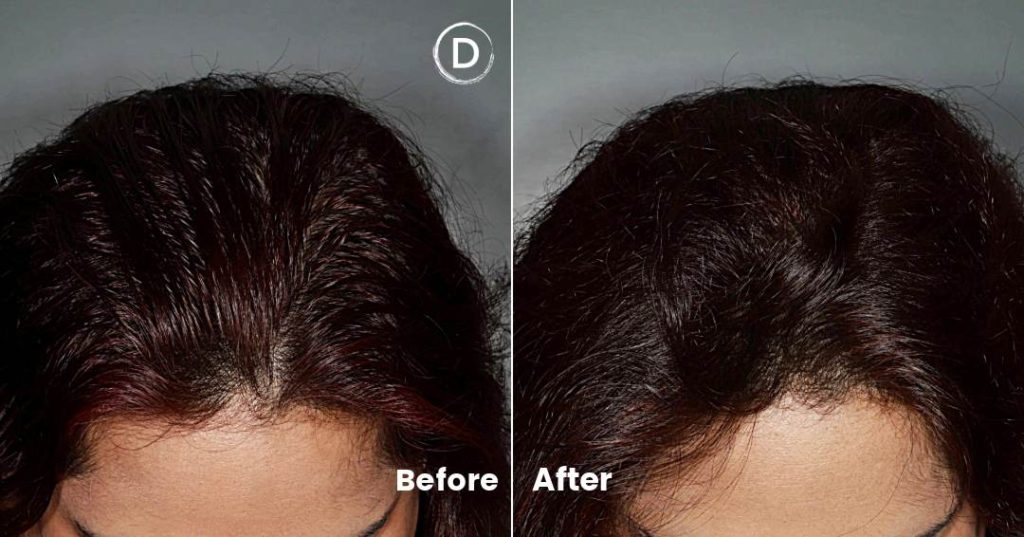
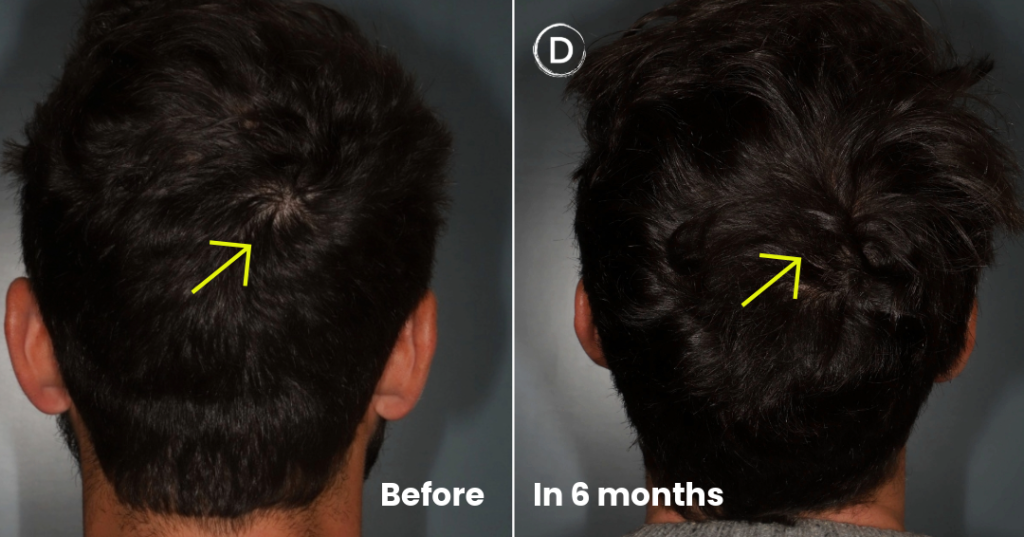
Individual results vary. Hair-loss treatment plans may include medication, KeraLase, PRP or other therapies depending on the diagnosis.
View more hair-loss results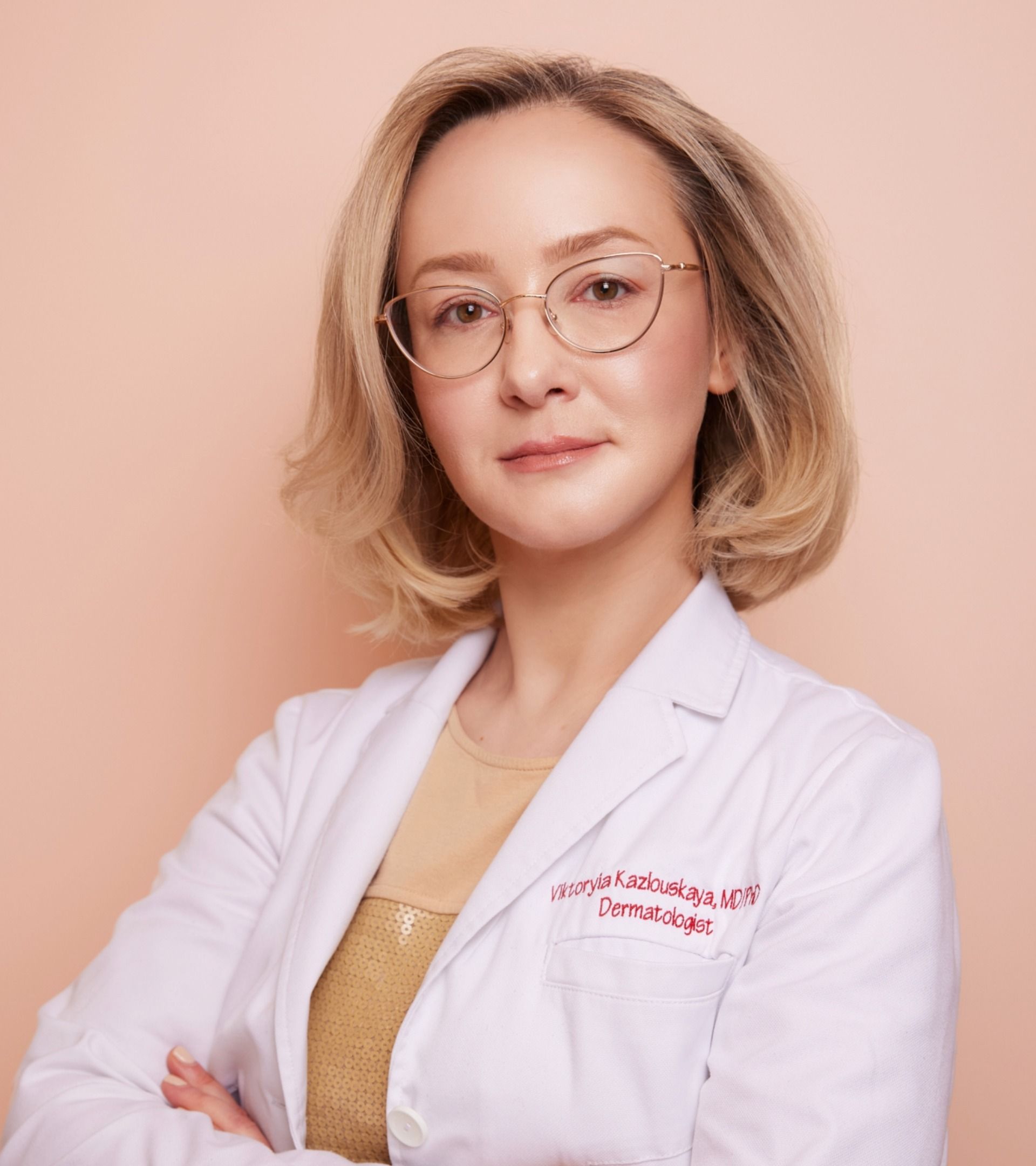
Two patients can have similar-looking thinning for entirely different reasons.
Dr. Viktoryia Kazlouskaya evaluates the scalp, clinical pattern and history before determining whether KeraLase has a reasonable role.
When appropriate, trichoscopy, laboratory testing or scalp biopsy can help distinguish pattern hair loss, shedding disorders and inflammatory alopecias.
Medical diagnosis and treatment of hair and scalp disorders
Additional diagnostic perspective when scalp biopsy is required
Trichoscopy, medical therapy and regenerative treatments
Treatment suitability, schedule and aftercare depend on the individual diagnosis and scalp condition.
Schedule an evaluationKeraLase combines fractional treatment with the LaseMD Ultra 1927 nm thulium laser and subsequent topical application of KeraFactor serum.
No. KeraLase does not require scalp injections or a blood draw. KeraFactor is applied topically after fractional laser treatment.
PRP involves a blood draw, preparation of platelet-rich plasma and scalp injections. KeraLase uses fractional laser treatment followed by topical KeraFactor.
There is not enough comparative evidence to say that one is universally superior. Treatment selection depends on diagnosis, goals and procedural preference.
Most patients tolerate treatment well. Temporary warmth, tingling, redness or scalp sensitivity may occur.
Significant downtime is generally not expected, although temporary redness or sensitivity may occur.
A typical initial program may include approximately six treatments separated by about four to six weeks. The schedule may be individualized.
Hair changes develop gradually, so meaningful assessment generally occurs over several months.
Yes. Depending on the diagnosis, KeraLase may be used alongside medical therapy or other selected adjunctive hair-restoration treatments.
Arrive with a clean, dry scalp and avoid styling products in the treatment area. Individual instructions may vary.
Active scalp infection, significant inflammation or other medical considerations may require treatment to be postponed.
A dermatologist-led hair-loss evaluation can help determine whether KeraLase belongs in your treatment plan and what other therapies may be appropriate.