
Androgenetic Alopecia
Androgenetic Alopecia affects up to 50% of men and women. However, some people may not be familiar with the diagnosis, causes, and available treatment options.
What is Androgenetic Alopecia?
Androgenetic alopecia is a hair loss condition in men and women that gradually worsens. Many patients have parents with similar condition, but it is not always a case. The primary symptoms are hair loss, thinning, or balding on the scalp.
Androgenetic alopecia in women, also known as female pattern hair loss, often begins with thinning hair at the crown. Women may begin noticing that the hairline at the top of their heads is becoming wider.
Most women notice thinning hair in their 40s or 50s. They usually do not see big changes in their frontal hairline. However, the thinning may slowly spread to all areas of the scalp.
Male Pattern Hair Loss
Male pattern hair loss presents differently and can start earlier, around their 20s or 30s. Most men notice a slowly receding frontal hairline or a growing bald spot on the crown. Thinning may begin around the temple areas, and the hairline may develop an “M” shape. Eventually, the frontal hairline moves further up the scalp. In other men, a bald spot grows to encompass most or the entire top of the head. The exact pattern and severity of hair loss vary.
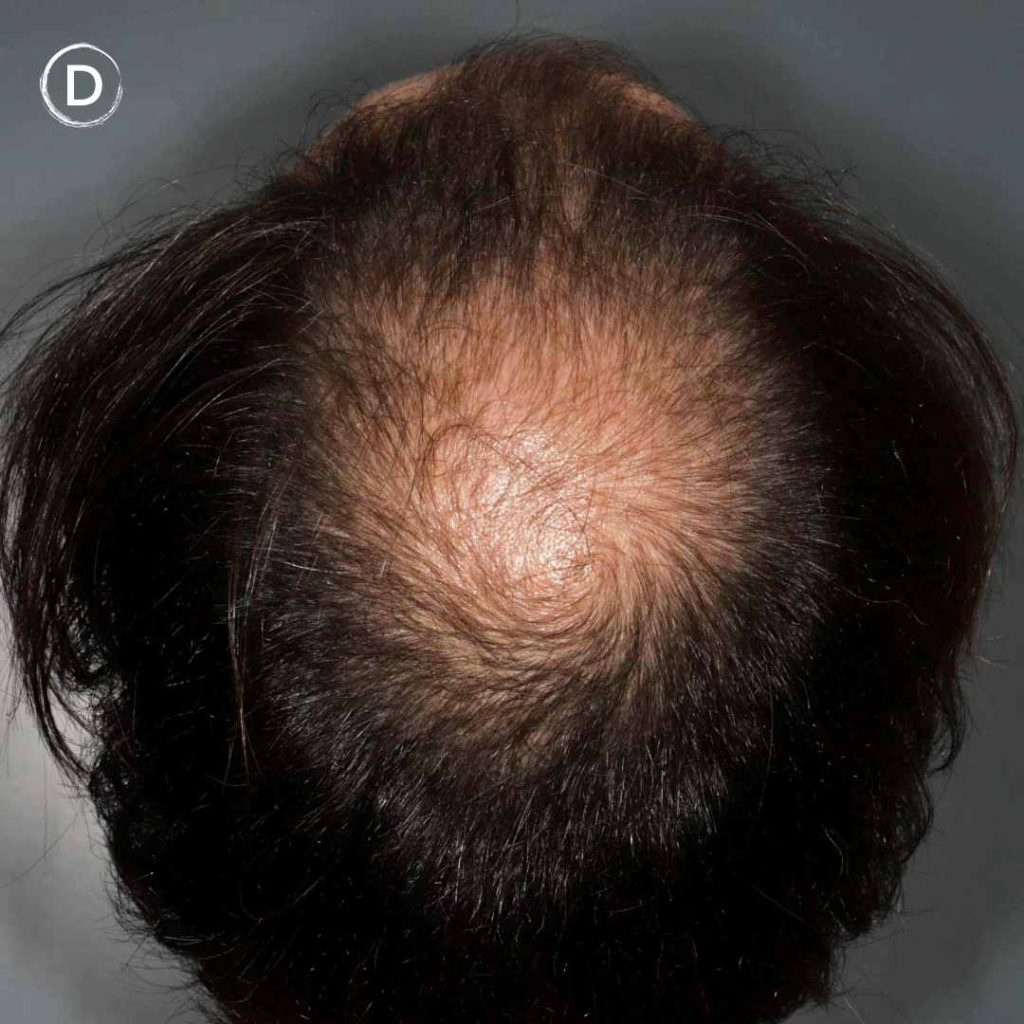
Male pattern hair loss with the hair loss on the crown.
What Causes Androgenetic Alopecia?
People with androgenetic alopecia produce higher levels of Dihydrotestosterone (DHT), an active male sex hormone (androgen) formed from testosterone. DHT shrinks hair follicles, limiting the ability to grow new hair. Eventually, this prevents the body from replacing lost hair.
Androgenetic Alopecia is not a male-specific diagnosis as both men and women have testosterone, just at different levels. Therefore, an excess response to higher levels of DHT can lead to this hair loss disorder in men and women.
Androgenetic alopecia is not the same as temporary hair loss (telogen effluvium). Stress, various diseases and disorders, certain medications like blood thinners, and medical treatments like chemotherapy can cause temporary hair loss. However, hair growth returns to normal after these medications and treatments in most of these cases. A dermatologist can accurately diagnose between temporary hair loss diagnosis and androgenetic alopecia with a physical exam and medical history questions.
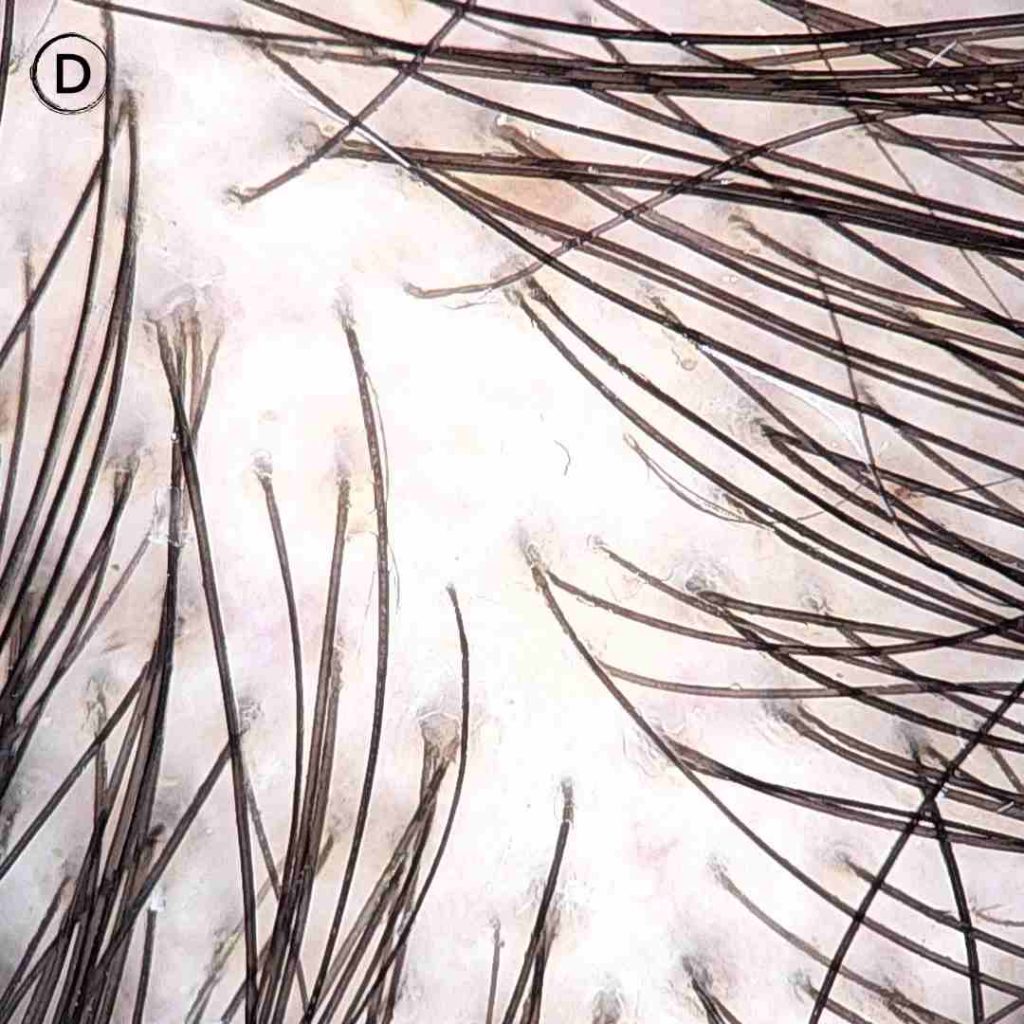
Trichoscopy of female androgenetic alopecia reveals several key features: most hair shafts are thin, there is significant variability in hair shaft diameters, some hair follicles are absent, and a brown halo (peripilar sign) is often observed around hair follicles—an indicator of pattern hair loss.
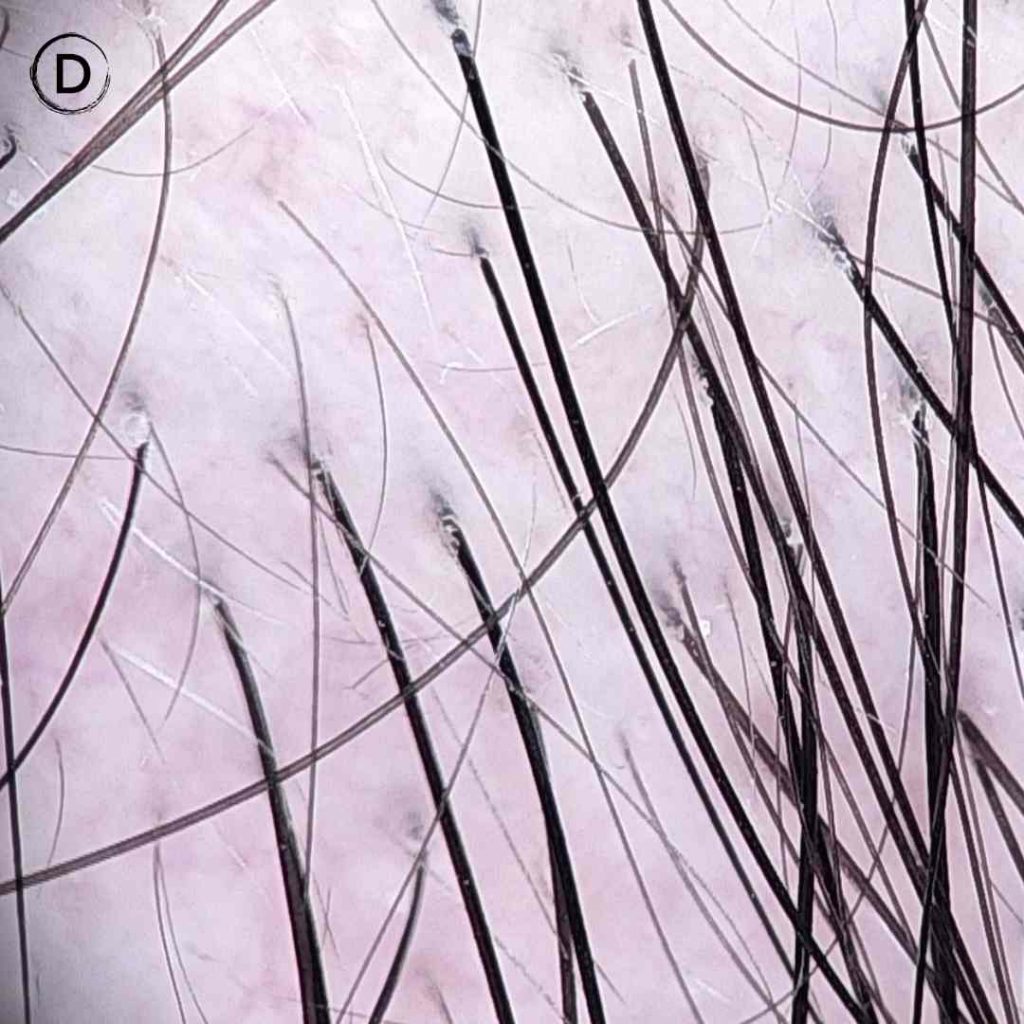
Trichoscopy of male androgenetic alopecia reveals significant variability in hair shaft diameters and the presence of numerous vellus hairs.
How Is Androgenetic Alopecia Diagnosed?
Dermatologists diagnose androgenetic alopecia by conducting a physical exam while taking a thorough family and medical history. Typical questions may include:
- When did you start noticing the hair loss?
- Does anyone in your family have hair loss?
- Did the hair loss happen suddenly or gradually?
- Are you currently taking any medications or supplements?
Dermatologists may order blood tests or biopsies to rule out temporary hair loss diagnoses. They may also use a noninvasive method of imaging the scalp and hair known as trichoscopy to help confirm a diagnosis.
Where Science Meets Elegance
Your skin tells your story — let it reflect the very best version of you. Our team provides expert, personalized care designed to help you look and feel radiant at every age.
Are There Available Treatments for Androgenetic Alopecia?
Dermatology Circle offers many safe and painless treatment options for androgenetic alopecia. Medications and in-office procedures can limit hair loss, boost hair health, and encourage new growth.
Minoxidil
Finasteride
Dutasteride
Spironolactone
Platelet-Rich Plasma Injections
Laser Therapy and Low-Level Lasers
Microneedling
Hair transplant
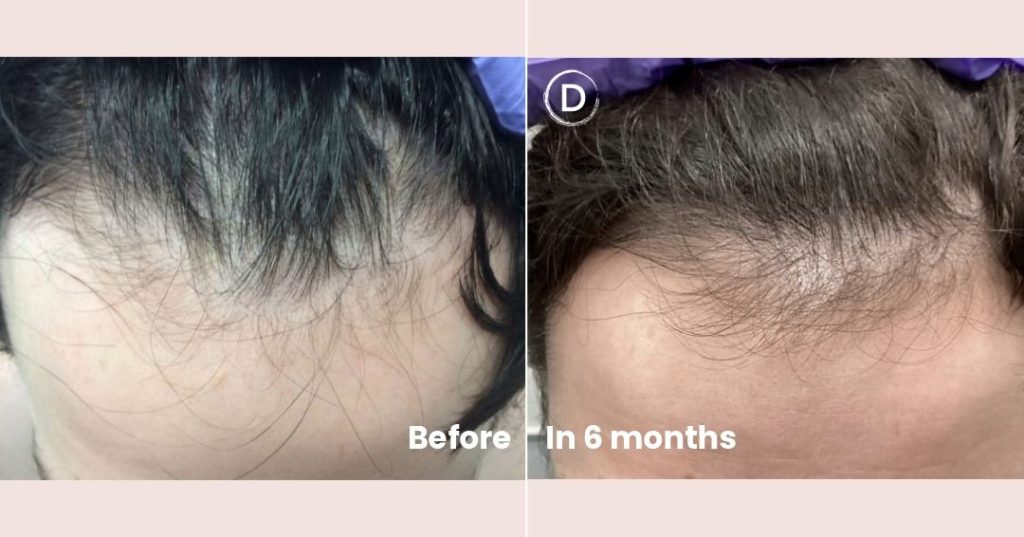
Before and after treatment of male pattern hair loss: noticeable improvement in the hairline achieved with medical treatments.
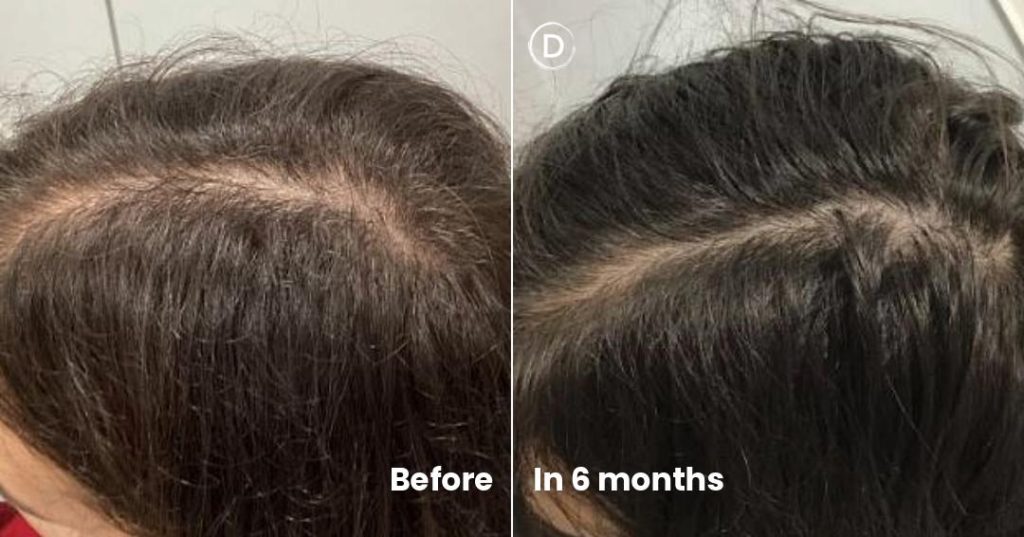
Before and after treatment of male androgenetic alopecia in a young patient: significant improvement in hair density.
How Do You Approach Pattern Hair Loss?
At our clinic, we dedicate time to address the concerns of our patients and offer comprehensive clinical consultations and scalp analysis. During these consultations, we evaluate your overall health, and current medications, and identify potential causes of hair loss. We utilize digital trichoscopy and conduct a scalp analysis as part of our clinical examination.
If required, we can perform a scalp biopsy, although this test is not necessary for all patients. We provide a variety of treatments for different types of hair loss, ensuring the best possible results.
In our approach, we always start with FDA-approved medications first. These medications follow international care standards and are known to produce excellent results.
For patients seeking an integrative approach, we offer a range of methods to stimulate hair growth. These include PRP injections, microneedling with growth factors and exosomes, or Keralase fractional laser treatment.
Frequently Asked Questions
Is it possible to reverse or stop pattern hair loss?
No, pattern hair loss cannot be fully reversed or completely stopped. However, the progression of hair loss can often be slowed down with medications. Treatments like minoxidil (topical) and finasteride (oral) are commonly prescribed to help reduce hair loss and promote some regrowth. Minoxidil increases blood flow to hair follicles, while finasteride reduces a hormone responsible for shrinking hair follicles.
While these treatments can slow the hair loss process, they require consistent use and take time to show results. Early intervention is crucial because once hair follicles are dormant or inactive, they cannot be restored. Keep in mind that these treatments are meant to manage, rather than cure, pattern hair loss.
Does stress contribute to pattern hair loss?
Yes and no. Stress itself doesn’t directly cause pattern hair loss, but it can contribute to a temporary condition called telogen effluvium (TE), which leads to increased shedding. TE occurs when a stressful event or period pushes more hair follicles into the resting phase, leading to noticeable shedding. This type of hair loss is typically temporary and resolves once the stressor is removed.
However, for individuals with pattern hair loss, TE can worsen the appearance of thinning or shedding, as it adds to the existing loss. In these cases, it may look like pattern hair loss is rapidly progressing, but the TE shedding is usually reversible once the stress is managed.
Does pattern hair loss lead to noticeable hair shedding?
Yes, pattern hair loss can indeed cause shedding. This chronic condition typically follows a progressive pattern, which means that hair shedding can fluctuate over time. People with pattern hair loss may experience periods when the shedding seems more noticeable, followed by times when the shedding lessens or even stabilizes. TE episodes should be ruled out if shedding dramatically worsens.
Such fluctuations are typical with pattern hair loss, and external factors like stress, changes in diet, or other health conditions can influence the amount of shedding as well. Effective management with the right treatments can help minimize the shedding and prolong the health of existing hair.
How does pattern hair loss differ from alopecia areata?
Pattern hair loss and alopecia areata are two distinct types of hair loss with different characteristics. Pattern hair loss (androgenetic alopecia) typically results in gradual thinning at the top of the head or a receding hairline, and it progresses over time.
In contrast, alopecia areata is an autoimmune disorder that leads to sudden, patchy hair loss in small circular areas. There is also a rare, diffuse form of alopecia areata that can cause generalized shedding across the scalp. This form of alopecia areata can sometimes be difficult to differentiate from pattern hair loss due to similar symptoms, but it’s uncommon. Diagnosis of alopecia areata may involve a careful examination and, in some cases, a biopsy to confirm.
What distinguishes pattern hair loss from telogen effluvium?
While both pattern hair loss and TE can involve shedding, they have key differences. Pattern hair loss is a chronic condition associated with genetics and hormones that progressively worsen over time. TE, on the other hand, is usually a temporary condition triggered by stress, illness, or a major life change, and it can lead to increased shedding across the scalp.
In cases of TE, the hair typically regrows once the underlying cause is resolved. Chronic TE, while rarer, can occur and may require further investigation. Blood work, a comprehensive history, and a scalp examination are important to accurately differentiate these conditions and to rule out any underlying factors.
Can I have pattern hair loss even if no one in my family does?
It is still possible to have pattern hair loss even if there is no clear family history. Although pattern hair loss is often hereditary, other factors, such as lifestyle, health conditions, or hormonal changes, can play a role. For instance, in women, hormonal imbalances related to conditions like polycystic ovary syndrome (PCOS) can contribute to pattern hair loss.
Genetic predispositions can vary widely, and sometimes traits skip generations. Each individual’s genetics are unique, which means that even if family members don’t exhibit hair loss, it may still manifest in others.
Are there effective natural remedies for managing pattern hair loss without medications?
Natural remedies can complement the treatment of pattern hair loss, but it’s important to understand that they are generally not a replacement for medical treatments, especially in moderate to severe cases. Supplements like saw palmetto or regenerative treatments such as lasers, microneedling, or PRP injections, can promote scalp health. There are many new treatments with peptides, amino acids, growth factors, and exosomes are currently under development.
While these natural options may help to support overall hair and scalp health, they are unlikely to halt the progression of pattern hair loss entirely. A comprehensive approach, often including medical treatments alongside lifestyle and natural remedies, is generally the most effective.
If I stop taking hair loss medication, will my condition worsen?
No, stopping medications will not directly make your hair worse than before, but you will lose the benefits of treatment. Since pattern hair loss is a progressive condition, hair thinning will continue naturally, and with age, you may notice more thinning than you had before treatment.
It’s also important to understand that the progression of pattern hair loss varies from person to person, and the natural aging process can make hair appear thinner over time regardless.
Will a hair transplant alone address my hair loss concerns?
A hair transplant can help by redistributing healthy hair follicles to areas with noticeable thinning. However, it’s important to recognize that hair transplantation addresses existing bald areas and doesn’t stop the progression of pattern hair loss in other parts of the scalp.
Since pattern hair loss is a chronic and ongoing condition, it’s often advisable to develop a long-term plan that includes both medical and surgical treatments. Combining these approaches can help maintain results and manage future thinning.
Where Confidence Begins.
Reveal the beauty of healthy skin with treatments tailored to you. Dr. Kazlouskaya & her team combines medical expertise with artistry to deliver natural, timeless results.