
Dandruff and Seborrheic Dermatitis
Seborrheic dermatitis is a common, noninfectious skin disorder. A form of dermatitis or skin inflammation causes itchy, red patches or oily scales on the skin. It also causes white or yellowish crusty or powdery flakes on the scalp, known as dandruff. Dandruff is a symptom of seborrheic dermatitis, which makes the scalp dry and itchy. Seborrheic dermatitis can happen on any oily area of the body. This includes the face, eyebrows, eyelids, around the nose, ears, and upper chest.
How are dandruff and seborrheic dermatitis present?
Symptoms can differ for each person. They may include bumpy, oily, red, scaly, or itchy skin. Some people might also have painful, cracked scaly patches of skin. Others may have dandruff or white or yellow flakes, scales, or crusts on their scalp. In severe cases of seborrheic dermatitis hair loss may be lost. They may also have itchy, white flaky skin on their eyebrows and facial hair. People may also have blepharitis or scaly redness along the eyelid edges. Some may develop pink-colored plaques or patches of thick skin on the sides of their face. Others may experience redness near their armpits, genitals, or under the breasts, although this is not as common.
In infants, seborrheic dermatitis is called cradle cap. It leads to crusty scales on an infant’s head. It doesn’t itch, but scratching it can cause bleeding or mild infection.
- Inflammation and scaling on the scalp in seborrheic dermatitis.
- Greasy scales in seborrheic dermatitis.
- Trichoscopy in seborrheic dermatitis.
Causes of Dandruff and Seborrheic Dermatitis
The exact cause of seborrheic dermatitis and dandruff is unknown. However, the following factors can increase the risk of seborrheic dermatitis and dandruff in people:
- Overgrowth of a fungus called Malassezia or Pityrosporum. This is not an infection, but rather an inflammatory response to a fungus that usually resides on human skin.
- High levels of hormones called androgens leading to the excessive production of oil by sebaceous glands.
- High levels of natural fats or lipids in the skin
- Inflammatory reaction
- Oily skin
- Family history of seborrheic dermatitis
- Stress
- A cold and dry climate
- Use of alcohol-based creams or cosmetics
Where Science Meets Elegance
Your skin tells your story — let it reflect the very best version of you. Our team provides expert, personalized care designed to help you look and feel radiant at every age.
Conditions that may mimic dandruff and seborrheic dermatitis
The symptoms of dandruff and seborrheic dermatitis may mimic other skin and medical conditions. A qualified healthcare professional can distinguish between similar skin conditions and make the correct diagnosis.
The following skin conditions are often mistaken for dandruff and seborrheic dermatitis:
Psoriasis
Contact dermatitis
Eczema
Rosacea
Tinea Capitis
Dermatomyositis and Lupus Erythematosus
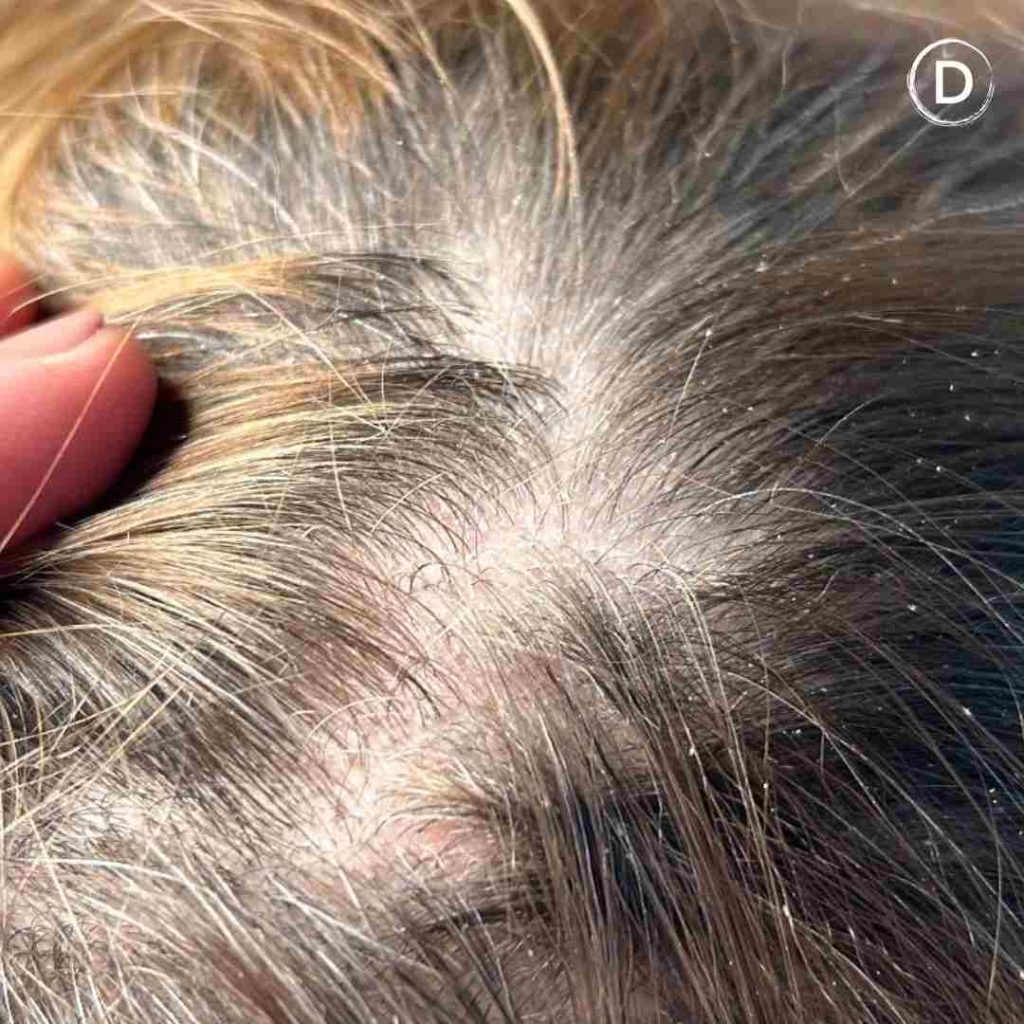
Inflammation and scaling on the scalp in seborrheic dermatitis
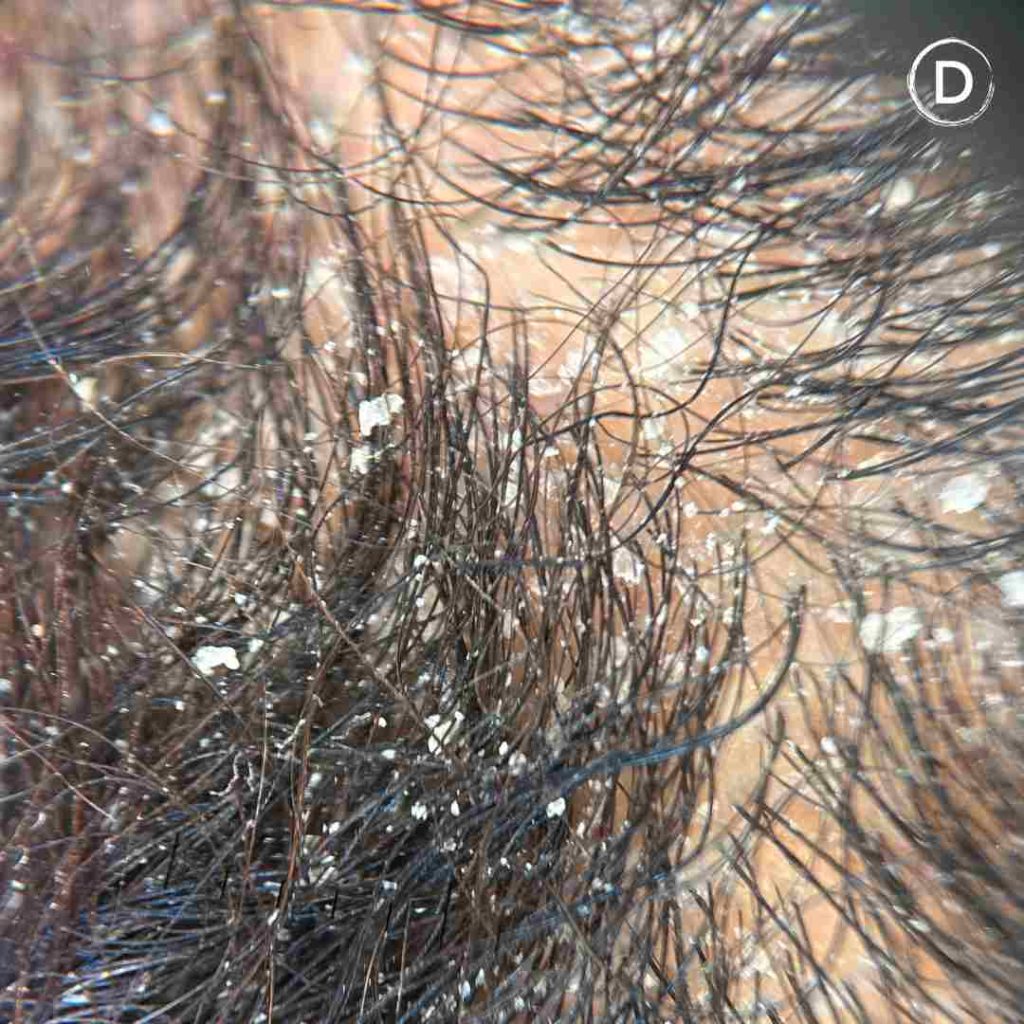
Greasy scales in seborrheic dermatitis
Frequently Asked Questions
How are dandruff and seborrheic dermatitis diagnosed?
Skin doctors or dermatologists diagnose dandruff and seborrheic dermatitis by checking the symptoms and medical history. They also take a family history, as seborrheic dermatitis may be hereditary. The doctor will conduct a physical examination to check the affected skin. Sometimes, they may require a skin biopsy. They take a skin sample from the affected area to study the skin cells and confirm the diagnosis.
What are the treatment options for dandruff and seborrheic dermatitis?
Dandruff and seborrheic dermatitis treatment depends on the symptoms, age, and severity of the condition. Treatment includes gently applying the following medicated products to the affected skin:
- Creams, body washes, or shampoos containing antifungal medicines like selenium sulfide, ketoconazole, fluconazole, or ciclopirox
- Creams or shampoos with anti-inflammatory ingredients like zinc pyrithione, salicylic acid, or coal tar
- Home remedies with tea tree oil, aloe vera, or juniper berry extracts.
- Creams or body washes with the antibiotic sodium sulfacetamide
- Creams or ointments containing corticosteroids such as hydrocortisone or fluocinolone acetonide
- Creams or ointments containing calcineurin inhibitors like pimecrolimus or tacrolimus
- Recently, FDA approved a new foam with the anti-inflammatory medicine Roflumilast (Zoryve). It targets inflammation and helps even in refractory cases.
- In severe cases, oral antifungals (usually Fluconazole or Itraconazole) may be given to prevent recurrences. Doctors also recommend isotretinoin (Accutane) in low dosages for cases of seborrheic dermatitis that resist other treatments.
Seborrheic dermatitis and dandruff can be chronic or long-term conditions that may come and go. The doctor may suggest using medicated shampoos, creams, body washes, or ointments once or twice a week. This depends on how severe the condition is. These treatments can help prevent symptoms from getting worse or coming back.
Where Confidence Begins.
Reveal the beauty of healthy skin with treatments tailored to you. Dr. Kazlouskaya & her team combines medical expertise with artistry to deliver natural, timeless results.