Facial Volume Loss NYC

Restoring fullness, structure, and contour of the face on the Upper East Side, NYC.

Facial volume loss is one of the primary structural changes of aging, yet it is often misunderstood. It rarely announces itself with a single dramatic change. Instead, it accumulates gradually, until the face in the mirror no longer matches the one in a photograph from a few years ago. 

At Dermatology Circle on the Upper East Side, Dr. Kazlouskaya approaches volume restoration as a structural problem, not a cosmetic one. She evaluates each layer of the face individually and treats only what is needed, in the sequence that produces the most natural result.

What Is Actually Happening Beneath the Surface

Most people think of aging skin as a surface phenomenon — wrinkles, spots, dullness. But the changes that create the appearance of volume loss begin far deeper than the skin itself. They begin in the bone.

The facial skeleton is not static. From the mid-30s onward, the bones of the face gradually resorb. The orbital rim around the eye expands slightly, creating more visible hollowing beneath the brow and above the cheek.

The jaw angle changes. The cheekbones lose projection. The chin may recede slightly. These are slow, subtle shifts, but they alter the structural foundation on which everything above them rests.

Directly above the bone sit the deep fat compartments of the face. These fat pads (around the eyes, along the cheeks, beneath the cheekbones) begin to shrink and descend with age. The result is hollowing in the under-eye area, the mid-cheek, and the temples. Folds deepen not because the skin is falling, but because the volume supporting it from beneath has moved or diminished.

Above the fat compartments, the muscles of facial expression gradually lose tone and shift position. The connective tissue that suspends and supports the face weakens. And on the surface, the skin loses collagen, elastin, and hyaluronic acid that keep it plump and resilient.

This is why volume loss is not a single problem with a single solution. It is a structural process happening at multiple depths simultaneously. Treating only one layer while ignoring the others produces results that look incomplete and not natural.

The Right Time to Treat

Most patients don’t recognize volume loss as the cause of what they’re seeing. They simply notice that something looks different. The most common complaints we hear:

“My cheeks look flat.” 

“I look tired even when I’m not.” 

“My face looks gaunt.” 

“My jawline has softened.” 

“I look older than I feel.” 

Areas of the Face Most Affected by Volume Loss

Volume loss does not occur evenly across the face. The areas most commonly treated at Dermatology Circle include:

Cheeks and Midface

The cheeks are typically the first area to show noticeable change. As the malar fat pads shrink and descend, the midface flattens and the nasolabial folds deepen. Restoring cheek volume is often the single most impactful correction in a treatment plan.

Under-Eye Area (Tear Trough)

As the fat pad beneath the eye loses volume, a hollow forms between the lower eyelid and the cheek (the tear trough). This creates a shadowed, tired appearance that persists regardless of how much sleep a patient gets. Precise filler placement at the correct depth can significantly reduce this hollowing.

Temples

The temples are among the earliest areas to hollow with age, particularly in slender patients and those on GLP-1 medications. Temple volume loss creates a skeletal appearance at the outer edges of the face that affects overall facial balance.

Jawline

As bone resorption occurs along the jaw and chin, and as lateral fat pads descend, the sharp jawline of youth softens. Volume restoration along the jaw and chin can redefine the lower facial contour without surgery.

Lips

The lips thin with age as collagen diminishes. The vermilion border loses definition, and the Cupid’s bow flattens. Subtle lip restoration is often incorporated into overall volume treatment.

Chin

A slight chin recession is common as bony resorption occurs at the mandibular symphysis. Chin augmentation with filler can restore anterior projection and improve the balance of the lower face.

You've been thinking about this long enough

A conversation is the right place to start.

Restoring Volume Layer by Layer

Because volume loss happens at multiple depths, effective restoration requires treatments that address those depths in the right combination and sequence. At Dermatology Circle, Dr. Kazlouskaya evaluates each patient’s facial anatomy individually, assessing which layers are most affected and designing a treatment plan that addresses them specifically.

The Foundation: Bone-Level Support

For patients with visible structural changes, treatment at the deepest level makes the biggest difference. This involves placing filler at or near the periosteum, the surface of the bone itself, to restore the structural projection that supports everything above it. Biostimulatory injections also add up.

The Fat Compartments: Restoring Midface Volume

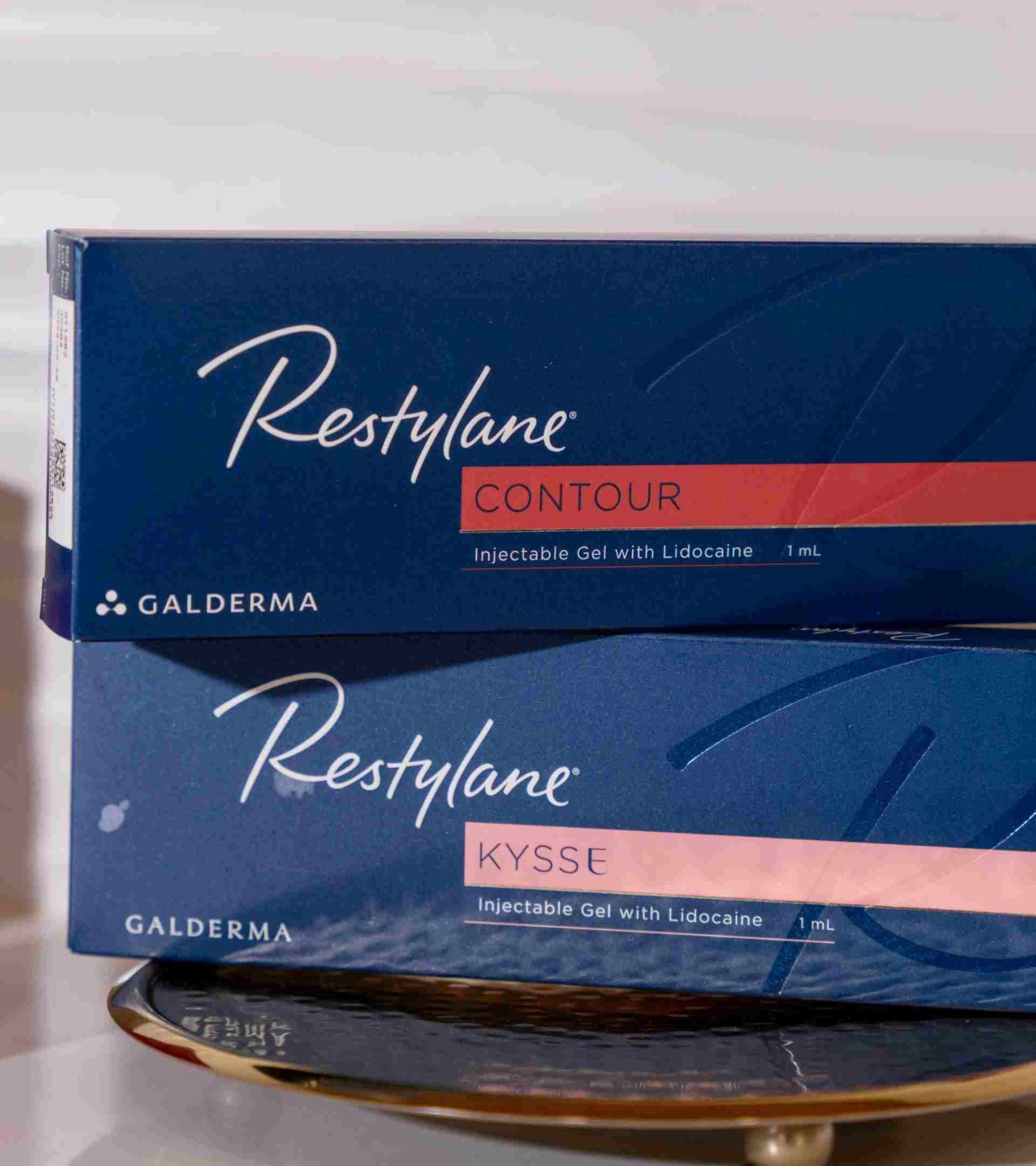
The middle layers of the face — the fat compartments of the cheeks, under-eye area, and temples — are where most visible volume loss occurs. Several treatments, including hyaluronic fillers, Sculptra, or Radiesse, address this layer effectively, and the right choice depends on the degree of loss, the patient’s age, and the overall treatment plan.

Skin Quality and Surface Plumpness

Not all patients need deep structural correction. For patients with early or mild volume changes, improving the quality and hydration of the skin can significantly enhance the appearance of fullness.

Skinvive (intradermal hyaluronic acid) is injected as tiny droplets into the dermis. It does not add volume, but improves the quality of the skin over the deeper structures of the face. For many patients, especially those in their late 30s and 40s with early changes, this is the right level of care.

Medical Grade Skincare

Medical-grade skincare preserves and extends the results of in-office treatments. Regular use of retinol, peptides, sunscreen, and a quality moisturizer is the foundation.

For patients experiencing volume-related changes, including those managing skin changes after GLP-1 medications, Dr. Kazlouskaya recommends Ampra Volumizing Macro HA Serum by SkinBetter Science as part of a comprehensive home care protocol. 

Ampra uses proprietary HYASync™ technology (hyaluronic acid bonded with alpha-lipoic acid) to improve penetration and slow the breakdown of HA in the skin, and has been shown to improve the appearance of skin fullness and contour. It is available in the clinic and through our online store.

Collagen Rebuilding: Supporting the Structure from the Surface and Within 

Sofwave™ ultrasound stimulates new collagen production in the mid-dermis, gradually improving skin firmness and the structural support of the overlying skin. While Sofwave does not replace lost volume directly, it improves the quality of the tissue that surrounds and supports the face’s deeper structures. It contributes to a more lifted, firmer overall appearance.

Microneedling and resurfacing lasers rebuild collagen and elastin in the dermis, improving skin quality and resilience. For the face, this is particularly valuable in the context of overall skin health and long-term maintenance.

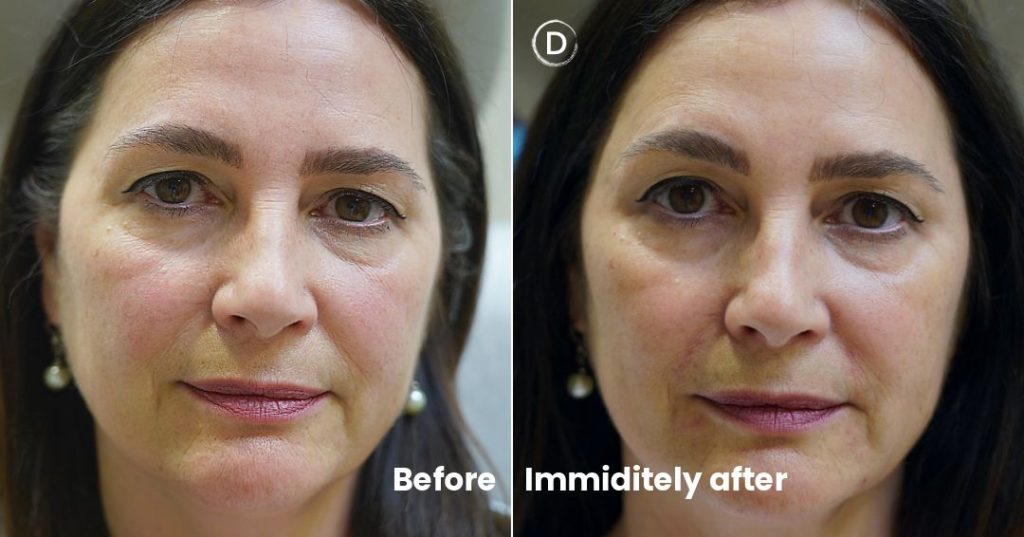
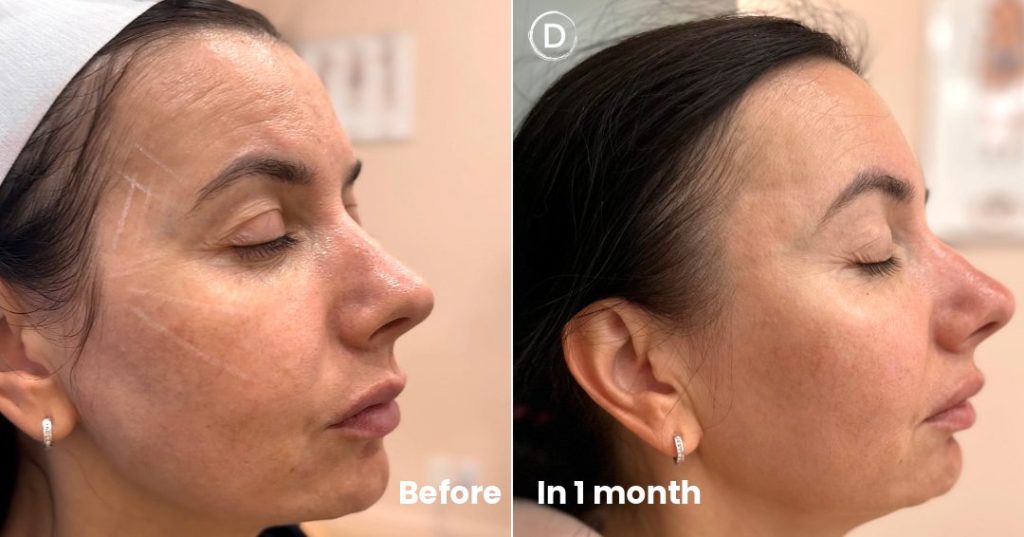
Before & Afters

The Physician Evaluation That Must Come First

Volume restoration is among the most technically demanding areas of cosmetic dermatology. The face is a complex three-dimensional structure. The same product placed at the wrong depth, in the wrong plane, or in the wrong quantity can create an unnatural result.

At Dermatology Circle, every volume restoration consultation begins with a thorough assessment of facial anatomy. Dr. Kazlouskaya evaluates the degree and distribution of volume loss across all layers (bone, fat compartments, and skin) and designs a treatment plan based on what she finds, not on a standard protocol.

This approach matters particularly for patients who have received previous filler treatments elsewhere. Identifying what has been placed, where, and how it is affecting the current appearance of the face is essential before adding anything new. Overfilled faces are as much a concern as under-treated ones.

Who Benefits from Volume Restoration

Volume loss affects patients across a wide age range, and the right approach depends significantly on where a patient is in that spectrum.

Patients in their late 30s and early 40s typically have early, subtle changes — mild hollowing under the eyes, slight softening of the cheeks. At this stage, light treatment with Skinvive, Ampra serum, and small amounts of well-placed filler can maintain the face’s natural appearance for years. Prevention at this stage is far easier than correction later.

Patients in their mid-40s to early 50s often have more visible fat pad loss and early bony changes. A comprehensive approach combining bone-level support, midface filler or biostimulators, and skin quality treatments typically produces the most balanced result.

Patients in their mid-50s and beyond, or patients who have experienced significant weight loss, may have more substantial structural changes requiring a phased approach over multiple visits. For these patients, Sculptra is often the foundation of treatment — gradually rebuilding collagen and fullness over time — with targeted filler added for precision.

Patients experiencing volume loss after GLP-1 medications often present with accelerated, diffuse fat loss across the face. A customized plan is the most effective approach for this group.

What to Expect at Dermatology Circle

Every volume restoration consultation at Dermatology Circle begins with standardized photography and a comprehensive assessment of facial anatomy. Dr. Kazlouskaya reviews the degree of volume loss at each layer, evaluates any previous treatments, and discusses the patient’s goals and priorities.

Treatment plans are presented clearly — what is recommended, why, in what sequence, and at what investment. Patients are never pressured to begin treatment at the consultation visit. The consultation is a conversation, not a sales appointment.

Frequently Asked Questions

This varies significantly by patient. Early volume loss may require one to two syringes placed with precision. More significant structural changes may require a phased approach across several visits. At Dermatology Circle, Dr. Kazlouskaya always recommends starting conservatively. It is easier to add than to remove, and natural results require restraint as much as skill.

Partially. Bone resorption and fat pad changes are part of normal aging and cannot be stopped entirely. However, beginning treatment early — maintaining the face’s structure before significant loss has occurred — is far more effective than waiting. A consistent home skincare routine can improve your skin over time.

Yes, and the distinction matters for treatment. Volume loss is the reduction of fullness and structural support beneath the skin.

Sagging is the descent or laxity of the skin and soft tissue itself. Both contribute to facial aging, and both are often present simultaneously, but they require different treatments. Fillers address volume loss. Sofwave, lasers, and energy-based treatments address skin laxity. The best outcomes come from identifying and addressing both accurately.


This concern is one of the most common we hear, and one of the most important to address honestly. Overfilled faces result from too much product, placed in the wrong plane, without regard for facial anatomy. At Dermatology Circle, the goal is always a result that looks like you. Dr. Kazlouskaya’s approach begins with the minimum effective treatment and builds gradually. Patients should look rested and healthy, not treated.

GLP-1 medications, including Ozempic and Wegovy cause fat loss throughout the body, including the facial fat compartments. The result can be accelerated, diffuse hollowing — particularly in the cheeks, temples, and under-eye area. This is sometimes called “Ozempic face.” The treatment approach is the same as for age-related volume loss, but may need to be more comprehensive given the degree of change. Read more on our dedicated Ozempic face page.

Cost varies significantly based on the treatments selected, the number of areas addressed, and the degree of volume loss being corrected. At Dermatology Circle, pricing is confirmed at consultation once a personalized plan has been developed. Patients are never presented with a cost before a plan, because the plan always comes first.