
Ozempic Face and Skin After Weight Loss NYC
Physician-led skin and face rejuvenation after weight loss · GLP-1 medications · Upper East Side, New York
Written and reviewed by Dr. Viktoryia Kazlouskaya, MD/PhD, Double Board-Certified Dermatologist
Your body changed for the better. You have done something significant. The weight is coming off. You feel better, healthier, energized, and more in control than you have in years.
But the face and skin do not follow same path. Volume is lost. Skin appears looser. The arms and abdomen have a softness that exercise does not resolve.
This is a real and predictable result of major weight loss. It has become much more common since people started widely using GLP-1 drugs like Ozempic, Wegovy, Mounjaro, and Zepbound. These medications brought rapid weight loss to millions of patients.
The good news is that these changes are addressable. Most of them are very effectively treated, with and without surgery.
Why Weight Loss Changes the Way You Look
Understanding the mechanism behind these changes directly determines which treatments will work for you.
The face loses fat faster than the skin can adapt
The face contains distinct fat compartments (cheeks, temples, around the eyes, and along the jawline). These fat pads provide structural support and soft contours that give a face its youthful fullness.
When weight loss occurs rapidly, these fat pads shrink faster than the overlying skin can contract. The skin now has less support beneath it. The result is the deflated appearance that has become widely known as “Ozempic face”.
GLP-1 medications affect fat compartments differently than normal aging
A 2025 imaging study from Vanderbilt University Medical Center used CT and MRI scans to objectively measure midface volume changes in patients on GLP-1 medications. It found an average 7% decrease in total midfacial volume per each 10 kilograms of total body weight lost. Crucially, the loss was not distributed evenly: superficial fat decreased significantly more. This is opposite of what happens in normal aging, when the face loses deep fat first.
https://aao-hnsfjournals.onlinelibrary.wiley.com/doi/10.1002/ohn.1209
This is a meaningful and measurable structural change that happens faster than most patients anticipate, and it is why so many patients describe looking years older within months of starting these medications.
Similar changes happen on the hands (“Ozempic hands”), buttocks (“Ozempic butt”), and other areas of the body.
Muscle loss amplifies the problem
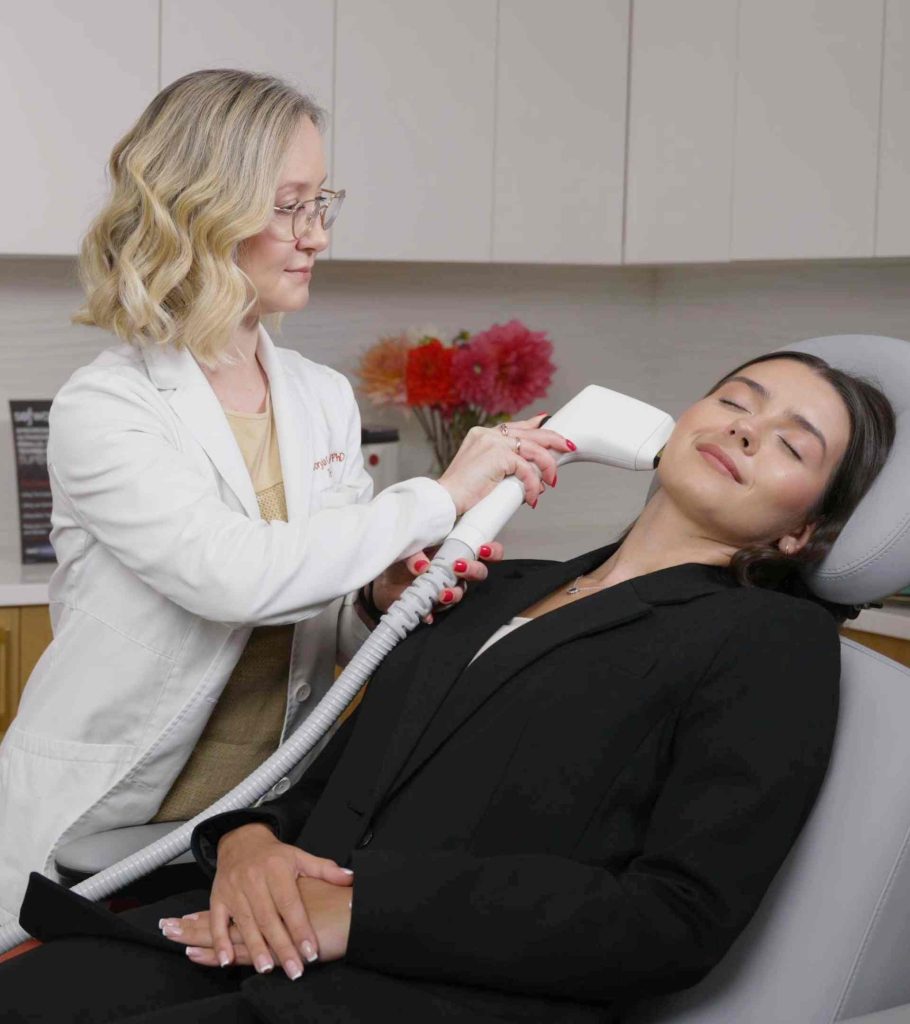
Rapid weight loss with or without GLP-1 medications may cause muscle loss. This risk is higher without enough protein and strength training. Muscle provides support to the overlying skin. When it diminishes, skin laxity becomes more pronounced.
There may be more happening than weight loss alone
Most people assume that Ozempic face is simply a consequence of losing fat from the face. The emerging science suggests the picture is more complicated.
Research published in 2025 identified that GLP-1 medications appear to act directly on certain cells within the skin and fat (fibroblasts and adipose-derived stem cells), potentially accelerating the aging process beyond what weight loss alone would cause.
The body shows the same pattern on a larger scale
Skin on the body shows a similar problem with arms, abdomen, inner thighs, knees, and neck becoming softer and showing signs of sagging.
Hair loss is part of the picture
During rapid weight loss, the body shifts resources away from hair follicles.
This can trigger temporary, distressing hair shedding called telogen effluvium. This usually starts two to four months after major weight loss.
It is almost always reversible with appropriate treatment. However, shedding may reveal other types of hair loss, like pattern hair loss. These may need a different approach and lifelong maintenance.
You've been thinking about this long enough
A conversation is the right place to start.
The Right Time to Treat
This is a question patient often ask, and there is no single right answer. But there is a clinical framework.
During active weight loss
Preventive treatments are valuable and well-timed. During weight loss, collagen-stimulating treatments such as Sofwave, biostimulatory injectables, and microneedling strengthen the skin’s structural support before laxity takes hold. Think of this as collagen banking applied to weight loss: maintaining the skin’s foundation while the volume beneath it shifts.
After the weight has stabilized
For patients who have reached or are near their goal weight, the full range of treatments becomes appropriate. Volume restoration with hyaluronic acid fillers and biostimulatory injectables produces the most predictable and durable results once the face has settled into its new baseline. Allowing weight to stabilize for at least three months before comprehensive volume restoration is the common practice.
The ongoing prevention
Many patients on GLP-1 medications will remain on them for long-term maintenance as part of their health regimen.
Dr. Kazlouskaya discusses timing individually at consultation based on where you are in your weight loss journey, how much you have lost, and what changes are most concerning.
What We See and What We Treat. The Face
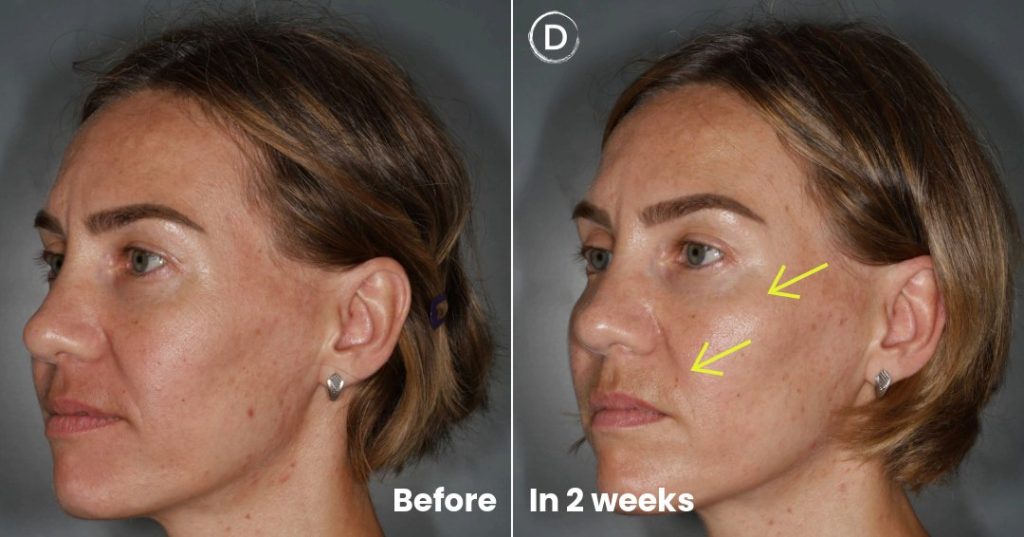
Facial volume loss: hollow cheeks and temples
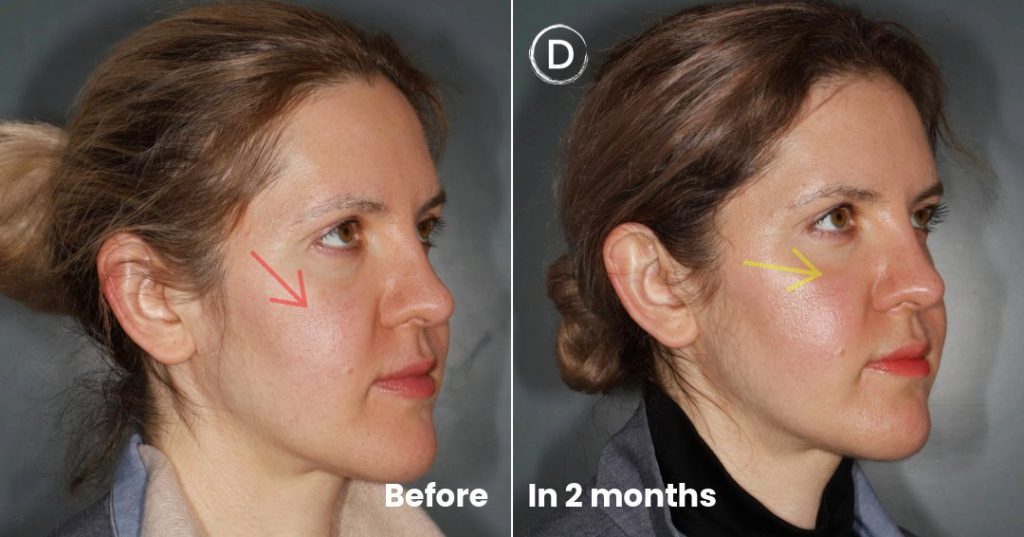
These are the most visible and most distressing change. The cheeks flatten. The temples hollow. The under-eye area becomes shadowed.
The first question is always what kind of volume restoration is right. Hyaluronic acid fillers (Juvederm Voluma, Juvederm Volux, Restylane Lyft) restore structural volume to the cheeks, temples, and midface with immediate visible improvement lasting twelve to eighteen months.
Sculptra and Radiesse rebuild volume more gradually through your own collagen production, with results that develop over three to six months and last two years or more. For most patients with significant facial volume loss, a combination of both produces the most natural and most durable result.
The goal is not to restore the face to how it looked when you were heavier. It is to restore appropriate facial proportion and skin quality for your new body weight, the healthy, well-rested version of your thinner self.
Skin laxity: jawline softening and early jowls
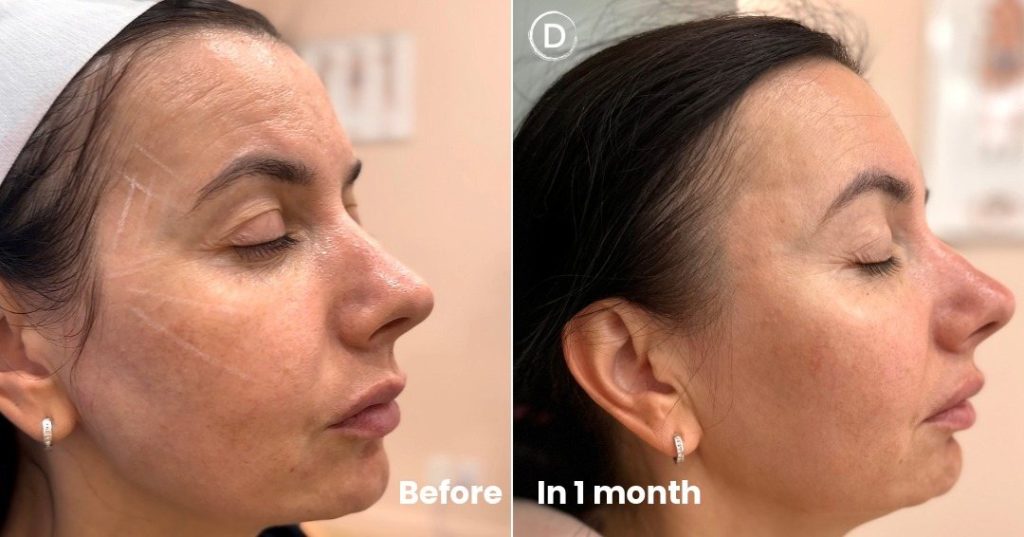
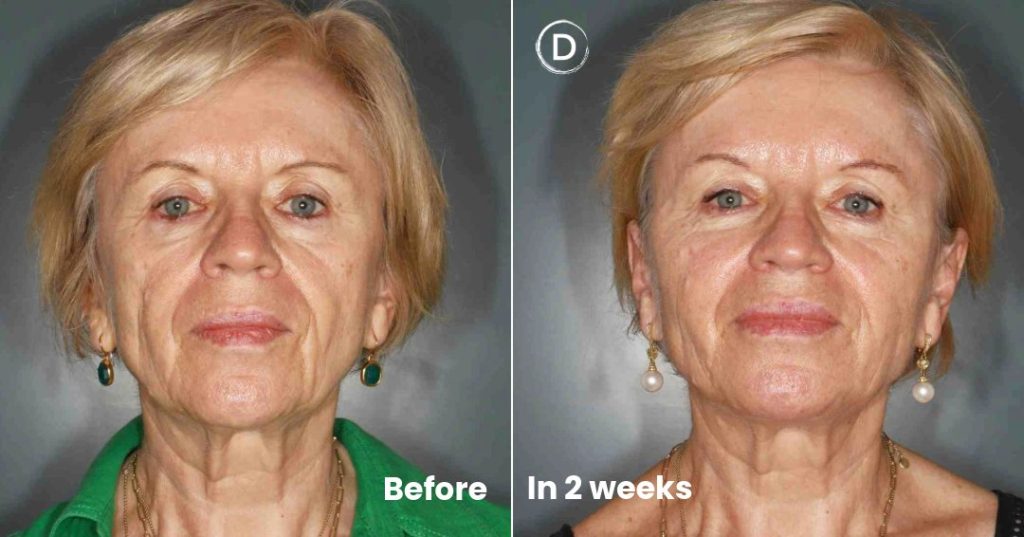
As fat diminishes and collagen production declines, the lower face loses its definition. The jawline softens. Early jowls develop. The skin sits differently on the face, less supported, less firm, less consistent with how you feel.
For treatment of skin laxity, we use various methods. Sofwave improves the jawline-neck transition and firms the skin along the lower face and neck. Biostimulatory injectables, such as Sculptra and Radiesse, rebuild the collagen foundation simultaneously, producing structural improvement that compounds with the Sofwave result over time.
Skin quality: dullness, crepiness, and texture changes
Rapid weight loss and nutritional changes during the weight loss period frequently compromise skin quality. We implement a range of treatments to improve it. Starting with medical-grade skincare with retinoids, vitamin C, and growth factors, and pairing with Skinvive microdroplet hyaluronic acid injections, we restore the skin from inside and outside. Microneedling with regenerative treatments (polynucleotides (aka “salmon sperm”), PRP, or exosomes) rebuilds collagen and skin quality from within.
Under-eye hollowing and dark circles
The tear trough and under-eye area is one of the first places to show the effects of facial fat loss. The hollow beneath the eye creates a shadowed, tired appearance that no amount of sleep or topical treatment will fully address.
Under-eye filler placed with extreme precision and conservative technique using light, soft hyaluronic acid products is one of the most impactful treatments available for this concern. But not everyone is a candidate for this procedure, and consultation before treatment is essential.
The technique requires significant clinical experience in this delicate anatomical area. At Dermatology Circle, under-eye filler is placed conservatively and staged over multiple sessions for the most natural result. Other treatments for the under-eye area may include medical-grade and prescription creams, platelet-rich fibrin injections, or laser resurfacing.
Body
Arms
The upper arms are one of the most common concerns of body after significant weight loss. The inner arm skin stretches during weight gain and frequently does not retract after loss, leaving loose, hanging skin that is visible in sleeveless tops and resistant to exercise.
Sofwave is FDA-cleared for arm tightening and lift and produces genuinely meaningful improvement in mild to moderate arm laxity with no downtime. Biostimulatory injectables used in diluted concentration across the inner arm improve skin quality and collagen density. For more advanced laxity, a surgical referral may be appropriate.
Abdomen
Abdominal skin frequently shows the most dramatic changes after significant weight loss — loose, overhanging skin, stretch marks, and loss of the smooth contour that was the goal of the weight loss in the first place.
Moderate laxity on the abdomen may be addressed with biostimulatory injections or skin tightening devices with no downtime. Microneedling and fractional lasers improve the appearance of stretch marks and overall skin quality. For patients with significant skin excess, surgical consultation for abdominoplasty is the honest recommendation.
Thighs and knees: loose skin and crepiness
Inner thigh and knee skin laxity is common after weight loss and among the most difficult to address non-surgically because of the large surface area and the mechanical stress from movement.
Sculptra in a diluted protocol for broader skin quality improvement is a reliable and common method to improve these areas. Realistic expectations are essential — significant inner thigh laxity may ultimately require surgical intervention.
Neck: accelerated laxity and definition loss
Neck fat loss is common with GLP-1 medications and can expose or accelerate platysmal bands. The result is a neck that looks aged even as the face is being treated. Botox for platysmal bands in a special technique may lead to the improvement of this area and even a subtle midface lift (so-called Nefertiti lift). Recently, Radiesse became the first injectable FDA approved to treat decollete area and can be used for collagen stimulation. See our dedicated Neck and Décolletage Rejuvenation page for the complete protocol.
Hair loss after weight loss
Telogen effluvium (the hair shedding pattern triggered by metabolic stress) is extremely common after significant weight loss and frequently underrecognized as related to GLP-1 medications or weight loss itself.
Hair loss typically begins two to four months after the period of most significant weight loss, peaks around four to six months, and may resolve on its own within twelve months in most patients. However, in older patients, those with pre-existing androgenetic hair thinning, or those with nutritional deficiencies during weight loss, the recovery may be incomplete or slower without intervention.
Treatment at Dermatology Circle includes a proper medical evaluation to distinguish telogen effluvium from androgenetic alopecia, the two most common patterns, which require different approaches. We utilize digital trichoscopy and AI-assisted hair and scalp analysis to ensure accurate and thorough diagnosis and follow-up. Implementing medical and regenerative treatments for hair loss as early as possible ensures the best results.
The Treatment Plan: What This Looks Like in Practice
No two patients lose weight the same way. The treatment plan at Dermatology Circle is based on your assessment. We consider what has changed, where, and how much. We also consider where you are in your weight loss journey.
The plan is usually not executed all at once. It is done over several months, with each treatment building on the last. Results are reviewed and adjusted as the face and body settle into a new baseline.
Why Choose Dermatology Circle for This Concern
Dr. Kazlouskaya sees the full spectrum of changes that weight loss produces in the face, in the body, and in the hair. As a board-certified dermatologist with both medical and cosmetic expertise, she evaluates these patients with an understanding of the underlying biology rather than a menu of available procedures.
She does not treat Ozempic face with a standard filler protocol any more than she would treat every skin concern with the same laser. The combination, the sequencing, the timing — these decisions are made for your face and your body specifically, after a thorough assessment.
Frequently Asked Questions
I am still losing weight. Should I wait to treat?
It depends on what you want to treat. Collagen-stimulating treatments such as Sofwave, SkinPen microneedling, or biostimulatory injections like Sculptra or Radiesse, are appropriate and beneficial during active weight loss.
They build the structural support the skin needs as volume continues to shift. Volume restoration with hyaluronic acid fillers is best done after your weight is stable.
This helps avoid overcorrecting a face that is still changing. Dr. Kazlouskaya discusses this individually at consultation based on where you are in your journey.
Can non-surgical treatments really address skin changes after weight loss, or do I need surgery?
For mild to moderate changes, non-surgical treatment produces genuinely meaningful, natural-looking improvement. The face responds particularly well to the combination of biostimulatory injectables and skin tightening.
For more advanced face and body laxity, surgical intervention is sometimes the honest recommendation. Dr. Kazlouskaya will tell you clearly which category applies to you at the cosmetic consultation.
Will treating the face look natural, given that the body is thinner?
Yes, when done correctly. The goal is not to restore the face to how it looked when you were heavier. It is to restore appropriate facial proportion and skin quality for your new body weight.
A skilled physician adjusts the treatment to your new baseline rather than trying to recreate what was there before. The result should look like the healthy, well-rested version of your thinner self, not artificially full.
I am losing hair since starting Ozempic. Is this related, and will it stop?
Telogen effluvium or hair shedding is often triggered by the metabolic stress of rapid weight loss and is extremely common. It almost always resolves within twelve months. A trichoscopy assessment distinguishes this from androgenetic alopecia. Treatment significantly accelerates the regrowth timeline.
How is treatment planned and priced?
Cost varies significantly by the combination of treatments and the degree of change being addressed. Pricing is confirmed at consultation once the appropriate plan has been determined. A plan designed around your specific changes is always more cost-effective than generic protocols not matched to your situation.
Do you work with patients who are still on GLP-1 medications?
Yes. Many patients at Dermatology Circle are on GLP-1 medications as part of their long-term health regimen.
In addition, in some instances, we offer and initiate GLP-1 treatment plans, if desired. Treatment is planned around their ongoing medication use, current weight trajectory, and expected weight stability timeline. This is increasingly common and increasingly well-understood clinically.