
Inflammatory
Acne
Acne can coexist with or resemble inflammatory rosacea, but the presence of comedones and the underlying process change treatment decisions.
Persistent facial redness is not a diagnosis by itself. Rosacea is one possibility — but sun-related change, acne, Demodex, dermatitis, hormonal flushing, and other conditions can create surprisingly similar patterns.
At Dermatology Circle, treatment begins by identifying what is actually driving the redness before deciding whether the next step should involve skincare, prescription therapy, IPL, vascular laser treatment, or a combination.
You do not need to know whether your redness is rosacea before scheduling an evaluation.
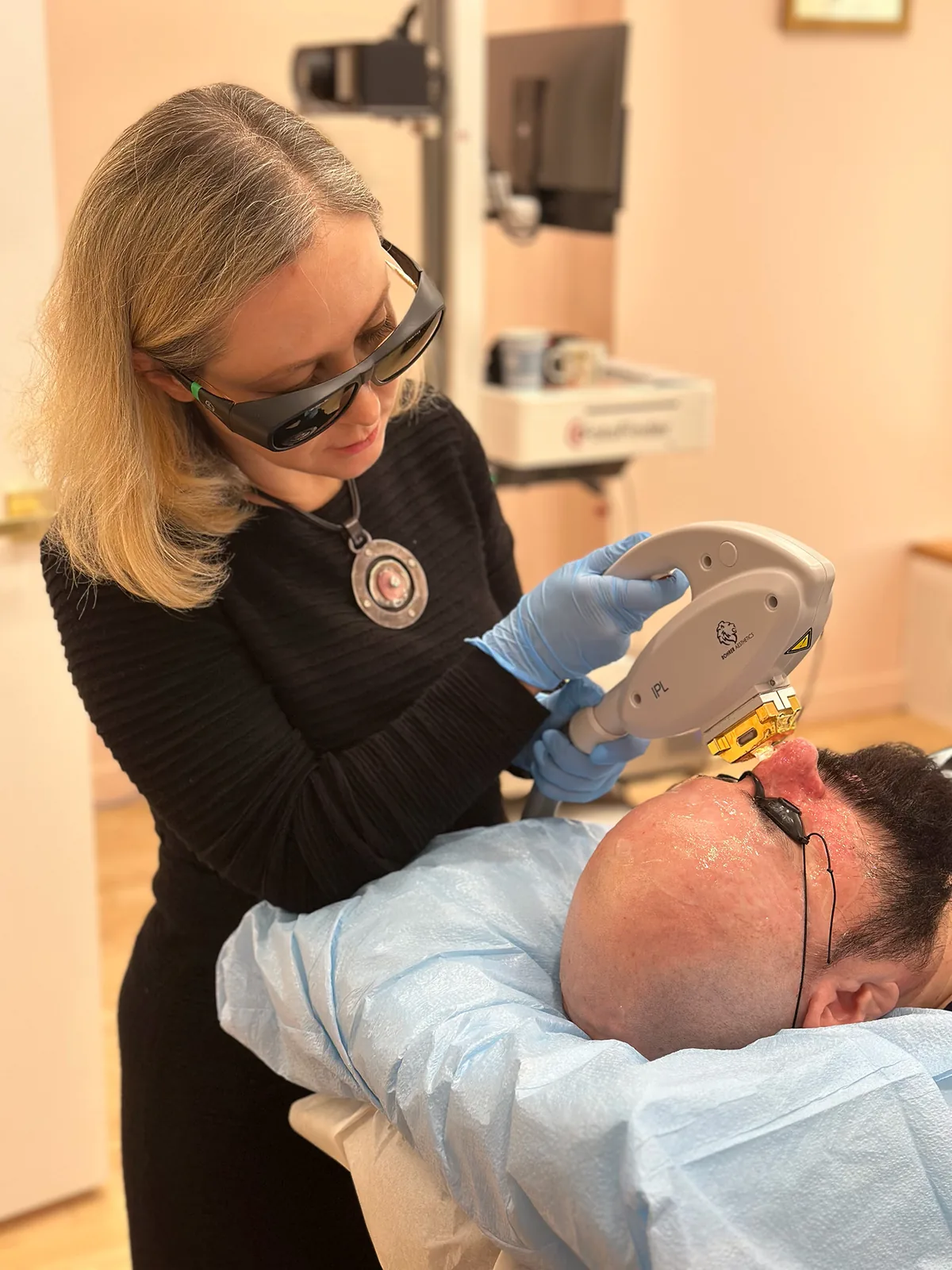
Rosacea is a chronic inflammatory condition that most commonly affects the central face — including the cheeks, nose, chin, and forehead.
Its biology is complex. Immune and inflammatory responses, vascular reactivity, genetic factors, Demodex mites, and potentially interactions with the microbiome can contribute differently from one patient to another.
Rosacea is not caused by poor hygiene. It is also not permanently curable in the traditional sense, but it can often be controlled very effectively with a treatment plan matched to the individual presentation.
Persistent redness can carry a disproportionate effect on confidence — particularly in professional and social settings. The goal is not only calmer skin, but skin that requires less attention from the person living in it.
Several conditions can look remarkably similar on the surface while requiring a very different diagnostic and treatment approach.
Acne can coexist with or resemble inflammatory rosacea, but the presence of comedones and the underlying process change treatment decisions.
Sun-driven redness and pigment change may resemble diffuse rosacea and require different monitoring.
Demodex mites normally live in follicles, but overgrowth can produce redness and bumps that closely resemble rosacea.
Small inflammatory bumps around the mouth or nose can mimic rosacea, particularly after topical steroid exposure.
Redness and scaling around the nose, eyebrows, and central face may coexist with or resemble rosacea.
Hormonal shifts can cause facial warmth and flushing that overlap with rosacea.
Autoimmune conditions can occasionally create facial patterns that resemble rosacea, making the broader clinical context important.
Multiple manifestations can coexist, and the dominant feature may change with time.
Background central facial redness, visible vessels, warmth, and episodic flushing are among the most recognizable manifestations of rosacea.
Acne-like inflammatory bumps may occur with or without prominent background redness.
Thickening and contour change can occur, most characteristically around the nose.
Dryness, burning, irritation, gritty sensation, and redness of the eyelids can accompany facial rosacea.
Patients do not always connect eye dryness or irritation with a facial skin condition. These symptoms are worth mentioning during the dermatologic consultation.
Classic pink-red change may be less conspicuous in deeper skin tones. Warmth, sensitivity, texture change, or more subtle discoloration can become important clues.
The useful question is not “What must I avoid forever?” but which factors reliably matter for your own skin.
Trigger awareness can support treatment. It should not become a substitute for appropriate medical care.
Alcohol can provoke flushing in some patients, but it is not the cause of rosacea.
Rosacea is a diagnosable medical condition, not simply a skin type.
Persistent redness and visible vessels can occur without inflammatory bumps.
Medical, skincare, and procedural approaches can often produce meaningful improvement.
Facial redness is evaluated as a pattern — not simply as color.
Distribution, visible vessels, inflammatory lesions, scale, texture, and symptoms are considered together.
Imaging can document vascular and color change and provide a useful baseline for comparison.
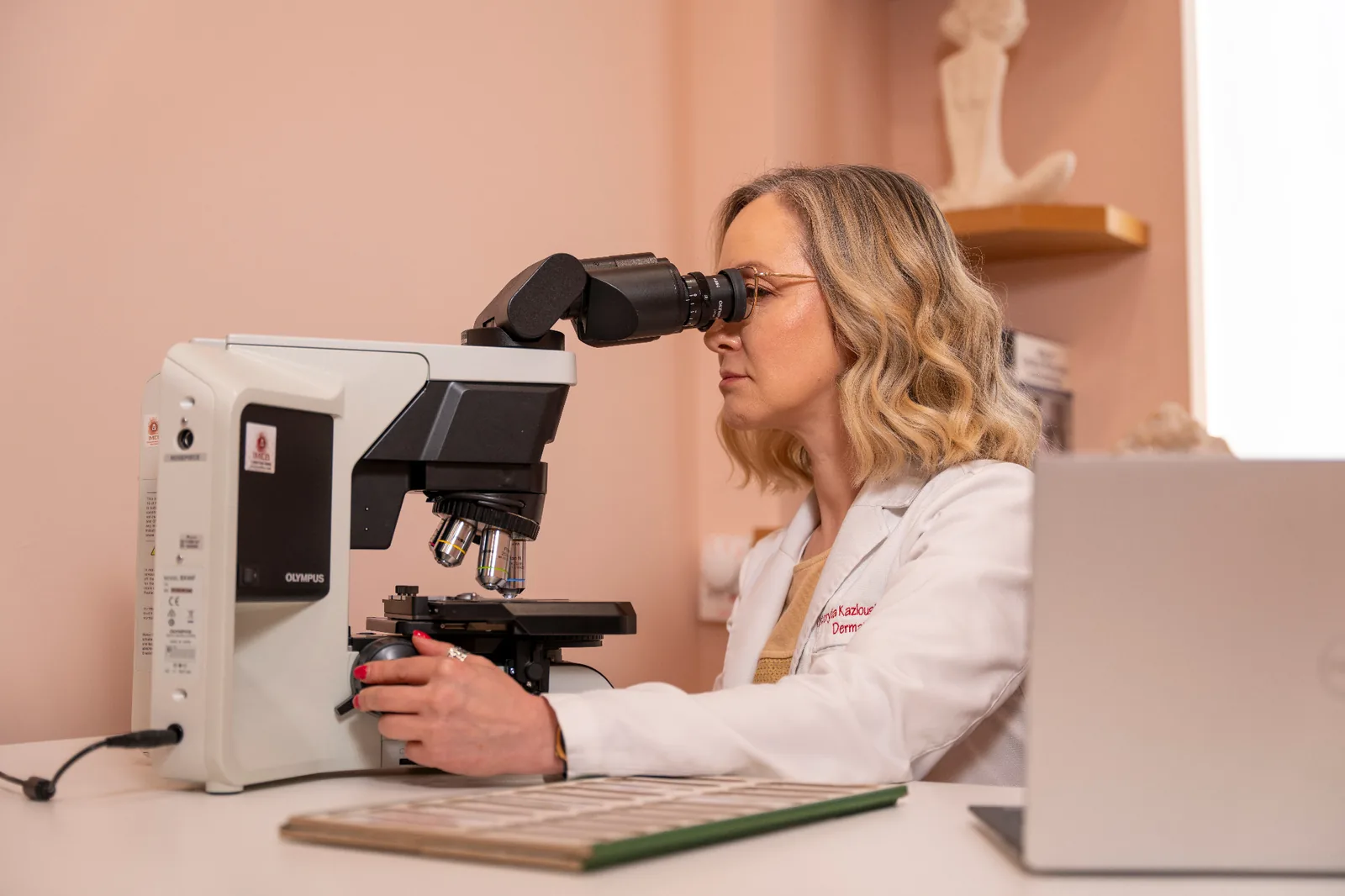
Microscopic examination may provide additional context when Demodex or another process is being considered.
A biopsy may be considered if the presentation raises concern for a different inflammatory or medical condition.
Rosacea is not one problem, so it should not be treated with one automatic protocol.
Treatment may include metronidazole, ivermectin, azelaic acid, Epsolay, Zilxi, Amzeeq, or other appropriately selected prescription options.
More persistent inflammatory rosacea may benefit from oral therapy, including doxycycline-based treatment when appropriate.
A deliberately simple routine can help support the skin barrier and reduce repeated irritation.
Neuromodulator treatment may be considered in selected patients whose dominant concern is episodic flushing.
Hyaluronic acid microdroplets may be used as an adjunct to support hydration and skin quality rather than as a replacement for core rosacea treatment.
Offering more than one vascular technology allows the device to follow the treatment target — rather than forcing every patient into one platform.
A focused vascular laser for selected superficial vessels and persistent red vascular change.
A broader light-based treatment that can be useful when diffuse redness occurs together with sun-related pigment or photodamage.
A longer-wavelength vascular option that may be useful for selected deeper or larger vessels.
Vessel depth, vessel size, background erythema, pigmentation, skin characteristics, and the rest of the clinical picture all influence treatment selection.
Different presentations require different plans. These are real Dermatology Circle cases. Individual results vary.
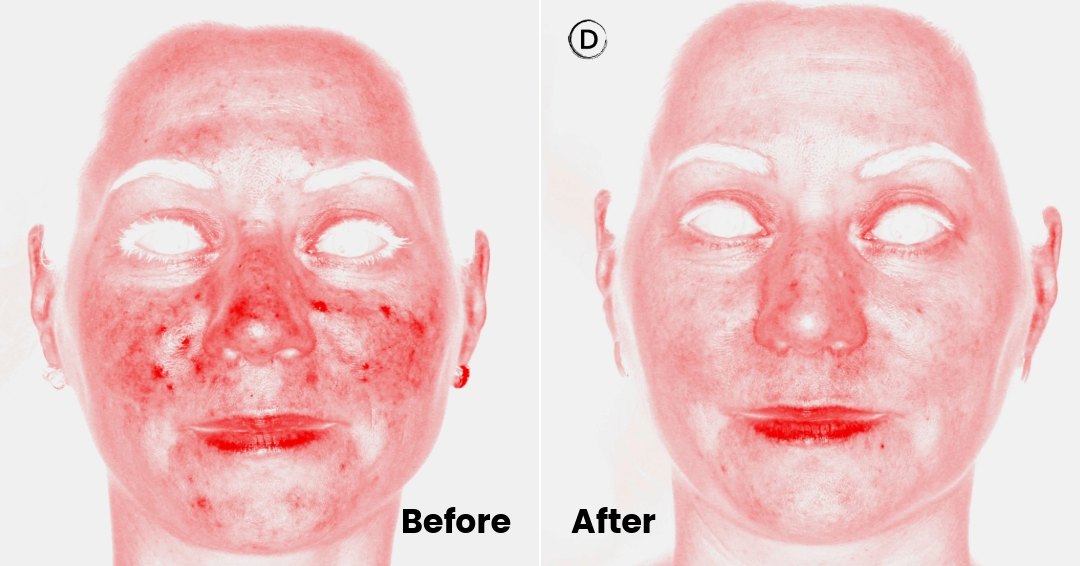
Customized IPL and Nd:YAG treatment focused on diffuse redness and visible vascular change.
View Case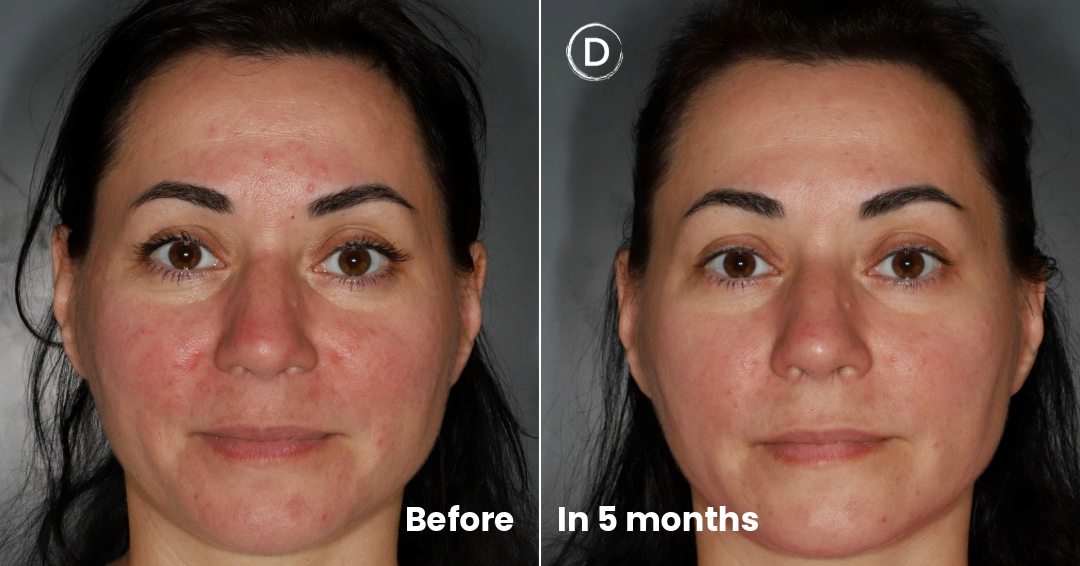
A combined strategy incorporating medical care, skincare, IPL, and ongoing maintenance.
View Case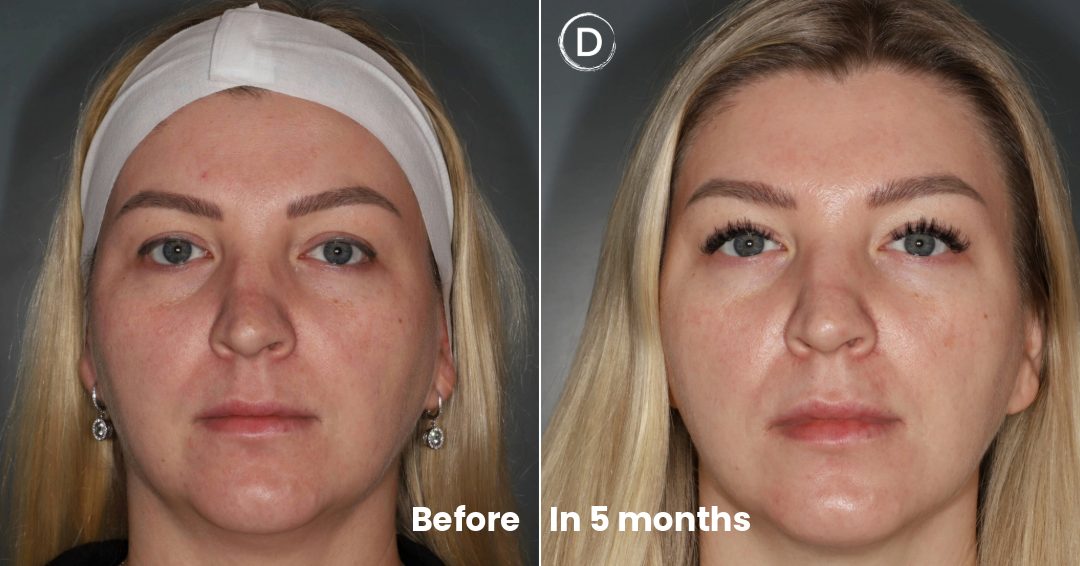
Vascular treatment combined with attention to skincare and daily photoprotection.
View CaseMedical therapy may require several weeks before improvement becomes apparent. Vascular procedures frequently build improvement over a treatment series.
Because rosacea is chronic, maintenance may sometimes be useful. The goal is realistic control — not a promise that redness can never return.
Clinical and microscopic perspective when needed.
Vbeam, IPL and long-pulsed Nd:YAG.
Baseline documentation and objective comparison.
Individualized physician-led care in Manhattan.
Facial redness can have more than one explanation. The pattern and clinical context matter.
Redness alone is not enough to tell. Acne, sun-related changes, perioral dermatitis, hormonal flushing, Demodex overgrowth, and occasionally autoimmune conditions can resemble rosacea. Clinical examination is the best starting point.
It is uncommon, but lupus can create facial redness that resembles rosacea. Other symptoms and the broader clinical pattern help determine whether additional evaluation is appropriate.
Demodex mites normally live on human skin in small numbers. Overgrowth can produce redness and inflammatory bumps that may resemble rosacea.
Yes. Classic pink-red color change can be less visible in deeper skin tones, so warmth, sensitivity, texture change, or subtle discoloration may become more useful clues.
Hormonal shifts during perimenopause and menopause can produce facial flushing and may overlap with or aggravate existing rosacea.
Rosacea is a chronic condition. It can often be controlled effectively, but treatment is intended to manage manifestations rather than promise permanent elimination.
There appears to be a hereditary component, although rosacea likely reflects an interaction between several biologic and environmental factors.
Rosacea itself is not established as a direct cause of skin cancer. Sun-related damage can coexist with facial redness, making dermatologic assessment useful when the pattern is unclear.
There is no universal best device. Vessel depth, size, background redness, pigmentation, skin characteristics, and goals influence whether Vbeam, IPL, Nd:YAG, or another strategy is appropriate.
It depends on the dominant rosacea features. Medication may target inflammation, while vascular treatments address persistent redness or visible vessels. Some patients benefit from a combination.
It may be considered for selected patients whose primary concern is episodic flushing, but it is not appropriate for every rosacea presentation.
Identify personal triggers, use gentle skincare, protect the skin from sun exposure, and avoid repeatedly irritating products. Home care should support rather than replace medical treatment.
The timeline depends on the treatment. Medical therapy often requires several weeks, while improvement from vascular procedures typically builds over a treatment series.
No. They can resemble one another and can coexist, but rosacea generally lacks the comedones typical of acne and the two conditions are managed differently.
The right treatment begins with the right diagnosis. Start with a physician-led evaluation at Dermatology Circle's Upper East Side practice.