
Skin Quality
Texture, Tone & Pigment
Fine lines, enlarged pores, photodamage, pigmentation, redness and uneven texture may require resurfacing or vascular and pigment-directed treatment.
Natural cosmetic results begin before treatment — with understanding your skin, facial structure, movement, volume and what is actually changing.
At Dermatology Circle, cosmetic dermatology is approached as medicine first. Treatments are selected according to anatomy, skin biology and long-term goals rather than trends or a predetermined procedure.
The ApproachThe goal is not to change your face. It is to understand where treatment adds value — and where it does not.

Cosmetic treatment should begin by identifying the problem — not by choosing the product.
A patient concerned about appearing tired may actually have midface volume change. A softer jawline may reflect true laxity, volume redistribution, muscle activity or several changes occurring together.
The same visible concern can therefore require completely different treatment in two patients.
A technically excellent procedure can still be the wrong procedure for the problem.
Skin quality, volume, muscle activity and tissue support change independently. Good cosmetic planning considers how those changes interact.
Fine lines, enlarged pores, photodamage, pigmentation, redness and uneven texture may require resurfacing or vascular and pigment-directed treatment.
Changes in cheeks, temples, lips, chin and facial support can alter proportion even when the skin itself remains healthy.
Early jowling, a softer jawline, neck laxity and declining firmness may benefit from collagen-remodeling strategies.
Forehead lines, glabellar lines, crow's feet and lower-face movement are dynamic concerns rather than volume problems.
Treatment PlanningTreat the component that is changing — not simply the area where the change is visible.
A treatment earns its place in the plan when it addresses a specific component of the patient's anatomy or skin.
Botox, Dysport and other neuromodulators reduce selected muscle activity responsible for dynamic facial lines.
Treatment can be adapted to facial movement rather than simply erasing every line.
Hyaluronic acid fillers can restore selected areas of volume, improve proportion and refine facial contours.
Explore Dermal FillersUltrasound-based treatment such as Sofwave may support collagen remodeling when early-to-moderate laxity is the primary concern.
Fractional resurfacing, vascular lasers and pigment-directed technologies address different aspects of tone, texture, redness and photodamage.
Microneedling creates controlled micro-injury and can support collagen remodeling and improvement in selected texture concerns.
Explore MicroneedlingSkinvive can improve selected aspects of hydration and skin quality. It is not a lifting treatment and does not replace correction of true laxity.
Explore Skinvive
More procedures do not automatically create a better cosmetic result.
Combination treatment makes sense when different procedures solve different problems. A laser may address texture while Sofwave supports laxity and selected filler restores lost structure.
The important question is not how many treatments can be combined, but whether each one has a clear anatomical purpose.
Identify what contributes most to the concern.
Use treatments in a purposeful order.
Evaluate the result before automatically adding more.
Real cases demonstrate how different concerns require different tools — from isolated skin tightening to resurfacing and long-term combination treatment.
 Real Patient · Sofwave
A non-invasive approach for a male patient seeking natural rejuvenation without injections.
Treatment focused on skin quality, firmness, wrinkles and subtle lifting while preserving masculine facial anatomy.
View Patient Case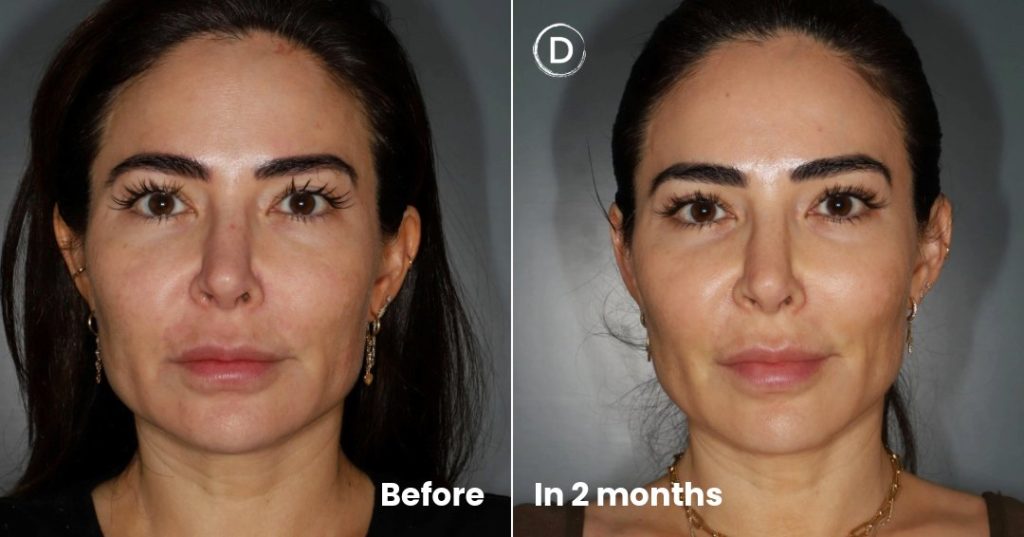 Real Patient · Combination Treatment
Two technologies addressed two different components of facial rejuvenation.
Sofwave targeted firmness and support, while Ultra LaseMD addressed texture, tone and discoloration.
View Patient Case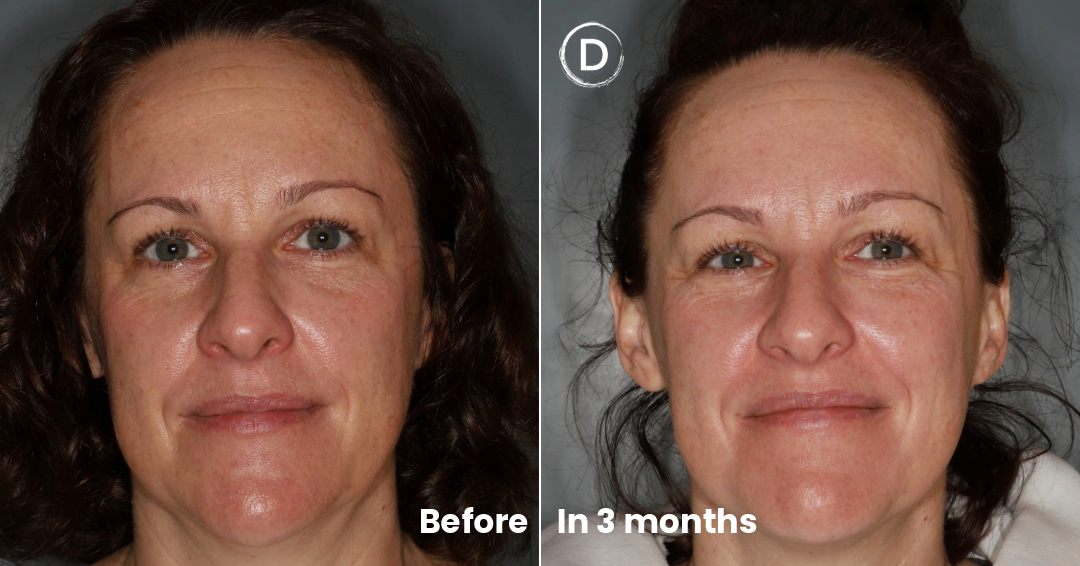 Real Patient · Ultra LaseMD
Two sessions of fractional Ultra LaseMD were used to improve pigmentation and overall skin quality.
The documented result includes a brighter complexion, improved texture and reduction in small wrinkles.
View Patient Case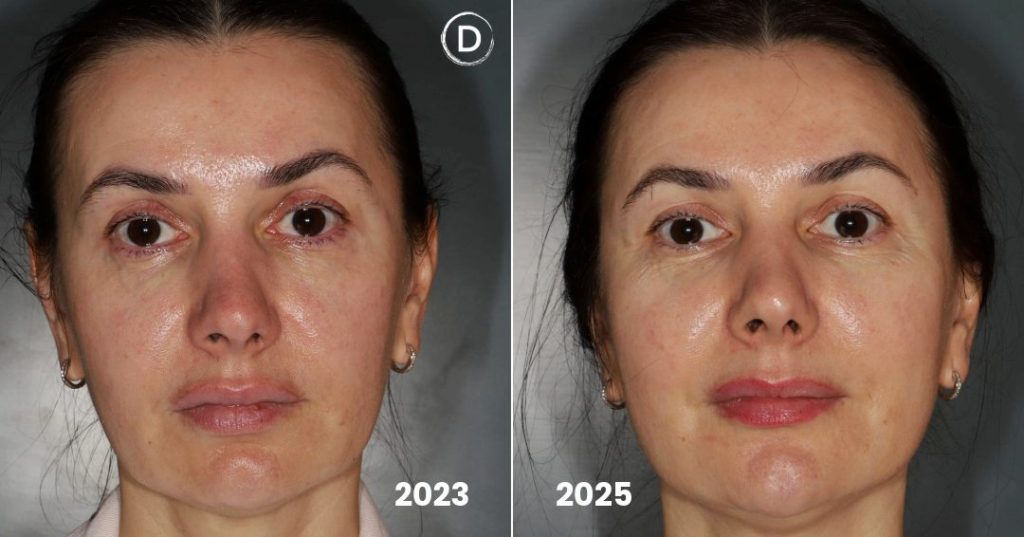 Real Patient · 2-Year Strategy
A personalized two-year strategy addressed multiple components of facial aging.
The plan combined skin tightening, collagen stimulation, neuromodulation, hydration, resurfacing and strategic volume support.
View Patient CaseIndividual results vary. Before-and-after photographs represent individual Dermatology Circle patients and are not a guarantee of outcome.
View More Cosmetic ResultsBoard-Certified Dermatologist · Board-Certified Dermatopathologist
Cosmetic dermatology is most useful when aesthetic judgment and medical judgment are part of the same conversation.
Dr. Kazlouskaya evaluates facial anatomy, skin quality, movement, volume distribution, previous treatments and long-term goals before recommending a procedure.
The result is a plan designed around the patient rather than around a product or device.
About Dr. KazlouskayaRestraint is not the absence of treatment. It is knowing where treatment adds value, and where it does not.
You do not need to arrive knowing which treatment is right for you.
Your concerns and goals are discussed first. The face and skin are then assessed for skin quality, structure, volume, movement, laxity and proportion.
No. Determining whether the concern involves skin, structure, movement, volume or laxity is part of the consultation itself.
Yes, when each treatment addresses a different component of the concern. Combination treatment should be purposeful rather than simply adding procedures.
Natural results depend on appropriate patient selection, facial proportion, treatment quantity and knowing when further correction is unnecessary.
No. Male patients may seek treatment for facial lines, skin quality, pigmentation, jawline definition and skin tightening.
A physician-led consultation may result in recommending another strategy, waiting, or advising against treatment when a procedure is unlikely to improve the actual concern.
Start with an assessment of what is changing. The treatment comes afterward.