
Excessive Hair Shedding · Upper East Side
Telogen Effluvium Treatment in NYC
Sudden shedding can feel as if it began overnight. The biology often started months earlier.
Telogen effluvium is a common cause of diffuse, excessive hair shedding after illness, childbirth, surgery, rapid weight loss or another significant physiologic change.
At Dermatology Circle, the goal is to identify why shedding started, determine whether telogen effluvium is the full diagnosis, and treat only what needs treatment.
The Dermatology Circle Approach
Reconstruct the timeline.
Identify what is reversible.
Treat with a clear reason.

01
Timeline
02
Trigger
03
Differential Diagnosis
04
Recovery
Understanding Telogen Effluvium
Diffuse. Delayed. Nonscarring.
Telogen effluvium is primarily a disorder of excessive hair shedding.
A significant physiologic event can cause a larger-than-usual number of growing hairs to transition toward the resting telogen phase. Those hairs do not shed immediately.
This delay explains why patients may feel completely recovered from an illness, procedure or period of rapid weight loss when hair fall suddenly becomes obvious.
The Important Distinction
Dramatic shedding does not automatically mean
that the follicles have been permanently lost.
Common Triggers
What Changed Before the Shedding?
The most useful history often begins several months before the hair fall.
One clear trigger is not found in every patient, and sometimes several factors overlap.
Illness
High Fever or Systemic Illness
Significant illness or systemic inflammation can temporarily alter the normal hair cycle.
Hormonal Shift
Postpartum Shedding
Increased shedding commonly becomes noticeable several months after childbirth.
Physical Stress
Surgery or Major Medical Event
Operations, hospitalization and other physiologic stressors can produce delayed diffuse shedding.
Metabolic Change
Rapid Weight Loss
Rapid weight reduction, calorie restriction or major changes in nutritional intake may contribute.
Medical Contributors
Iron, Nutrition & Thyroid
Iron deficiency, nutritional factors or thyroid abnormalities may be relevant in selected patients.
Other Changes
Medication or Significant Stress
Medication changes and significant psychological or physiologic stress may also be part of the timeline.
01
Acute Telogen Effluvium
A Trigger, a Delay, Then Recovery.
Acute telogen effluvium often follows an identifiable physiologic event and gradually improves once the provoking factor has passed.
Often a recognizable trigger
Diffuse rather than focal shedding
Hair fall begins after a delay
Recovery occurs gradually
02
Chronic Telogen Effluvium
When Shedding Continues Beyond Six Months.
When excessive shedding persists or fluctuates for more than six months, the diagnosis and potential ongoing contributors deserve reassessment.
Persistent or recurrent shedding
May fluctuate over time
Does not automatically mean permanent follicle loss
May coexist with another form of hair loss
Diagnosis
“My Hair Is Falling Out” Is a Symptom, Not the Diagnosis.
The first task is determining whether the pattern truly fits telogen effluvium.
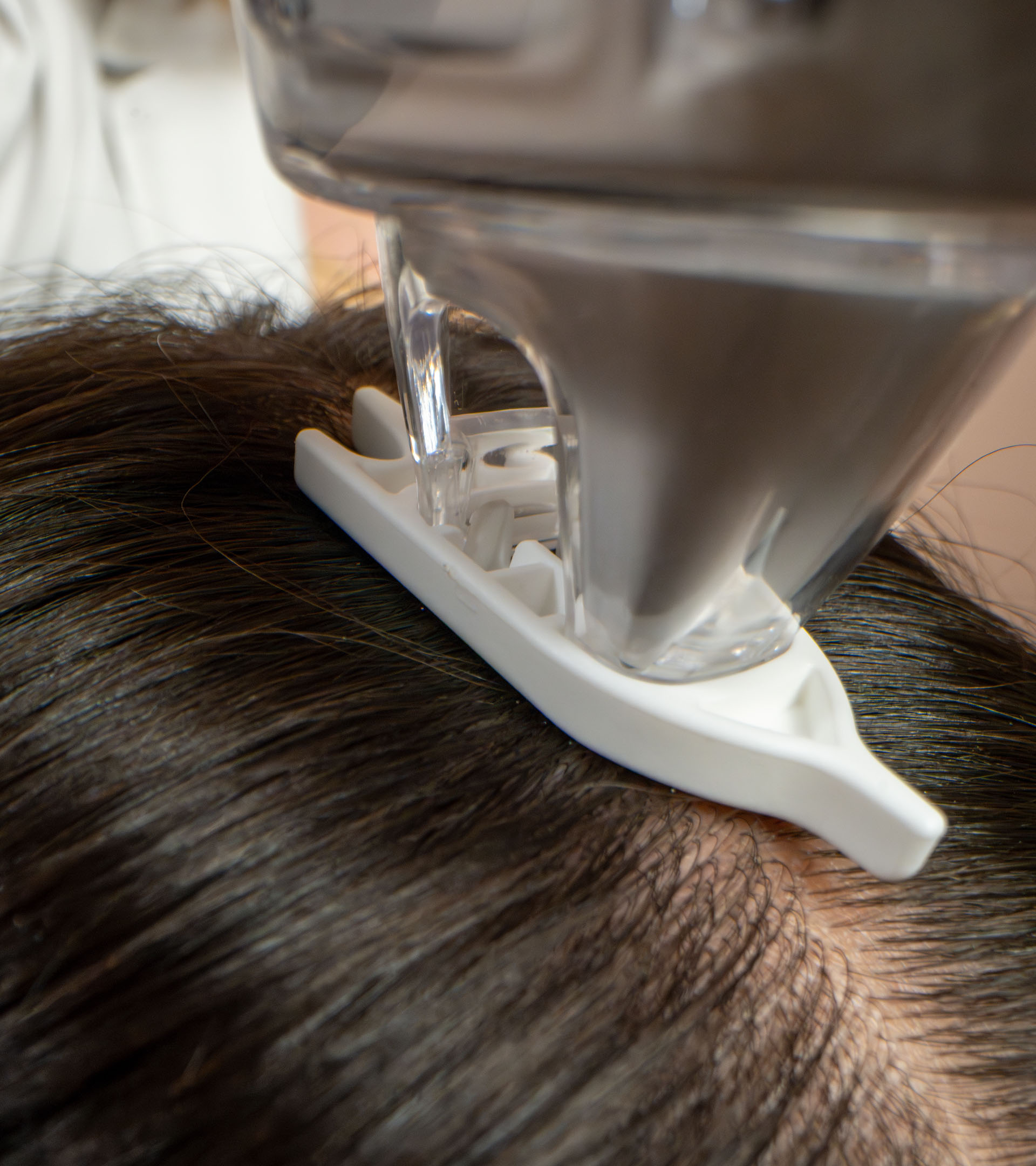
A detailed hair loss consultation can combine the timeline, scalp examination, trichoscopy and targeted testing when appropriate.
Timeline
What happened before shedding began?
Distribution
Diffuse, patterned or focal?
Trichoscopy
Is follicular miniaturization present?
Blood Work
Targeted to the history and clinical question
Biopsy
Reserved for diagnostic uncertainty
A Common Diagnostic Question
Telogen Effluvium or Pattern Hair Loss?
Sometimes the correct answer is both. A significant shedding episode can make previously subtle androgenetic hair loss much more visible.
Telogen Effluvium
Androgenetic Alopecia
Pattern
Diffuse shedding
Regional or patterned density change
Timing
Often sudden after a delayed trigger
Usually progressive over time
Follicles
No characteristic progressive miniaturization
Progressive follicular miniaturization
Strategy
Explore Androgenetic Alopecia
Identify trigger and support recovery
Often requires ongoing management
Treatment Strategy
Treat What Is Keeping the Hair Cycle Off Balance.
Uncomplicated telogen effluvium does not automatically require multiple hair-growth procedures.
The plan depends on whether a trigger is still present, whether something correctable exists, and whether another hair-loss condition coexists.
Foundation
Identify the Trigger
Reconstruct the months before shedding and determine whether the provoking event has passed or remains active.
Correctable Contributors
Address What Can Be Corrected
Relevant nutritional, endocrine or medical contributors are addressed according to the individual clinical situation.
Selected Patients
Consider Medical Support
Minoxidil or another supportive approach may be considered selectively, depending on duration, diagnosis and treatment goals.
Coexisting Hair Loss
Treat What TE May Have Revealed
If the shedding exposes androgenetic alopecia, the underlying pattern hair loss may require its own long-term plan.
Recovery
Shedding May Improve Before Density Looks Normal.
Hair recovery naturally happens on a different timeline from hair shedding.
New hair needs time to grow before it contributes visibly to fullness, so density often lags behind improvement in hair fall.
A physiologic event shifts more follicles toward telogen.
Hair fall becomes noticeable after the biologic delay.
When the trigger resolves, excessive hair fall may gradually decline.
New hair needs length before fullness becomes obvious.
A Common Source of Anxiety
Short new hairs and continued shedding
can temporarily occur at the same time.
Recovery does not always look linear.
Clinical Documentation
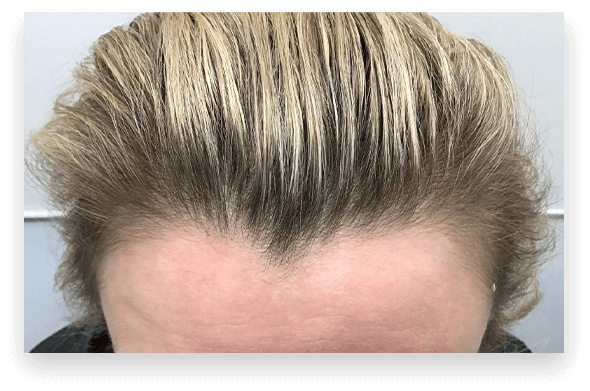
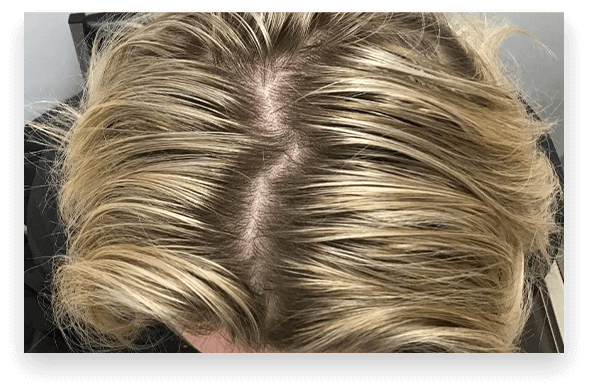
A Baseline Makes Change Measurable.
Diffuse hair changes can be difficult to judge from memory alone.
Clinical photography provides a reference point for future comparison when subjective shedding and visible density do not change at the same pace.
Follow-Up Principle
Compare a patient with their own baseline,
not with someone else's hair density.
View Hair Loss Gallery

Dermatology + Dermatopathology
A Shedding Complaint Is Only the Starting Point.
Diffuse shedding may be straightforward. It can also overlap with pattern hair loss or resemble another form of alopecia.
Dr. Viktoryia Kazlouskaya is board-certified in dermatology and dermatopathology. Hair-loss evaluation can combine clinical examination, trichoscopy and longitudinal documentation when appropriate.
The objective is not to add the largest number of treatments. It is to understand what the hair is doing and create a plan that matches the diagnosis.
Practice Principle
A precise plan explains
not only what to do,
but why it belongs there.
Explore the Hair Loss Consultation
Hair Loss Care · Manhattan
Telogen Effluvium Evaluation on the Upper East Side.
Detailed physician-led evaluation for sudden, diffuse and persistent hair shedding in a private Manhattan practice.
Telogen Effluvium FAQ
Questions Patients Often Ask.
With telogen effluvium, timing and pattern usually tell us more than counting every shed hair.
01 What is telogen effluvium?
Telogen effluvium is a form of diffuse excessive hair shedding in which more follicles than usual enter the resting phase of the hair cycle around the same time.
02 When does shedding begin after a trigger?
Increased shedding commonly becomes noticeable approximately two to four months after a significant triggering event. The delay reflects normal hair-cycle biology.
03 How long does telogen effluvium last?
Duration varies. In many acute episodes, excessive shedding gradually improves after the trigger resolves. Visible recovery in density takes longer than improvement in shedding itself.
04 Will the hair grow back?
In uncomplicated telogen effluvium, follicles generally remain capable of producing new hair. Recovery may be slower when a trigger continues, shedding becomes chronic or another form of hair loss coexists.
05 What is chronic telogen effluvium?
Chronic telogen effluvium describes prolonged or fluctuating excessive shedding, commonly continuing beyond six months. Persistent shedding deserves reassessment for ongoing contributors and other forms of hair loss.
06 How is telogen effluvium different from pattern hair loss?
Telogen effluvium primarily causes diffuse shedding and often follows a delayed trigger. Androgenetic alopecia involves progressive follicular miniaturization and patterned density change. Both can occur together.
07 Can rapid weight loss cause telogen effluvium?
Significant or rapid weight loss can act as a physiologic stressor and may contribute to telogen effluvium, especially when calorie, protein or nutritional intake also changes substantially.
08 What blood tests may be useful?
There is no single laboratory panel required for every patient. Testing may include a blood count, iron or ferritin assessment, thyroid testing or other targeted studies when the clinical history supports them.
09 Do I need minoxidil?
Not every patient with telogen effluvium needs minoxidil. Its role depends on the duration of shedding, the overall diagnosis and whether another form of hair loss is present.
10 Does PRP treat telogen effluvium?
PRP is not automatically required for uncomplicated telogen effluvium. Procedural treatment may be discussed selectively, particularly when another hair-loss condition is also being treated.
11 Should I stop a medication if I think it caused shedding?
Do not stop a prescription medication without discussing it with the clinician who prescribed it. Medication timing can be reviewed during the hair-loss evaluation, but changes should be made safely.
Telogen Effluvium · Dermatology Circle NYC
Private Hair Loss Consultation
Schedule Your Evaluation
Understand the Shedding Before You Treat It.
A clearer plan begins with the timeline, the pattern and a diagnosis that explains what your hair is actually doing.