
Active Acne, Persistent Breakouts & Acne Scarring
Medical treatment is directed at controlling active disease first, especially when ongoing inflammation is creating new scars or pigment change.
Skin symptoms that look similar can have very different causes. Medical dermatology begins with understanding the pattern, history and clinical findings before treatment is selected.
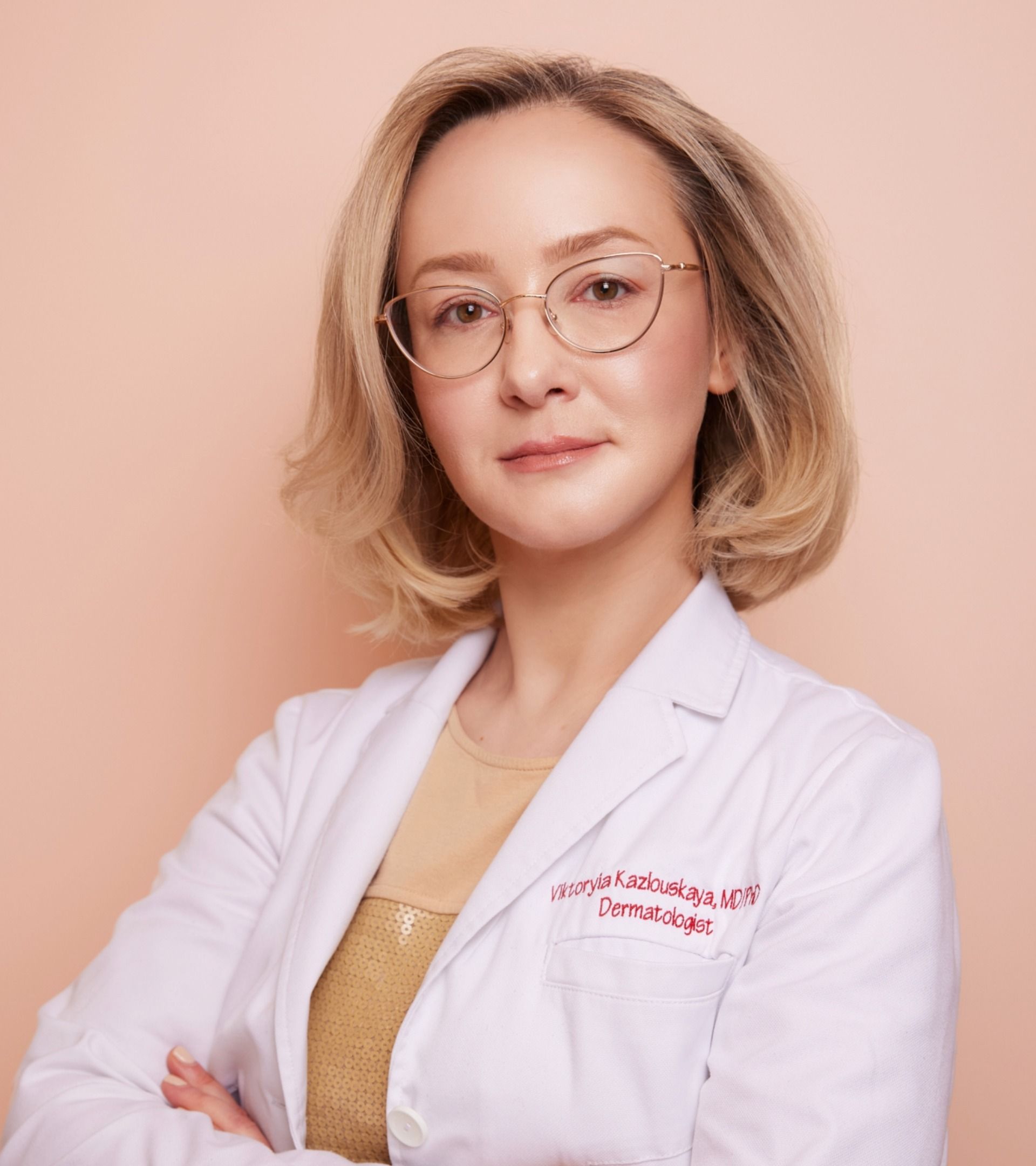
At Dermatology Circle, medical skin concerns are evaluated by a board-certified dermatologist and dermatopathologist. The next step may be treatment, monitoring, additional testing or simply reassurance — depending on what the evaluation shows.
Redness, scaling, bumps, itching, pigment and changing spots are patterns. The diagnosis explains why the pattern is happening — and what should happen next.
Redness may reflect rosacea, dermatitis, acne, sun-related change or another inflammatory process.
Scaling may be related to eczema, seborrheic dermatitis, psoriasis, contact dermatitis or infection.
A changing lesion may be benign, but sometimes deserves dermoscopy, photography or biopsy.
The categories below are a starting point rather than a complete diagnosis list. You do not need to know exactly what your condition is before scheduling an evaluation.
Medical treatment is directed at controlling active disease first, especially when ongoing inflammation is creating new scars or pigment change.
Facial redness and bumps can overlap visually. Rosacea, dermatitis, acne and Demodex-associated inflammation may require different treatment strategies.
Persistent rashes are evaluated by pattern, distribution, symptoms, exposures and prior treatment rather than being treated automatically as “sensitive skin.”
Treatment may range from topical therapy to systemic or biologic medication, depending on the diagnosis, severity and effect on daily life.
Clinical examination and dermoscopy evaluate individual lesions. Digital mole mapping can add longitudinal documentation for selected patients who benefit from monitoring.
Common skin and nail concerns may still require a precise diagnosis before treatment, particularly when a lesion persists, changes or does not respond as expected.
More testing is not automatically better. It becomes useful when the result may meaningfully change the diagnosis, treatment or monitoring plan.
Pattern, morphology, distribution, symptoms and history establish the clinical starting point.
Magnified examination can add detail when evaluating moles, pigmented lesions and selected inflammatory findings.
Selected conditions may benefit from microscopy, cultures, laboratory testing or other focused evaluation.
A biopsy can resolve diagnostic uncertainty when appearance alone is not enough to choose the right treatment.

Some patients come to us after months or years of uncertainty, several treatments, conflicting diagnoses or a condition that has simply not behaved as expected.
We do not shy away from difficult or diagnostically challenging cases. They are often the situations where a careful review of the entire history, a fresh examination and another look at previous testing can be especially valuable.
Patients have traveled to Dermatology Circle from Canada, Bangladesh, England, France and other U.S. states for complex dermatologic evaluation and second opinions.
We review previous diagnoses, how the problem developed, what treatments have already been tried, what helped, what failed and whether the clinical pattern has changed over time.
Relevant outside records, prior laboratory testing, clinical photographs and other previous evaluations can be reviewed to understand what has already been investigated and what may still be missing.
Previous pathology reports can be reviewed. When appropriate material is available, prior biopsy slides may also be reconsidered from a dermatopathology perspective and correlated with the current clinical picture.
The goal is to separate what is already known from what remains uncertain, then provide practical advice about treatment, additional workup, monitoring, another biopsy or referral when appropriate.
Not every condition can be completely treated in our office, and not every difficult diagnosis can be resolved in a single visit. Even when we cannot offer the definitive treatment ourselves, we can provide an honest evaluation, identify reasonable opportunities for improvement, clarify what may still require investigation and help define the most appropriate next step or specialist.
If you have a complex case, extensive prior records or biopsies that need review, please contact us before booking. We can review the scope of the case and provide a customized consultation fee and quote based on the amount of material and level of review required.
Complex Case · Second Opinion Request a Consultation QuoteA treatment plan may be simple or multi-step. The choice depends on the diagnosis, severity, symptoms, previous response, medical history and practical goals.
Prescription creams, gels, foams, lotions or medicated shampoos may be appropriate when disease can be controlled locally.
Oral therapy may be considered when topical treatment is insufficient, disease is extensive or the condition is better treated systemically.
Selected inflammatory diseases such as moderate-to-severe psoriasis or eczema may benefit from targeted systemic therapy.
Depending on the diagnosis, office care may include biopsy, injections, cryotherapy, lesion treatment or other focused procedures.
Not every finding requires immediate treatment. Observation and follow-up can be the appropriate plan when intervention would add little value.
Cosmetic treatment is often most effective when the underlying medical condition has first been identified and stabilized.
Ongoing inflammatory acne is treated before acne scars, texture and post-inflammatory changes become the primary focus.
Prescription care may come first; vascular laser or IPL can then address persistent visible vessels or redness in selected patients.
Brown or red marks, melasma, sun damage and suspicious pigmented lesions can look superficially similar while requiring very different strategies.
 Before & After
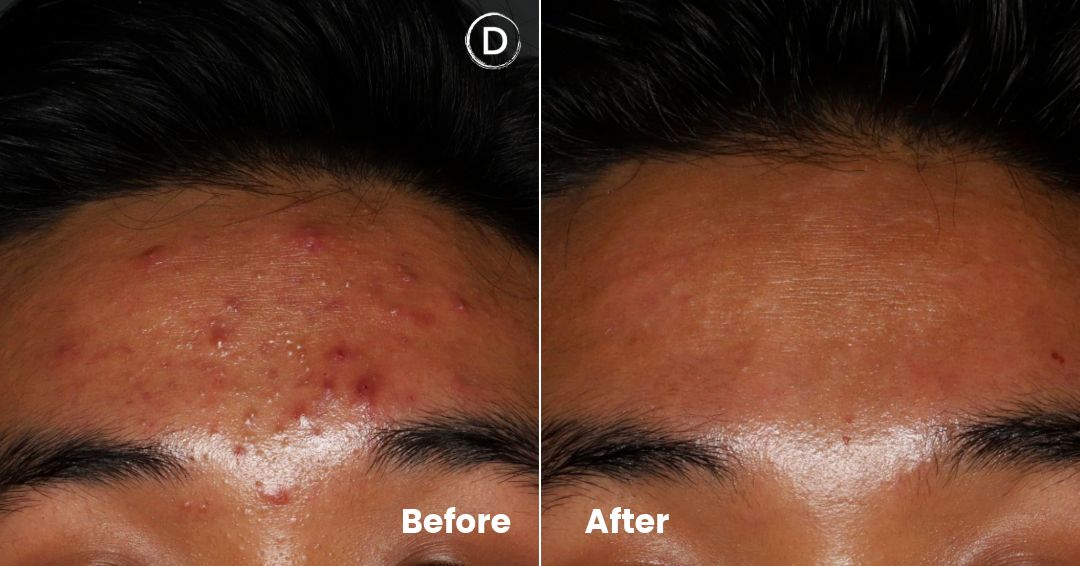
Chronic inflammatory acne resistant to topical treatment improved after a dermatologist-guided course of oral isotretinoin.
 Before & After
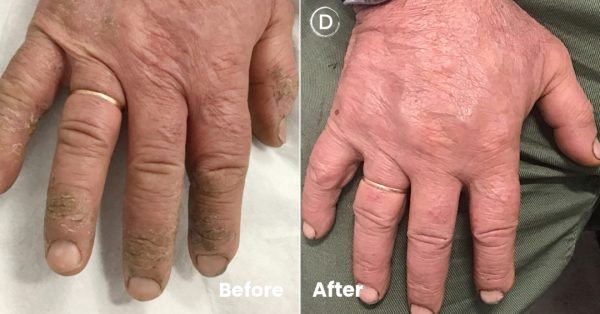
Hand eczema that did not respond to topical creams improved after treatment was escalated to a targeted systemic medication.
 Before & After
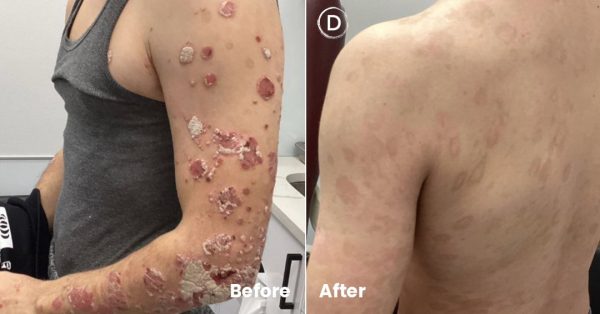
Chronic psoriasis was treated with biologic medication selected for systemic disease control.
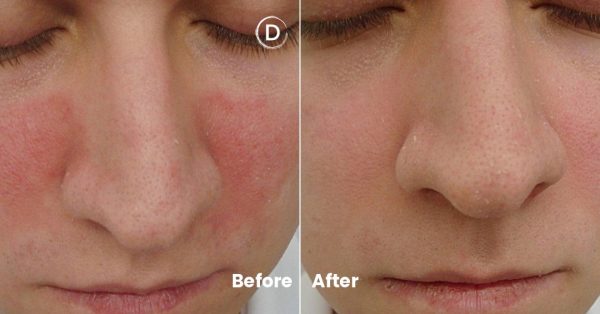 Before & After
An unusual persistent facial rash was biopsied to clarify the diagnosis before a non-steroidal treatment plan was selected.
Individual treatment plans and results vary.
A skin examination evaluates what is present today. Digital mole mapping can add a photographic baseline that makes future change easier to recognize in selected patients.
Full Body Skin Examination
Clinical review of moles, growths and other skin findings.
Dermoscopy
Magnified evaluation of selected lesions when closer inspection is useful.
Digital Mole Mapping
Standardized total body photography for longitudinal comparison.
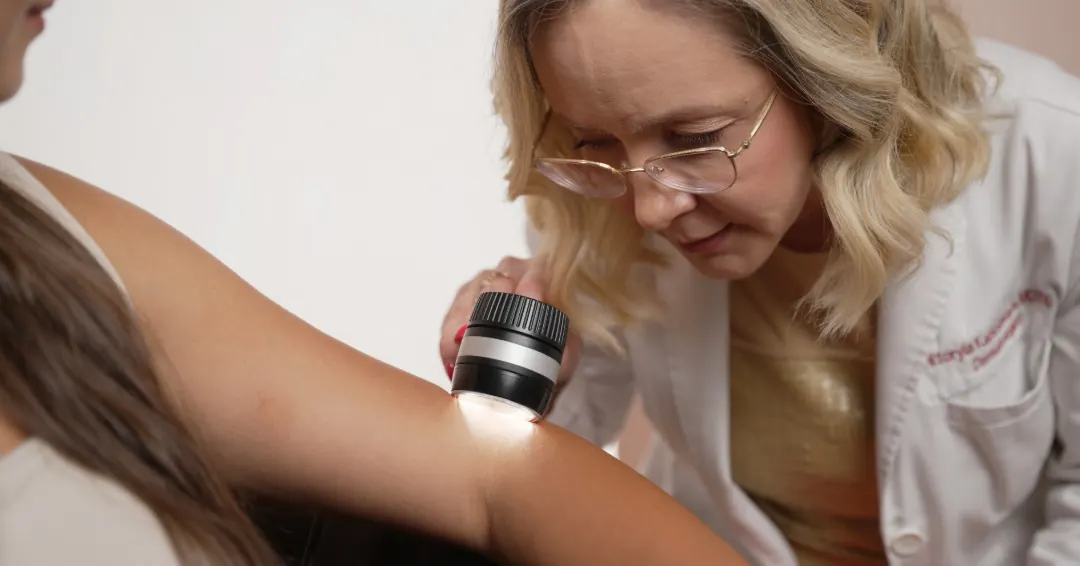
Dermatology Circle evaluates common and complex skin concerns across different ages.
Acne, eczema, rashes, warts, moles and other skin conditions can present differently with age, which is why the clinical context matters.

Board-Certified Dermatologist · Dermatopathologist
Dr. Kazlouskaya brings more than two decades of clinical and academic dermatology experience to the evaluation of medical skin disease, skin cancer prevention, hair and scalp disorders and aesthetic concerns.
Her dermatopathology training adds another layer of diagnostic perspective when a biopsy is needed or when a rash or lesion does not fit a straightforward pattern.
You do not need to know your diagnosis before booking. The purpose of the consultation is to understand what is happening and decide what deserves treatment, monitoring or further evaluation.
Medical and cosmetic concerns may be discussed together when appropriate for the visit.
Dermatology Circle · NYC Schedule Your ConsultationMedical dermatology includes inflammatory skin disease, acne, rosacea, dermatitis, psoriasis, rashes, infections, nail disorders, growths, moles, skin cancer evaluation and many other skin concerns. The diagnosis determines which treatment pathway is appropriate.
No. Many patients schedule because they have a symptom, rash, lesion or change they do not yet understand. The consultation is designed to establish the clinical starting point.
Your history and prior treatment are reviewed, the relevant skin is examined and the findings are interpreted before recommendations are made. Depending on the concern, additional testing or follow-up may be discussed.
Yes. Medical and cosmetic concerns can overlap, and one advantage of dermatologist-led care is that both can be considered within the same clinical context when time and the reason for the visit allow.
Yes. Dermatology Circle evaluates common skin conditions in both adults and children, with the examination and treatment plan adapted to age and clinical circumstances.
A biopsy may be useful when clinical examination alone cannot answer an important diagnostic question and the pathology result is likely to influence treatment or management.
Yes. A changing or unusual lesion can be examined clinically and with dermoscopy when appropriate. Selected patients may also benefit from digital mole mapping for longitudinal monitoring.
A skin check is a clinical examination at a point in time. Mole mapping adds standardized total body photography so existing lesions and new lesions can be compared over time.
The Medical & Cosmetic Dermatology Consultation at Dermatology Circle is $350. More specialized consultations, including hair and scalp evaluation or mole mapping, have different pricing.
Dermatology Circle is located at 801 Madison Avenue, 4th Floor, New York, NY 10065, on Manhattan’s Upper East Side.
Yes. Complex cases and second-opinion consultations may include review of the clinical history, prior diagnoses and treatments, laboratory results, photographs, pathology reports and previous biopsies when appropriate. Extensive records or pathology reviews require additional physician time and are priced individually, so patients with complex cases should contact the office before booking for a customized quote.
Whether the concern is new, persistent, changing or simply unclear, a physician-led evaluation can help determine what deserves treatment and what does not.