DHT Reduction
Dutasteride inhibits type I and type II 5-alpha-reductase enzymes involved in DHT production.
A dermatologist-directed, off-label treatment that delivers small amounts of dutasteride directly into selected areas of the scalp for appropriate patients with pattern hair loss.
Dutasteride inhibits 5-alpha-reductase, the enzyme involved in converting testosterone to dihydrotestosterone, or DHT — an important driver of androgenetic alopecia.
Mesotherapy provides local intradermal delivery, but systemic absorption is not necessarily zero. Appropriate patient selection and counseling remain important.

Mesotherapy refers to small intradermal injections placed directly within the treatment area.
With dutasteride mesotherapy, medication is delivered locally into the scalp rather than taken as a daily oral medication.
Dutasteride inhibits type I and type II 5-alpha-reductase enzymes involved in DHT production.
Small amounts of medication are placed at multiple sites across selected areas of pattern hair loss.
Dutasteride mesotherapy is not an FDA-approved treatment for androgenetic alopecia in the United States.
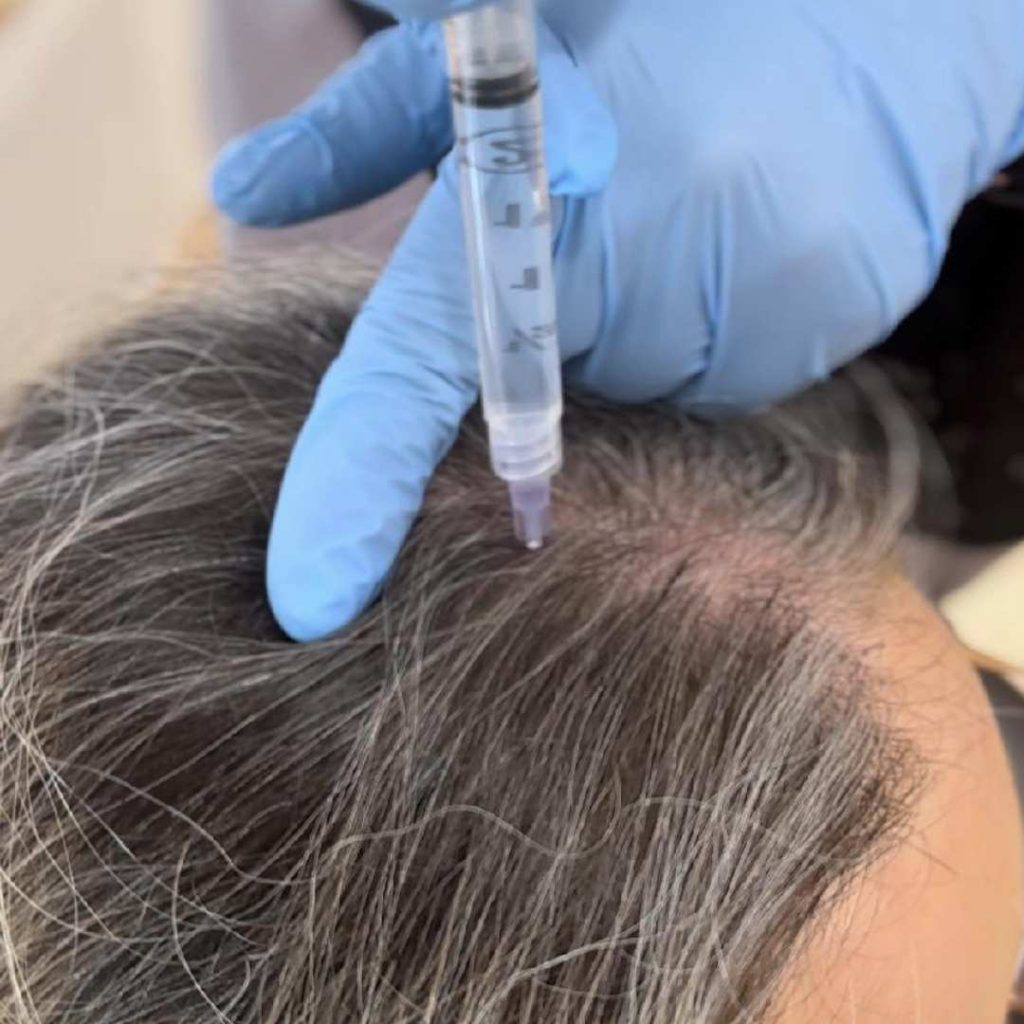
The procedure involves targeted intradermal delivery across selected areas of pattern hair loss.
The scalp, pattern of thinning and treatment history are evaluated before mesotherapy is selected.
The selected treatment area is cleaned and prepared before injection.
Small injections are placed at multiple sites throughout the selected scalp area.
Temporary warmth, tenderness, redness, swelling or small injection-site marks may occur.
Dutasteride targets androgen-dependent follicular miniaturization.
Hair shedding, inflammatory alopecia, nutritional deficiency and scarring conditions require different treatment priorities.
Clinical examination and digital trichoscopy can help distinguish follicular miniaturization from shedding or inflammatory disease.
Explore hair-loss evaluation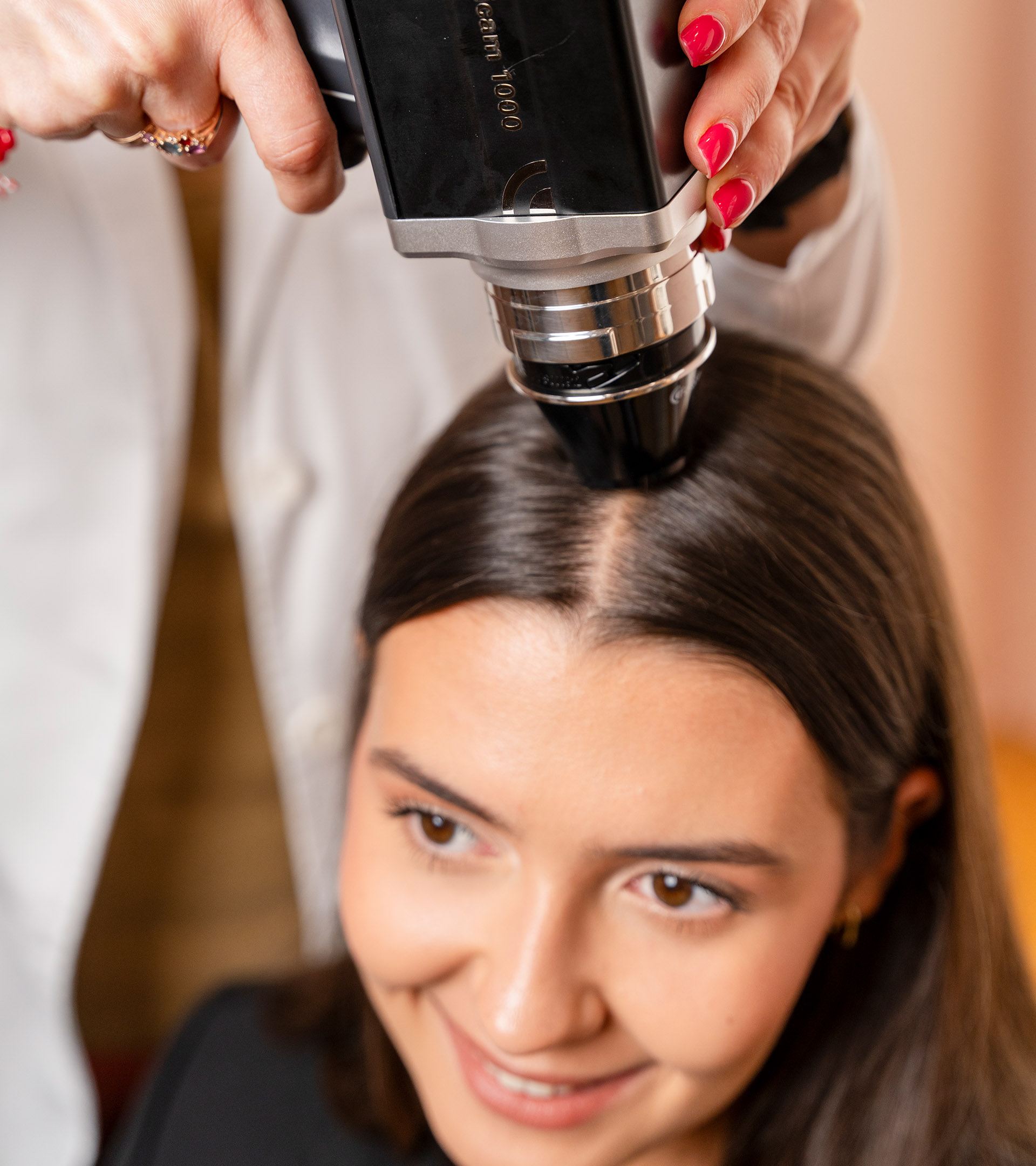
It is primarily considered for selected patients with androgenetic alopecia.
The decision depends on diagnosis, medical history, pregnancy potential, current therapy and treatment goals.
Pattern hair loss is the diagnosis for which intradermal dutasteride has been studied most extensively.
Learn about pattern hair lossSome patients may prefer an intermittent office-based approach rather than daily oral antiandrogen therapy.
Mesotherapy may be considered as an adjunct to an established treatment plan rather than as the only therapy.
Dutasteride requires particularly careful consideration in women because fetal exposure must be avoided.
When inflammation is destroying follicles, controlling the underlying disease takes priority over antiandrogen mesotherapy.
Published studies suggest that intradermal dutasteride may improve hair density in selected patients with pattern hair loss.
Protocols, concentrations, treatment intervals and outcome measures remain heterogeneous.
Published studies have reported improvement in selected patients with androgenetic alopecia.
Concentration, volume, injection technique and treatment interval are not standardized.
Local delivery may reduce systemic exposure, but systemic effects remain possible.
Oral 5-alpha-reductase inhibitors have a broader evidence base for androgenetic alopecia.
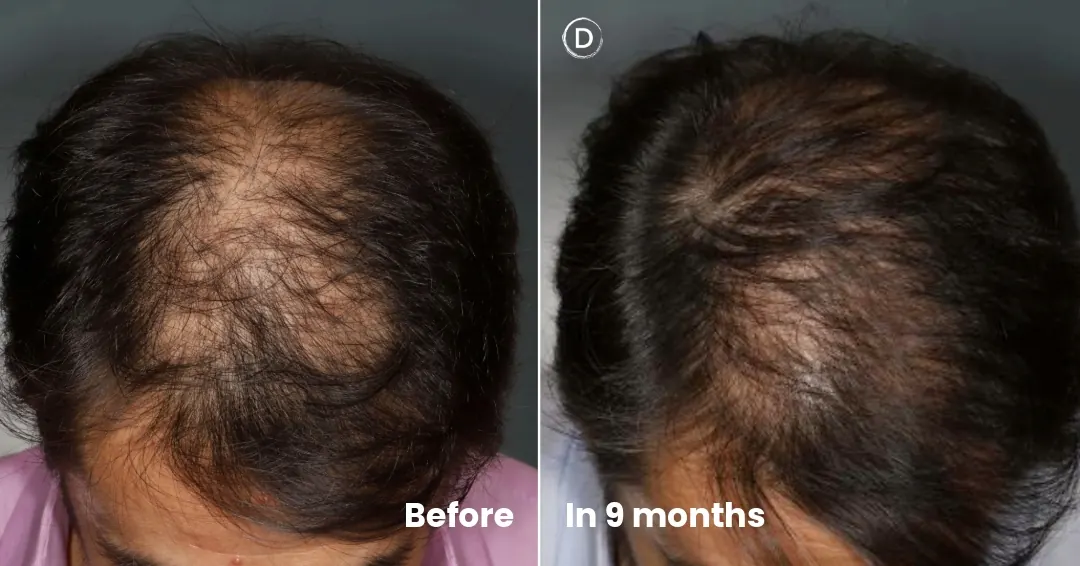
A patient with early thinning wanted to avoid an oral DHT blocker while still addressing progressive pattern hair loss.
Treatment was structured around dutasteride mesotherapy combined with oral minoxidil.
Hair transplantation restores selected areas, but native hair may continue to progress. Long-term medical management can therefore remain important after surgery.
Local delivery and oral treatment should not be treated as interchangeable.
They differ in evidence base, systemic exposure, treatment schedule and practical considerations.
Dutasteride can cause fetal harm and should not be used during pregnancy.
Because intradermal administration can still result in systemic exposure, local treatment should not be assumed to eliminate reproductive risk.
Pattern hair loss is chronic, and one procedure rarely addresses every component of the condition.
Depending on the diagnosis and treatment goals, other therapies may be used before, after or alongside dutasteride mesotherapy.
Explore hair-loss treatmentsTreatment schedules are individualized because published mesotherapy protocols are not standardized.
Diagnosis, medications, reproductive considerations and treatment areas are reviewed.
Small intradermal injections are placed throughout the selected treatment area.
Redness, warmth, tenderness, swelling or small injection marks may occur.
Response is evaluated over time and the treatment interval is adjusted individually.

Selecting an antiandrogen treatment begins with confirming that androgen-driven miniaturization is actually present.
Dr. Viktoryia Kazlouskaya evaluates the clinical pattern, scalp findings and treatment history before deciding whether intradermal dutasteride has a reasonable role.
When necessary, trichoscopy, laboratory testing or scalp biopsy may help distinguish pattern hair loss from shedding disorders and inflammatory alopecias.
Medical diagnosis and treatment of hair and scalp disorders
Additional diagnostic perspective when scalp biopsy is required
Trichoscopy, medical treatment and regenerative approaches
Because dutasteride mesotherapy is off-label and published protocols vary, treatment should be individualized.
Schedule an evaluationDutasteride mesotherapy is an off-label treatment in which dutasteride is injected intradermally into selected areas of the scalp.
No. Dutasteride mesotherapy is an off-label treatment for hair loss in the United States.
No. In the United States, oral dutasteride is FDA-approved for benign prostatic hyperplasia, not androgenetic alopecia.
Not necessarily. Local delivery may reduce systemic exposure, but systemic absorption can still occur.
Temporary pain, redness, swelling, tenderness, itching, bruising or other injection-site reactions may occur.
Selected women with androgenetic alopecia may be considered, but fetal exposure must be avoided and reproductive circumstances require careful discussion.
No. Dutasteride can cause fetal harm and should not be used during pregnancy.
Published protocols vary. At Dermatology Circle, selected patients may be treated at intervals around every three months, with the schedule individualized.
Hair changes occur slowly, so response is generally assessed over several months rather than after a predetermined number of treatments.
Yes. Depending on the diagnosis, the broader plan may include minoxidil, other antiandrogen therapy, PRP, low-level light therapy or selected regenerative approaches.
Arrive with a clean scalp and provide an accurate medical and medication history. Individual instructions are reviewed before treatment.
A dermatologist-led hair-loss evaluation can determine whether dutasteride mesotherapy has a reasonable role and what other treatments should be part of the plan.