A woman in her late 40s may notice that her ponytail feels smaller, her central part looks wider, or suddenly much more hair is coming out in the shower. Because these changes often occur during perimenopause or menopause, it is tempting to attribute everything to estrogen.
But “menopause hair loss” is not one diagnosis. One woman may be developing female pattern hair loss with progressive follicular miniaturization. Another may be experiencing telogen effluvium after illness, rapid weight loss or iron deficiency. A third may have thyroid dysfunction. And a smaller but clinically important group may be developing a scarring disorder such as frontal fibrosing alopecia or an autoimmune process such as alopecia areata.
Hormonal changes during perimenopause and menopause can influence the follicle, hair caliber and hair cycle. A 2025 review specifically identified female pattern hair loss, telogen effluvium and frontal fibrosing alopecia as important hair disorders in postmenopausal women.
Why Can Hair Change During Perimenopause?
Perimenopause is the transition leading up to menopause and can begin years before the final menstrual period. During this period, ovarian hormone production becomes increasingly variable. Estrogen levels fluctuate rather than simply declining in a straight line, and the broader hormonal environment changes over time.
Hair follicles are hormone-responsive structures. Changes during the menopausal transition may influence: hair-cycle timing, shaft caliber, overall density, texture, and follicular behavior.
But that does not mean every woman who develops thinning during perimenopause has the same hormone-driven disorder. Perimenopause may create a setting in which an underlying tendency becomes more visible.
For example, a woman with subtle genetically determined female pattern hair loss may notice very little thinning in her 30s. During her 40s, changes in hair cycling, age-related changes in hair caliber, and an additional episode of shedding may make the previously subtle pattern much easier to see.
It is also important not to attribute every new episode of hair loss to menopause. Other medical and nutritional factors become relevant during this stage of life and may contribute to excessive shedding. Thyroid disease, iron deficiency or low iron stores, vitamin D deficiency, nutritional changes, weight loss, illness, medications, surgery, and significant physiologic or emotional stress can trigger telogen effluvium, sometimes superimposed on female pattern hair loss.
Other forms of alopecia may also first appear or become more noticeable during this period. Frontal fibrosing alopecia (FFA) has a particularly strong association with the peri- and postmenopausal years and is important to recognize early because it is a scarring form of hair loss. Alopecia areata (AA) may also occur in midlife, although its occurrence should not automatically be attributed to menopause.
This is why evaluating hair loss during perimenopause requires identifying the pattern and cause of hair loss, rather than assuming that changing estrogen levels are responsible.
The life stage provides context. It does not establish the diagnosis.
Estrogen, Androgens and the Hair Cycle
Hormones do affect our hair, but the relationship is not as simple as “more estrogen means better hair” or “less estrogen causes hair loss.”
During perimenopause, estrogen levels fluctuate and eventually decline. These changes may affect the hair cycle, hair texture and density. However, a low estrogen level does not tell us why a woman is losing hair, and replacing estrogen does not automatically reverse hair loss.
This is important when discussing hormone replacement therapy (HRT). Some women notice changes in their hair while taking HRT, but current evidence does not support using HRT as a standard treatment for female pattern hair loss. Decisions about HRT should be based primarily on menopausal symptoms and a woman’s overall health, not on the expectation that it will restore her hair.
Androgens also play a role, particularly in women who are genetically susceptible to female pattern hair loss. As the hormonal environment changes with age, previously subtle miniaturization may become more noticeable. But this does not mean that women suddenly become “testosterone dominant” after menopause. In fact, many women with female pattern hair loss have completely normal androgen levels.
Ultimately, what happens to the hair depends on a combination of genetics, follicular sensitivity, age, local hormone activity and other health factors, not simply the estrogen or testosterone level on a blood test.
This is also why extensive hormone testing is not necessary for every woman who notices thinning during perimenopause or menopause.
What Does Menopause Hair Loss Usually Look Like?
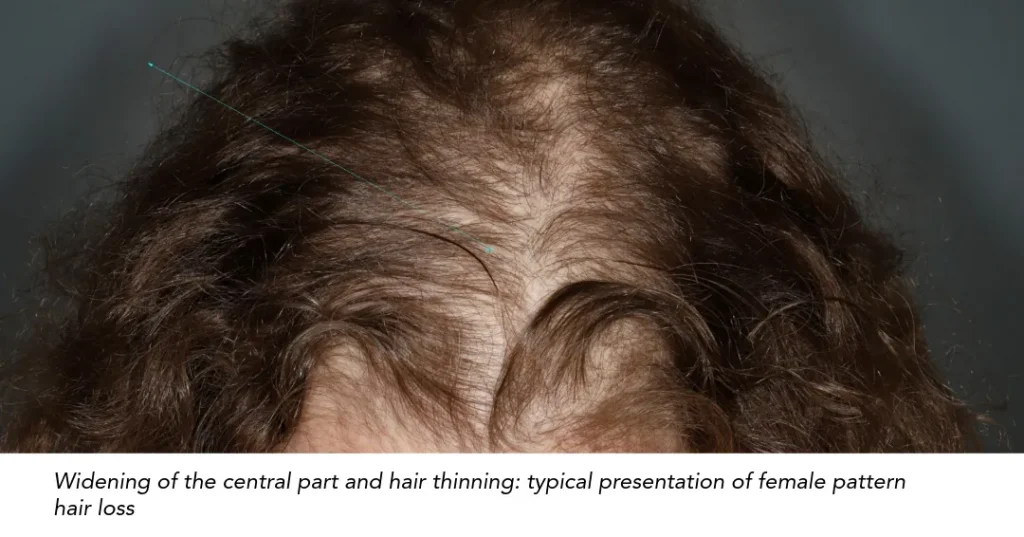
There is no single appearance. Women commonly describe: a widening central part, a smaller ponytail, reduced density over the top of the scalp, increased scalp visibility under bright lighting, more hair in the shower or brush, finer hair, changes in hair texture, or less volume during styling.
Those complaints may sound similar, but they can represent very different biological processes. A woman who is suddenly shedding hundreds of hairs may have a different condition from a woman whose part has slowly widened over five years. That distinction is central to treatment.
Why Does the Part Become Wider During Midlife?
A widening part often reflects more than simply “losing too many hairs.” In female pattern hair loss, follicles undergo miniaturization.
That means a follicle that once produced a thick terminal hair may gradually produce:
- A thinner hair;
- A shorter hair;
- A less pigmented hair;
- Eventually a hair that contributes very little visible coverage.
When enough follicles undergo this change, the scalp becomes increasingly visible through the central part. A woman can therefore lose substantial cosmetic density without developing obvious bald patches.
Dermatology Circle’s page on androgenetic alopecia and female pattern hair loss explains this progressive miniaturization pattern in more detail.
For a broader overview of other disorders that disproportionately affect women, see hair loss conditions that affect women.
Telogen Effluvium During Perimenopause and Menopause
Midlife can bring many potential telogen effluvium triggers that have little or nothing to do with ovarian hormones.
These may include:
- Significant illness;
- Surgery;
- Psychological or physiologic stress;
- Rapid weight loss;
- GLP-1-associated weight loss;
- Restrictive dieting;
- Iron deficiency;
- Thyroid dysfunction;
- Medication changes.
The timeline matters. Telogen effluvium usually does not begin the day after a trigger. There is often a delay between the physiologic event and noticeable shedding.
For example, someone who develops dramatic shedding in March may need to think back to January or even earlier rather than assuming the current hormone level is the entire explanation. This is why history is such an important part of a hair-loss evaluation.
Telogen Effluvium vs. Female Pattern Hair Loss
| Feature | Telogen Effluvium | Female Pattern Hair Loss |
|---|---|---|
| Typical complaint | Increased shedding | Gradual thinning / density loss |
| Onset | Often more abrupt | Usually gradual |
| Distribution | Usually diffuse | Often central/top scalp predominant |
| Widening part | May become more noticeable as density falls | Characteristic finding |
| Miniaturization | Not the defining feature | Present |
| Trigger | Often identifiable | Genetic/follicular susceptibility |
| Trichoscopy | Helpful | Particularly useful |
| Can coexist with the other? | Yes | Yes |
This table is educational rather than a self-diagnostic tool.
When Hairline Recession Is Not Just Menopause
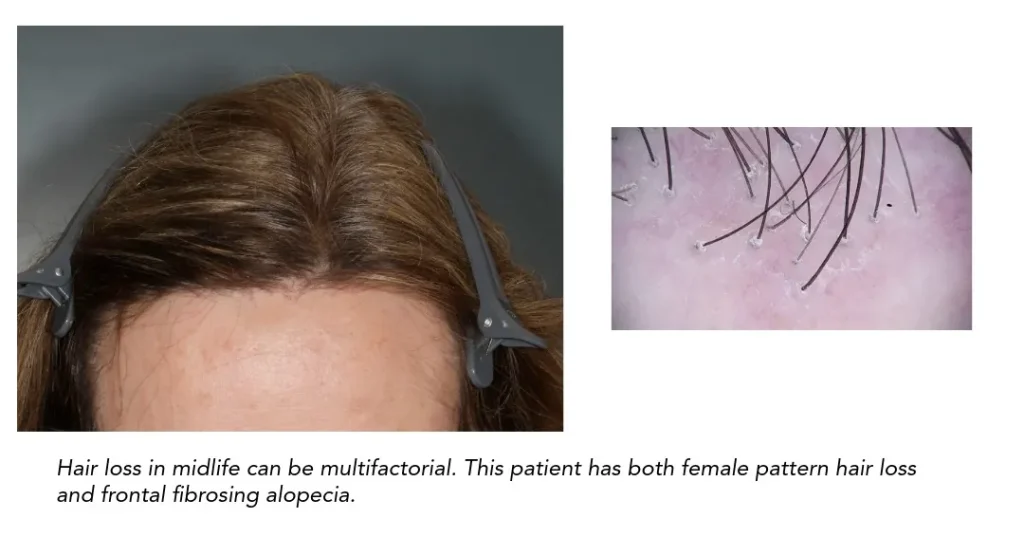
A receding frontal hairline deserves a different level of attention. Frontal fibrosing alopecia (FFA) is an inflammatory scarring alopecia that is particularly important in women around and after menopause. It often causes progressive recession along the frontal and temporal hairline.
Other clues may include:
- Eyebrow thinning or loss;
- Itching, burning or tenderness;
- Perifollicular redness;
- Scale surrounding individual follicles;
- Smoother or paler skin where follicles have disappeared;
- Facial papules in some patients.
The American Academy of Dermatology notes that FFA is most often diagnosed after menopause and that eyebrow loss is common. Unlike ordinary shedding, scarring alopecia can permanently destroy follicles. Once a follicle has been completely replaced by scar tissue, regrowth from that follicle may no longer be possible.
That is why progressive hairline recession should not automatically be dismissed as normal aging or “just hormones.”
Dermatology Circle’s overview of lichen planopilaris and frontal fibrosing alopecia explains how these inflammatory disorders are evaluated and why determining disease activity matters.
Why Hair-Loss Diagnosis Matters More Than Age
Consider four women, all 51 years old.
Patient A
Her central part has gradually widened for five years.
Trichoscopy shows miniaturization.
The likely process is female pattern hair loss.
Patient B
She suddenly begins shedding heavily three months after a major illness.
The pattern is more consistent with telogen effluvium.
Patient C
She has diffuse thinning, fatigue and laboratory evidence of a medical contributor.
Her hair changes cannot be treated appropriately without addressing that problem.
Patient D
Her frontal hairline is gradually receding and her eyebrows are thinning.
Examination shows perifollicular inflammation.
A scarring alopecia must be considered.
All four women are menopausal.
They do not have the same diagnosis.
Menopausal status provides clinical context, but it is not the diagnosis.
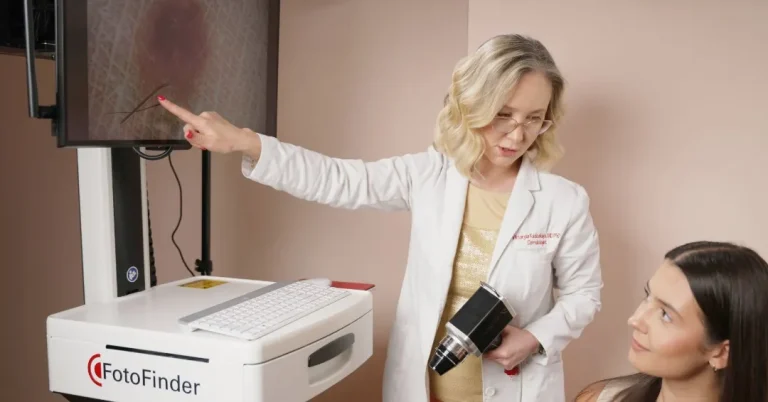
The Role of Trichoscopy
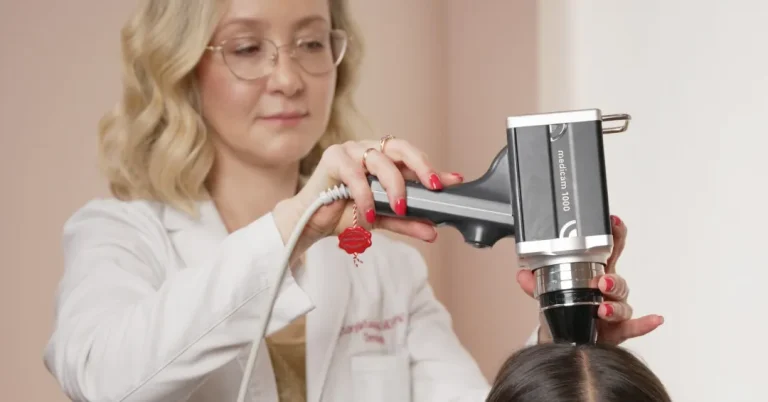
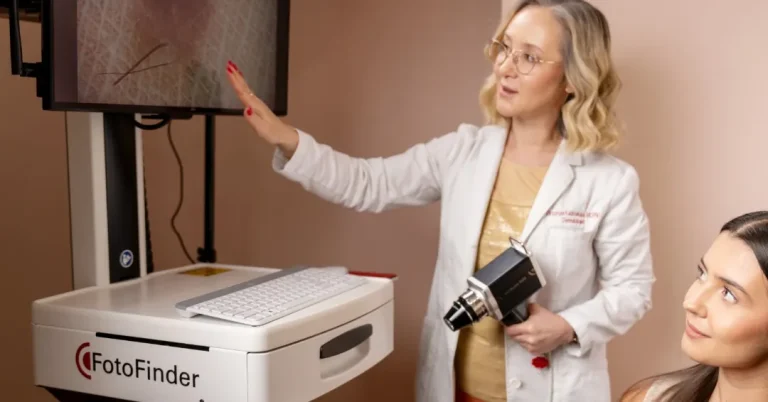
Trichoscopy is particularly useful when a woman reports both thinning and shedding. Telogen effluvium and female pattern hair loss can overlap clinically, but progressive shaft-diameter variability and miniaturization support a pattern-hair-loss component.
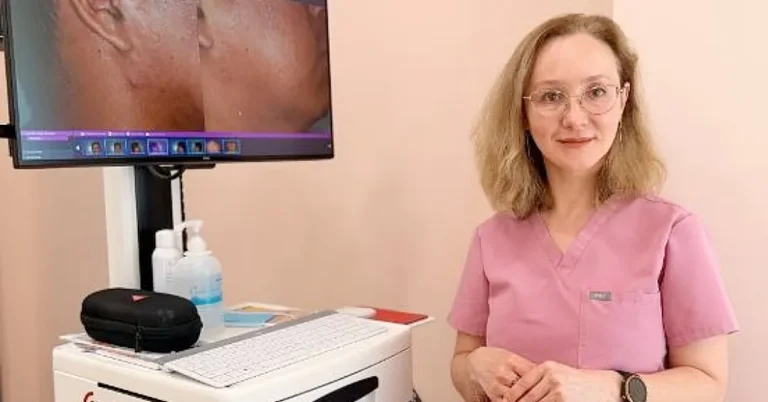
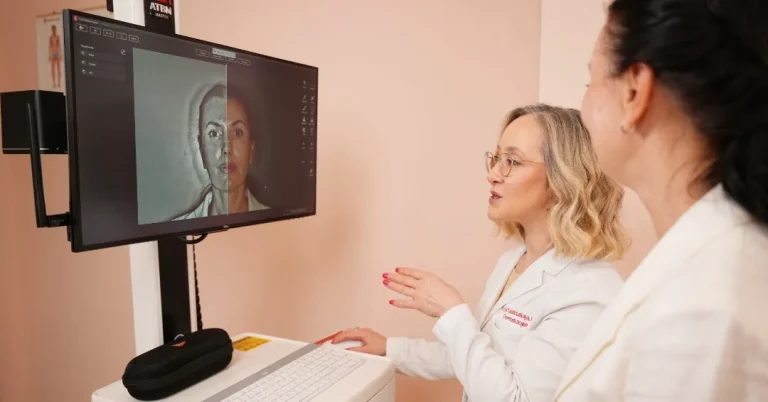
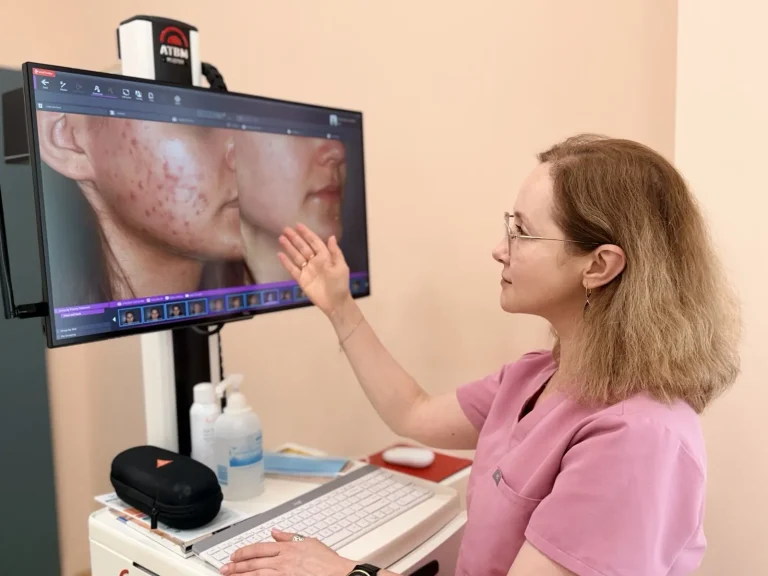
Digital trichoscopy for hair loss also allows images to be stored and compared later. That matters because hair treatment is slow.
Standardized baseline photography and repeat trichoscopy can provide a more reliable assessment than trying to remember whether the part “looked better six months ago.”
The broader hair loss consultation at Dermatology Circle combines history, examination, trichoscopy and selective testing rather than automatically ordering every available test.
When Is a Scalp Biopsy Needed?
A scalp biopsy removes a small sample containing follicles so that the tissue can be examined microscopically. Most women with straightforward female pattern hair loss or typical telogen effluvium do not need a scalp biopsy.
The biopsy result is interpreted together with the clinical pattern and trichoscopy rather than in isolation.
Dermatology Circle’s guide to scalp biopsy for unexplained or scarring hair loss explains when this additional step may be useful.
How Is Hair Loss During Menopause Treated?
There is no single treatment for “menopause hair loss” because hair thinning during this stage of life is often multifactorial. A woman may have female pattern hair loss together with increased shedding, low iron stores, thyroid disease, nutritional deficiencies, or another scalp condition.
This is why treatment at our practice starts with determining what is actually happening to the hair follicles. We evaluate the pattern of loss, examine the scalp and use trichoscopy to look for miniaturization, inflammation and changes in hair density and caliber. Laboratory testing may be recommended when the history suggests a medical or nutritional contributor.
Treatment is then individualized. Minoxidil, topical or oral, is frequently used when female pattern hair loss is present. Selected women may also benefit from spironolactone, finasteride or dutasteride, depending on their diagnosis, medical history and reproductive status. If telogen effluvium is contributing, identifying and correcting triggers such as iron deficiency, thyroid dysfunction, illness, weight loss or nutritional problems is equally important. Scarring or inflammatory alopecia requires treatment directed at the underlying inflammation.
Why We Often Combine Treatments
In our experience, women developing hair loss during perimenopause or menopause frequently have more than one factor affecting their hair at the same time. For this reason, a combination approach may be more useful than relying on a single medication.
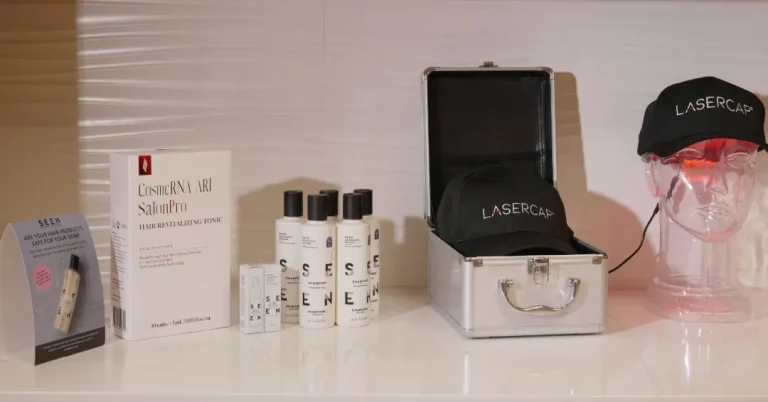
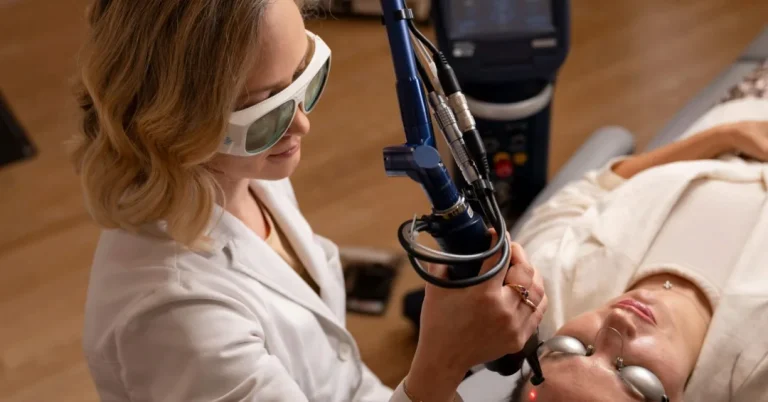
Along with medical treatment, platelet-rich plasma (PRP) and low-level laser/light therapy (LLLT) can be helpful adjuncts for appropriate patients. These treatments work through different pathways and can support follicular growth without attempting to “replace” menopausal hormones. Other regenerative procedures may also be considered selectively as part of an individualized treatment plan.
The goal is not simply to treat menopause. It is to identify shedding, miniaturization, inflammation and medical contributors, and address each component that is actually present.
Hormone replacement therapy (HRT) should be considered separately. Although hormones influence hair biology, HRT does not automatically improve hair loss and is not currently considered a standard treatment for menopause-related hair thinning alone.
Real Patient Hair-Loss Treatment Results
These cases illustrate why the diagnosis and the underlying follicular process matter more than age alone. One patient was treated for long-standing female pattern hair loss with a combination plan, while the other was treated for alopecia areata in an ophiasis pattern. Individual results vary, and another patient’s outcome cannot be predicted from these examples.
Long-Standing Female Pattern Hair Loss: Combination Treatment
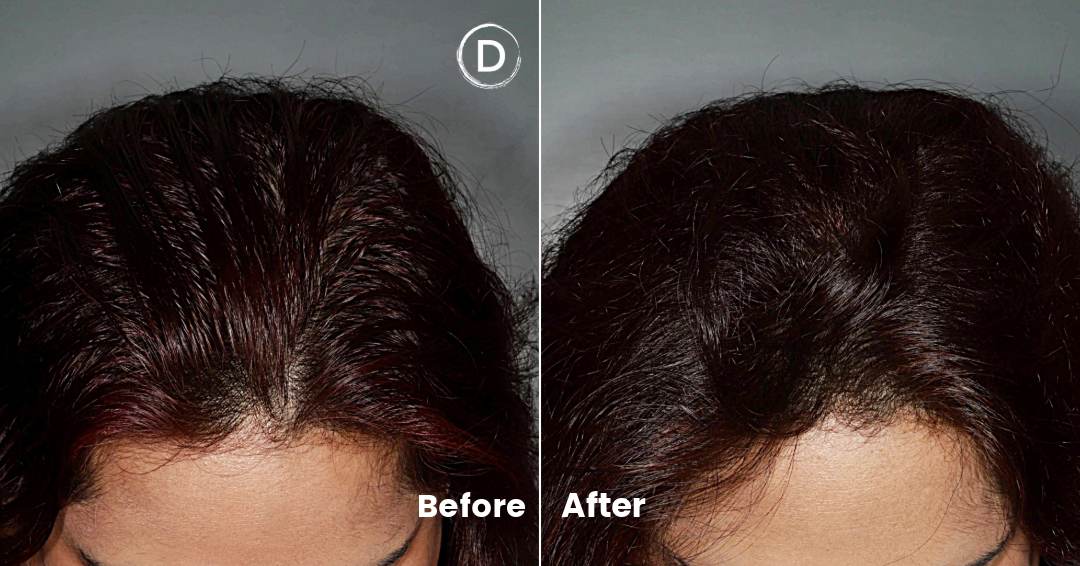
This patient had long-standing female pattern hair loss that had recently worsened in the setting of additional health factors. Her individualized plan combined medical treatment, KeraLase laser therapy and dutasteride mesotherapy, alongside attention to overall health and dietary needs.
Alopecia Areata in an Ophiasis Pattern in the 70s
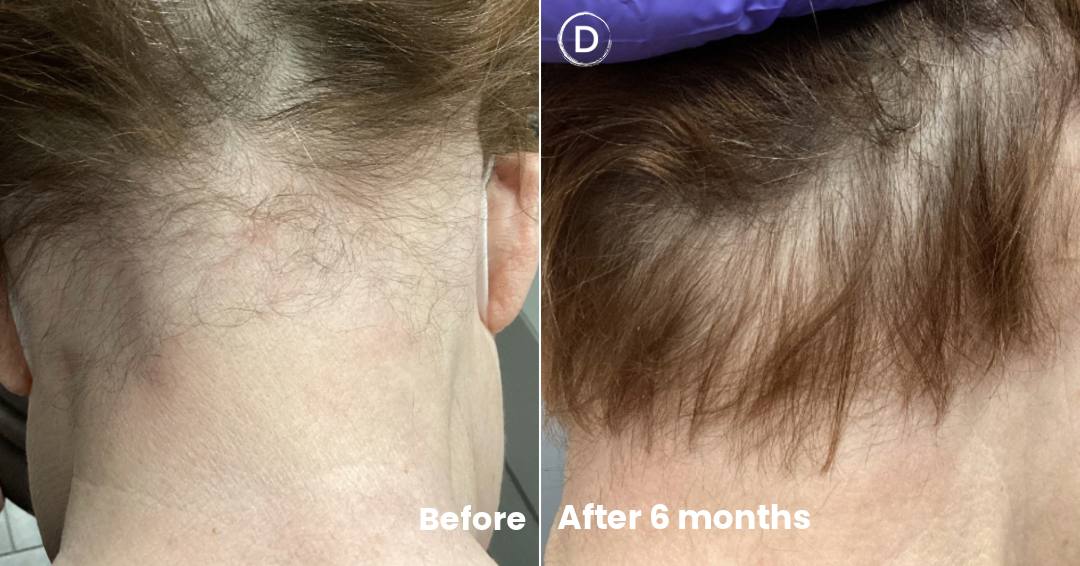
This patient in her 70s presented with alopecia areata in an ophiasis pattern, affecting the hair around the back and sides of the scalp. A diagnosis-specific plan using strategic corticosteroid injections and topical treatment produced visible improvement in fullness.