A hair transplant can move healthy follicles into areas where density has been lost, but it does not eliminate future thinning. Patients who undergo a transplant often have questions in the months that follow. Early on, most are worried about shedding, which is usually a normal, expected part of the healing process. But if meaningful improvement hasn’t happened by around 12 months, it’s reasonable to seek evaluation.
In that situation, the first question shouldn’t automatically be “did the grafts fail?”
A medical hair-loss evaluation can separate expected postoperative shedding from an ongoing process (androgenetic alopecia, telogen effluvium, inflammation, scarring alopecia, or a problem specific to the transplanted area itself). The real question to answer is which hairs are being lost, and why. Occasionally, persistent loss, poor growth, scalp symptoms, or an unusual pattern points to something else entirely: a hair-loss disorder that was already present before the transplant, or one that became active afterward.
It’s also worth remembering that pattern hair loss is progressive on its own. That’s why understanding how to protect and maintain hair after a transplant matters just as much as the procedure itself. It’s how you protect the investment you’ve already made.
What Hair Shedding Is Expected After Transplantation?
Seeing hair fall out after a transplant can be alarming, particularly after investing months of planning and recovery into the procedure. But early shedding of the visible transplanted hairs is often part of the normal postoperative cycle. After follicles are transplanted, the hair shafts may shed while the follicle remains in the scalp. The follicle then goes through a resting period before producing a new hair.
This means the appearance of the scalp during the first few months can be misleading.
A typical early course may include:
- Postoperative crusting and temporary redness;
- Shedding of transplanted hair shafts during the first several weeks;
- A period in which the recipient area may actually appear thinner;
- Gradual emergence of new hairs over the following months;
- Progressive improvement in thickness and coverage as the new hairs mature.
The American Academy of Dermatology notes that transplanted hairs commonly fall out between approximately two and eight weeks after surgery, and that the scalp may look thinner around the third month before growth becomes apparent. Most patients should therefore not judge the final outcome of a transplant during the first several months.
The important distinction is between expected postoperative shedding and hair loss that continues beyond the expected recovery pattern or affects areas that were not actually transplanted.
What Is Shock Loss?
“Shock loss” generally refers to temporary shedding that occurs around the transplant procedure. The term can be confusing because patients sometimes use it for any hair loss that occurs after surgery.
More specifically, recipient-site shock loss can affect native hairs surrounding the transplanted follicles.
Surgical trauma, inflammation, temporary disruption of the hair cycle, and other perioperative factors may push susceptible hairs into a resting phase. Shedding often becomes noticeable several weeks after surgery. In many cases, these hairs regrow.
The situation becomes more complicated when the native hairs were already significantly miniaturized by androgenetic alopecia. Some weakened follicles may have been close to disappearing even before surgery, making recovery less predictable.
This is one reason photographs from before the transplant are so useful. They help determine whether apparent post-transplant thinning represents:
- Loss of transplanted hairs;
- Temporary shock loss;
- Continued miniaturization of native hair;
- Or a combination of several processes.
When Should Transplanted Hair Begin Growing?
After the initial shedding phase, newly transplanted follicles generally begin producing visible hairs over the following months. The American Academy of Dermatology reports that most patients begin appreciating results between approximately six and nine months, although some require around 12 months to see the result more fully.
That does not mean nothing happens before six months. Early new growth can begin several months after the procedure, but these hairs may initially be short, fine, or lightly pigmented. They generally need time to lengthen and mature.
If a patient tells me that a transplant is “not growing,” the timing matters enormously. Poor visible density at three months means something very different from little meaningful growth at 12 months.
Why Native Hair Can Continue Thinning Even If the Grafts Survive
This is one of the most important concepts after hair transplantation. A transplant redistributes follicles. It does not necessarily stop the biological condition that caused the original hair loss. Most hair transplants for male or female pattern thinning use follicles from a relatively androgen-resistant donor area and relocate them into areas of reduced density.
Those transplanted follicles may survive while the patient’s original, non-transplanted hairs continue to miniaturize.
A patient may initially have an excellent cosmetic result and then notice several years later that the overall density is declining again. The grafts may still be present, but the surrounding native hair has become progressively thinner.
This can create:
- Widening spaces between transplanted hairs;
- Reduced density behind the transplanted hairline;
- New thinning at the crown;
- A visible difference between transplanted and native hair;
- An appearance that the original transplant has “stopped working.”
The problem in these cases is not necessarily graft survival. It may be ongoing native-hair loss.
Could Androgenetic Alopecia Still Be Progressing?
Yes. Androgenetic alopecia is a chronic condition. Hair transplantation can improve coverage, but it does not automatically switch off ongoing follicular miniaturization elsewhere on the scalp.
This is particularly relevant in younger patients who undergo transplantation while their pattern of loss is still evolving.
Imagine a patient who receives grafts along the frontal hairline at age 30.
Several years later:
- The transplanted frontal follicles may remain;
- The native hairs immediately behind them may become thinner;
- The crown may continue losing density;
- The patient may perceive the entire transplant as deteriorating.
This is one reason long-term hair restoration planning often includes discussion of medical treatment, not simply surgery. During a comprehensive hair loss consultation, the goal is to determine whether active miniaturization is still occurring and whether treatment of the underlying pattern hair loss is appropriate.
Could Scalp Inflammation Affect the Result?
Not every post-transplant problem is androgenetic alopecia. The condition of the scalp matters as well.
A patient with persistent redness, scaling, pustules, crusting, burning, tenderness, or significant itching should not automatically assume that these symptoms are simply part of having had a transplant.
The possibilities vary widely. Relatively common scalp conditions such as seborrheic dermatitis or folliculitis may occur independently of transplantation. Other inflammatory conditions require a different level of attention because they may involve the follicles themselves. This is where medical evaluation becomes different from simply measuring graft density.
When Scarring Alopecia Should Be Considered
Scarring alopecia is uncommon, but it is one of the diagnoses that should not be missed in a patient with unexplained post-transplant hair loss. Conditions such as lichen planopilaris and frontal fibrosing alopecia involve inflammation targeting the hair follicle. Over time, active disease can destroy follicles and replace them with scar tissue.
Possible clues include:
- Persistent scalp itching or burning;
- Perifollicular redness;
- Scaling concentrated around individual follicles;
- Smooth areas where follicular openings have disappeared;
- Patchy or irregular loss;
- Progressive loss despite otherwise reasonable treatment;
- Unexpectedly poor growth in a transplanted area.
There are published reports of LPP being diagnosed in patients who presented with suboptimal growth after hair transplantation. There are also reports of LPP or FFA becoming clinically apparent after transplantation. This does not mean hair transplantation routinely causes scarring alopecia, and a causal relationship has not been established.
Another important nuance is that recently transplanted scalp tissue can show inflammation or fibrosis simply as part of the surgical healing process. For that reason, a diagnosis of LPP should not be made from one finding in isolation.
How Trichoscopy Evaluates Transplanted and Native Hair
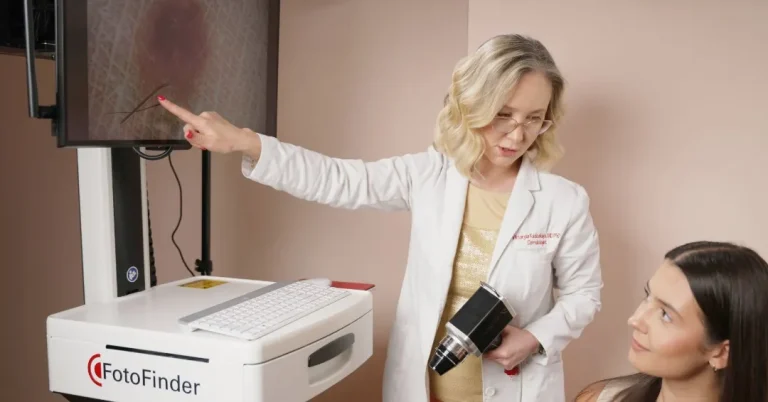
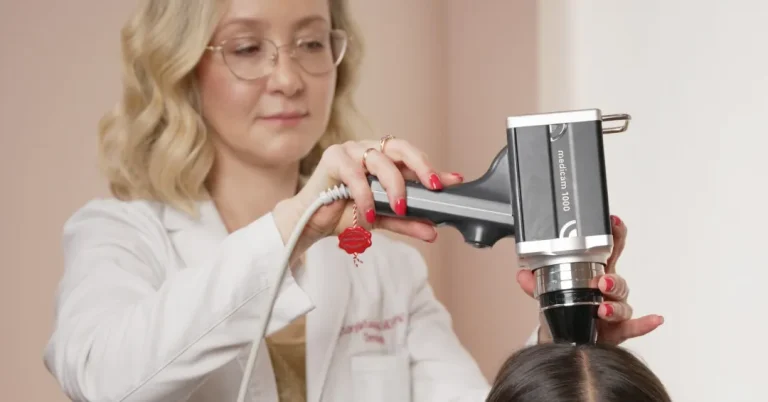
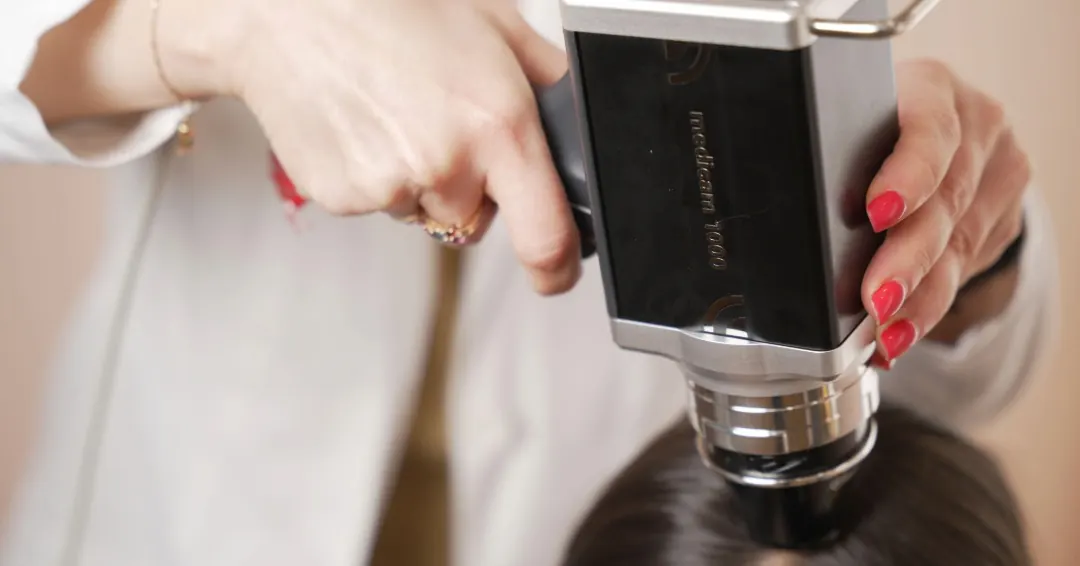
One of the most useful tools in post-transplant evaluation is trichoscopy. Trichoscopy is a magnified examination of the scalp and follicles.
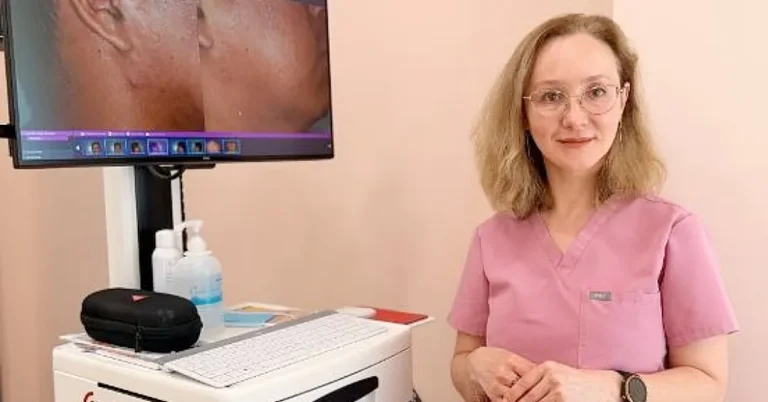
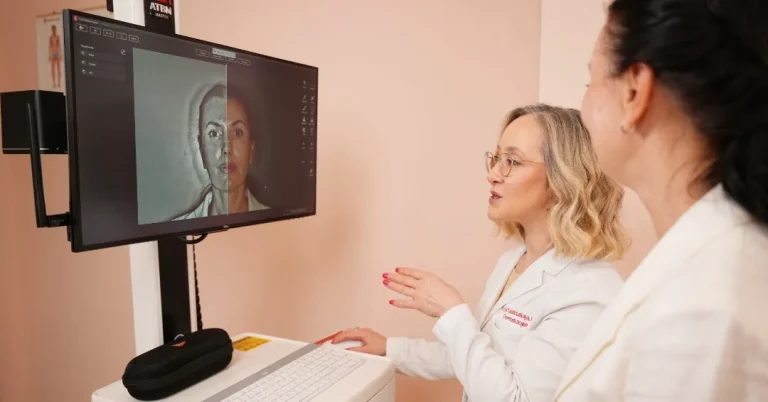
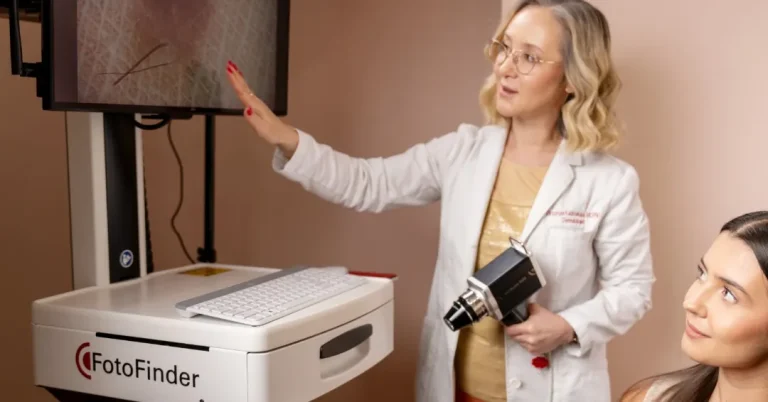
At Dermatology Circle, digital trichoscopy with FotoFinder can also provide standardized photographs that can be saved and compared over time. That longitudinal comparison is particularly helpful after transplantation. Rather than relying on memory or photographs taken under different lighting, hair length, or styling conditions, follow-up imaging can help answer: Is density actually declining, or does it only appear different today?
And, if density is changing: Are the transplanted follicles affected, the native follicles, or both?
When Laboratory Testing Is Useful
Not every patient with thinning after a hair transplant needs extensive laboratory testing. Blood work becomes more useful when the pattern suggests that something beyond the transplant itself may be contributing.
For example, a patient may develop diffuse shedding months or years after transplantation because of telogen effluvium triggered by an unrelated event. In these situations, laboratory testing can be targeted to the history rather than ordering every possible hair-loss test.
A transplant does not protect a patient from developing another type of hair loss later.
When a Scalp Biopsy Becomes Appropriate
Most patients with straightforward androgenetic alopecia do not need a scalp biopsy. A biopsy becomes more valuable when the clinical diagnosis remains uncertain or when there are signs suggesting inflammatory or scarring disease.
Examples include:
- Unexplained progressive loss;
- Unusual patchy thinning;
- Persistent perifollicular redness or scale;
- Loss of follicular openings;
- Significant scalp symptoms;
- Unexpectedly poor graft growth;
- Concern for LPP, FFA, CCCA, or another cicatricial alopecia;
- Conflicting clinical and trichoscopic findings.
During a scalp biopsy, a small sample of scalp containing hair follicles is removed under local anesthesia and examined microscopically. Where the sample is taken matters. In suspected inflammatory alopecia, biopsying an old completely scarred area may provide less useful information than sampling an appropriately selected active margin.
The pathology also needs to be interpreted in clinical context, especially in a previously transplanted scalp where surgical changes can complicate interpretation.
Medical Treatment After a Hair Transplant
For androgenetic alopecia, treatment may include options such as minoxidil and, in appropriately selected patients, medications targeting androgen-related miniaturization. The purpose of medical therapy after transplantation is often different from the purpose of the surgery.
Surgery places follicles where additional coverage is wanted. Medical treatment can help preserve susceptible native follicles and slow further progression when the underlying diagnosis is pattern hair loss.
If active inflammatory or scarring alopecia is present, however, the priority changes. Controlling the inflammatory disease becomes more important than adding cosmetic density.
Where PRP, LLLT, or Other Adjunctive Treatments May Fit
Patients who experience thinning after a transplant are often offered a long list of regenerative treatments. This is exactly where diagnosis should come first.
PRP
Platelet-rich plasma for hair loss has its strongest rationale as an adjunctive treatment for selected patients with viable follicles, particularly in androgenetic alopecia. It may be incorporated alongside medical treatment when appropriate.
Low-Level Light Therapy
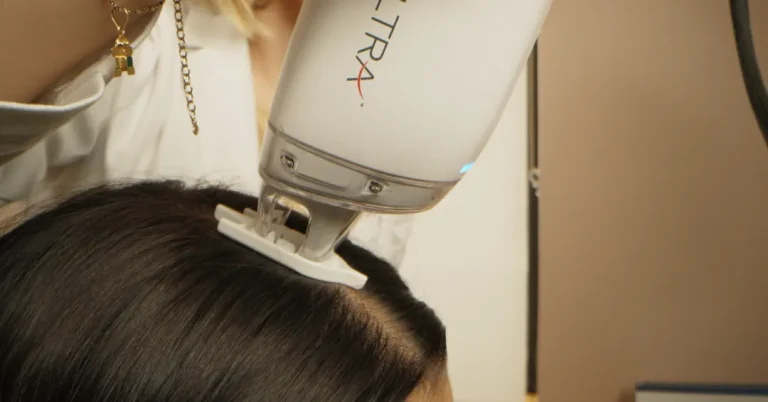
Low-level light therapy for hair loss is another non-invasive adjunct that may have a role in selected patients with pattern hair loss. It can potentially complement, but not replace, medical management.
Hair Transplant Shedding vs. Ongoing Hair Loss
| Situation | Possible Explanation | What to Consider |
|---|---|---|
| Transplanted hairs shed during the first several weeks | Expected postoperative shedding | Follow the transplant surgeon’s recovery plan |
| Scalp looks thinner around 2–3 months | Early shedding or temporary shock loss | Often too early to judge final transplant growth |
| Native hair around grafts becomes progressively finer | Continuing androgenetic alopecia | Dermatologic evaluation and long-term treatment strategy |
| Diffuse shedding months or years later | Telogen effluvium or another unrelated trigger | History, examination and selected laboratory testing |
| Persistent redness, scaling, burning, or perifollicular inflammation | Inflammatory scalp condition | Trichoscopy and dermatologist evaluation |
| Patchy loss with loss of follicular openings | Possible scarring alopecia | Prompt specialist evaluation; biopsy may be appropriate |
| Limited growth many months after transplant | Multiple possibilities, including graft-related and medical causes | Compare surgical history, photographs, trichoscopy and scalp findings |
Hair Transplant Results: Real Patient Cases
The following cases illustrate two different reasons patients may seek care after hair transplantation: protecting an existing result as hair loss continues to evolve, and addressing limited growth after an unsuccessful procedure.
Post Hair Transplant Maintenance and Optimization
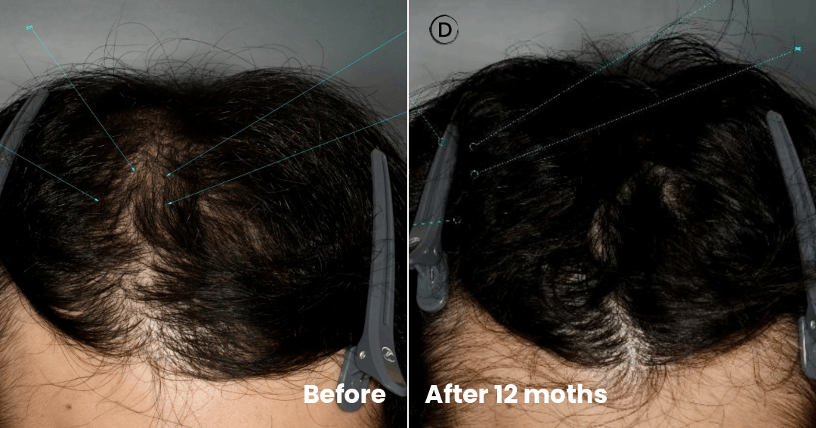
This case involved a young male patient who wanted to preserve and optimize the results of a previous hair transplant. The treatment strategy focused on protecting native hair, supporting overall density, and monitoring progression over time rather than performing another surgical procedure.
Hair Restoration After an Unsuccessful Hair Transplant
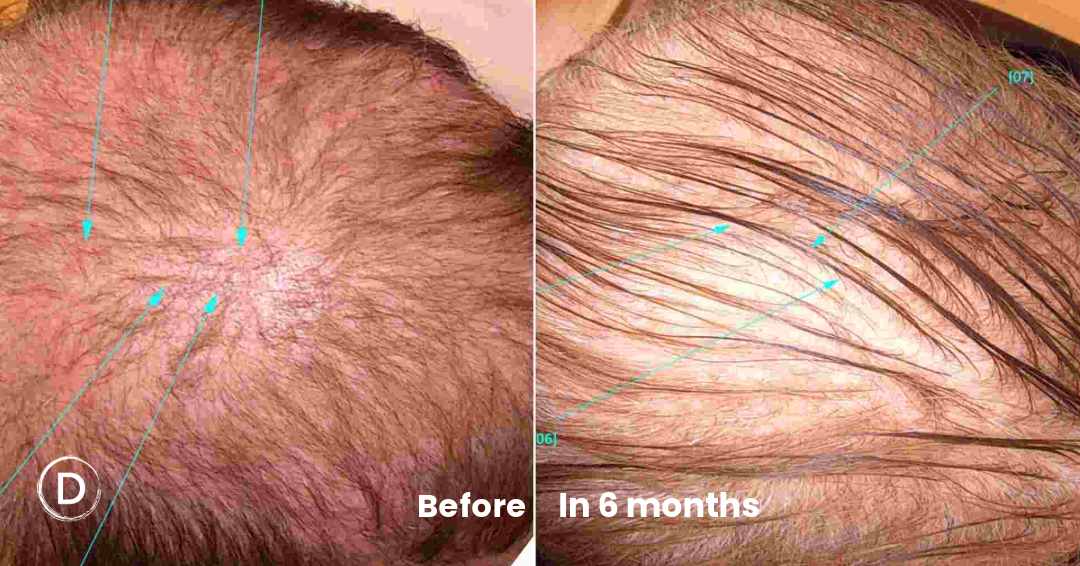
This patient had experienced little to no visible growth after a previous hair transplant. A personalized medical hair-restoration plan using targeted treatments helped improve density and achieve a meaningful cosmetic result.
When to Return to the Transplant Surgeon vs. See a Medical Hair-Loss Dermatologist
Both clinicians can play important but different roles.
Return to Your Transplant Surgeon
Your transplant surgeon should generally be the first contact for concerns related directly to the procedure or immediate postoperative recovery, including:
- Questions about graft placement;
- Wound or donor-site healing;
- Postoperative crusting or significant swelling;
- Suspected infection or bleeding;
- Surgical scarring or early procedural complications;
- Whether graft growth is occurring according to the expected surgical timeline.
The surgeon also knows exactly how many grafts were placed, where they were placed, and how the procedure was performed.
See a Medical Hair-Loss Dermatologist
A medical hair-loss dermatologist becomes particularly useful when the question shifts from “How did the procedure heal?” to “Why is my hair still thinning after the transplant?”
In many cases, the best approach is collaborative rather than either/or. The transplant surgeon evaluates the surgical result. The dermatologist evaluates the biology of the hair loss that continues around it.
If your density is declining after a transplant, a medical hair-loss evaluation at Dermatology Circle can help determine whether the issue involves temporary shedding, continuing native-hair loss, inflammation, or another process.