A patient comparing finasteride and dutasteride usually arrives at one simple conclusion very quickly: dutasteride blocks more DHT, so it must be the better hair-loss medication.
Pharmacologically, dutasteride does suppress dihydrotestosterone more strongly than finasteride. However, choosing a long-term treatment requires much more context.
Several comparative studies have found greater average improvements in hair count or hair caliber with dutasteride. But treatment selection is not based only on how completely a medication suppresses DHT.
Finasteride has an FDA-approved indication for male pattern hair loss in the United States, decades of clinical experience in androgenetic alopecia and a relatively short plasma half-life. Dutasteride is FDA-approved in the U.S. for benign prostatic hyperplasia rather than hair loss, inhibits both major 5-alpha-reductase isoenzymes and remains in the body far longer after treatment is stopped.
Sexual side effects, reproductive plans, previous treatment response, degree of follicular miniaturization and a patient’s preference for pharmacologic flexibility can all change the decision.
What Do Finasteride and Dutasteride Actually Do?
Finasteride and dutasteride belong to a class of medications called 5-alpha-reductase inhibitors, or 5-ARIs. The enzyme 5-alpha-reductase converts testosterone into dihydrotestosterone, or DHT.
In genetically susceptible scalp follicles, DHT contributes to progressive follicular miniaturization. Over time, affected follicles may produce hairs that are thinner, shorter, less pigmented and less cosmetically visible.
Eventually, a patient may notice:
- A receding hairline;
- Thinning at the crown;
- Widening of the part;
- Progressive reduction in overall density;
- A higher proportion of fine, miniaturized hairs.
Finasteride and dutasteride interrupt part of this process by reducing DHT production.
Their central role is to reduce an androgen signal that drives ongoing follicular miniaturization.
This differs from medications such as minoxidil, which support hair growth through another biological pathway. Our overview of androgenetic alopecia treatment explains how diagnosis, miniaturization and long-term stabilization fit into the broader treatment plan.
Type I vs. Type II 5-Alpha-Reductase
5-alpha-reductase exists in several isoenzyme forms.
Finasteride predominantly inhibits type II 5-alpha-reductase. Dutasteride inhibits both type I and type II 5-alpha-reductase. This broader enzyme inhibition is the main reason dutasteride produces substantially stronger systemic DHT suppression.
A patient-friendly way to understand the difference is:
Finasteride blocks one major DHT-producing pathway very effectively. Dutasteride blocks two major pathways.
That does not mean dutasteride produces twice as much hair growth. The relationship between DHT suppression and visible hair improvement is not perfectly linear.
Which Medication Lowers DHT More?
Dutasteride.
Classic pharmacodynamic studies have generally shown serum DHT reductions of approximately 60–70% with finasteride and greater than 90% with commonly studied oral dutasteride regimens.
The current U.S. prescribing information for Propecia reports approximately 65% serum DHT suppression within 24 hours after a 1-mg finasteride dose.
However, stronger biochemical suppression does not automatically mean that dutasteride is the right first treatment for every patient.
Does Stronger DHT Suppression Produce More Hair?
On average, comparative evidence suggests that stronger DHT suppression with dutasteride can translate into greater hair-growth efficacy.
One of the largest direct randomized comparisons included 917 men with androgenetic alopecia. After 24 weeks, the highest studied dutasteride dose demonstrated significantly greater improvement than finasteride in hair count, hair width and photographic assessment. The full study is available through PubMed.
Another randomized comparison found a greater increase in total hair count and a greater reduction in thin, miniaturized hairs with dutasteride than with finasteride after six months. That study can also be reviewed on PubMed.
A network meta-analysis comparing finasteride, dutasteride and minoxidil monotherapies ranked oral dutasteride 0.5 mg daily among the most effective treatments evaluated for male androgenetic alopecia. The complete analysis is available through PubMed Central.
These findings support an important conclusion: dutasteride can produce greater average improvement than finasteride.
They do not establish that every patient will respond better to dutasteride or that the medication with the strongest average effect always has the best individual benefit-risk balance.
Which Has Better Evidence for Male Pattern Hair Loss?
Finasteride has the advantage in regulatory approval and the duration of clinical experience specifically related to male pattern hair loss.
Finasteride has:
- An FDA-approved indication for male pattern hair loss;
- Decades of use specifically for androgenetic alopecia;
- Substantial long-term clinical experience;
- An established U.S. prescribing framework;
- A shorter half-life and greater flexibility after discontinuation.
In the United States, dutasteride remains an off-label treatment for androgenetic alopecia. Its FDA-approved indication is benign prostatic hyperplasia.
The more accurate conclusion is:
Dutasteride may provide greater average hair-growth improvement, while finasteride has the more established U.S. regulatory and long-term treatment history for male pattern hair loss.
Finasteride vs. Dutasteride at a Glance
| Feature | Finasteride | Dutasteride |
|---|---|---|
| Drug class | 5-alpha-reductase inhibitor | 5-alpha-reductase inhibitor |
| Main enzyme inhibition | Predominantly type II | Type I and type II |
| DHT suppression | Strong | More profound |
| FDA-approved for male pattern hair loss in the U.S.? | Yes | No—off-label |
| Hair-growth evidence | Extensive and long-established | Strong comparative evidence, often showing greater mean efficacy |
| U.S. androgenetic alopecia experience | Decades of clinical use | Used off-label |
| Plasma half-life | Measured in hours | Approximately five weeks at steady state |
| Persistence after stopping | Systemic exposure falls relatively quickly | Detectable concentrations may persist for approximately four to six months |
| Sexual adverse effects | Possible | Possible |
| Fertility considerations | Relevant in selected patients | Particularly important because of stronger suppression and prolonged persistence |
| Topical treatment | Evidence exists; no FDA-approved topical product in the U.S. | Emerging evidence; no FDA-approved topical hair-loss product in the U.S. |
| What happens after stopping? | Hair benefit gradually diminishes | Hair benefit eventually diminishes, but systemic drug exposure resolves much more slowly |
Why Dutasteride’s Long Half-Life Matters
This is one of the most clinically important differences between the medications.
Finasteride’s plasma half-life is measured in hours. Dutasteride’s terminal elimination half-life is approximately five weeks at steady state.
The U.S. prescribing information for dutasteride states that detectable concentrations may remain in the body for approximately four to six months after discontinuation.
That has practical consequences. If someone stops finasteride, systemic drug exposure falls relatively quickly. If someone stops dutasteride, exposure declines much more gradually.
This difference can matter when:
- Side effects develop;
- A patient’s reproductive plans change;
- A medical procedure or medication change requires reassessment;
- The patient values the ability to reverse course more quickly;
- The diagnosis remains uncertain.
Why Might a Dermatologist Consider Dutasteride?
Dutasteride may be considered for a patient who has:
- Clearly documented androgenetic alopecia;
- Progressive follicular miniaturization despite treatment;
- Inadequate stabilization with finasteride;
- Substantial ongoing disease activity;
- Strong treatment goals;
- Willingness to use an off-label medication;
- An acceptable reproductive and medical context;
- A clear understanding of its long half-life.
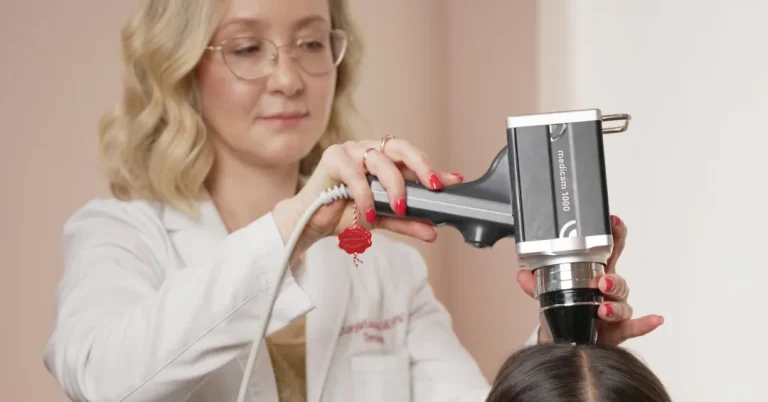
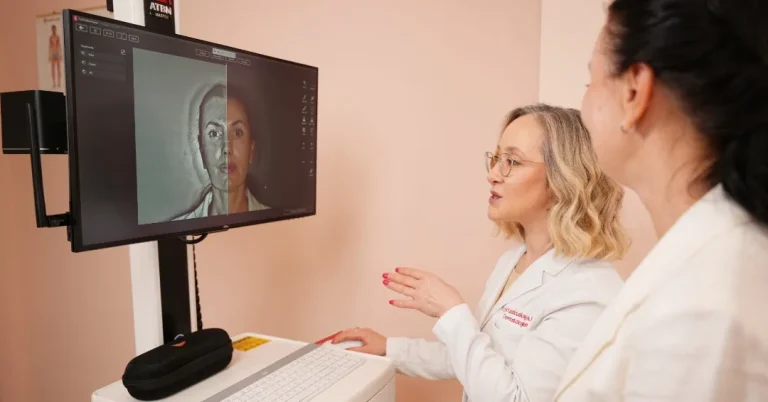
Clinical examination, standardized photography and digital trichoscopy during a hair-loss consultation can help determine whether miniaturization is continuing and whether treatment escalation is justified.
Why Might Finasteride Be the More Logical Choice?
Finasteride may be preferable when a patient:
- Is starting DHT-directed treatment for the first time;
- Prefers an FDA-approved hair-loss medication;
- Wants a medication that leaves the body more quickly;
- Has reproductive considerations that favor greater pharmacologic flexibility;
- Has achieved adequate stabilization without needing stronger suppression;
- Is concerned about committing immediately to a longer-persisting medication.
Starting with finasteride does not mean that dutasteride can never be considered later. Treatment can be reassessed according to response, tolerability and objective follow-up findings.
Sexual Side Effects: Finasteride vs. Dutasteride
Both medications can cause sexual adverse effects.
Reported effects include:
- Reduced libido;
- Erectile dysfunction;
- Changes in ejaculation;
- Reduced ejaculate volume.
A 2026 systematic review of sexual dysfunction associated with 5-alpha-reductase inhibitors found that sexual adverse events were generally uncommon in controlled androgenetic alopecia trials, although reported rates varied among studies and medications.
Across the trials evaluated in that review:
- Sexual adverse events were reported in approximately 1.9–6.7% of finasteride-treated participants, compared with approximately 0.9–3.9% in placebo groups;
- Reported rates across dutasteride trials ranged from approximately 4.1–12%, compared with approximately 4–5% in placebo groups;
- Most events in controlled trials were described as mild and reversible after discontinuation.
These ranges should not be treated as a direct head-to-head prediction for an individual patient. The included studies differed in design, participant selection, duration and how adverse events were collected.
Can Sexual Side Effects Persist After Treatment Stops?
This deserves careful discussion rather than dismissal.
Current U.S. finasteride labeling includes postmarketing reports of sexual dysfunction continuing after treatment discontinuation. It also includes postmarketing reports involving depression and suicidal ideation.
Because postmarketing reports are submitted voluntarily, their frequency cannot be reliably calculated, and causation is more difficult to establish than in a controlled clinical trial.
Dutasteride labeling similarly acknowledges reports in which sexual adverse reactions persisted after discontinuation and states that dutasteride’s role in that persistence is unknown.
The balanced counseling point is:
Persistent symptoms have been reported and should not be dismissed, but postmarketing reports cannot tell us precisely how often they occur or establish causation in every individual case.
Finasteride, Dutasteride and Fertility
Both finasteride and dutasteride may affect semen parameters in some patients, at least temporarily.
Relevant measurements may include:
- Semen volume;
- Sperm concentration;
- Total sperm count;
- Motility;
- Morphology.
The clinical significance varies. Many patients do not experience a meaningful fertility problem, while selected patients—particularly those who already have reduced semen parameters or are actively trying to conceive—may require additional caution.
Reproductive planning deserves its own discussion rather than being grouped under sexual side effects. A patient who is actively trying to conceive, undergoing fertility evaluation or concerned about baseline semen quality should discuss the timing and choice of treatment with the prescribing physician.
Dutasteride’s long persistence after discontinuation makes advance planning especially relevant.
Can Women Take Finasteride or Dutasteride for Hair Loss?
The main evidence in this comparison concerns male androgenetic alopecia. Finasteride’s FDA-approved hair-loss indication is for men.
Use of finasteride in women is off-label. Dutasteride is likewise not FDA-approved for female pattern hair loss in the United States.
Selected women, particularly appropriately selected postmenopausal patients, may sometimes receive a 5-alpha-reductase inhibitor under specialist supervision. However, female hair loss has a different diagnostic and reproductive context, and the evidence is less robust than it is for male androgenetic alopecia.
Pregnancy potential is particularly important because 5-alpha-reductase inhibition can interfere with the development of a male fetus.
Women who are pregnant or may become pregnant should not use these medications unless specifically directed within an appropriate specialist framework. They should also avoid handling crushed or broken finasteride tablets. Topical formulations require caution because medication can potentially be transferred through skin contact.
Oral vs. Topical Finasteride
Interest in topical finasteride has increased because the medication can be delivered to the scalp while potentially reducing systemic exposure.
A phase III randomized clinical trial found that topical finasteride significantly improved target-area hair count compared with placebo and produced substantially lower plasma finasteride exposure than oral finasteride.
However, lower systemic exposure does not mean zero systemic absorption or zero systemic risk. Evidence also depends on the specific formulation, concentration, vehicle, applied amount and treatment area.
Is Topical Finasteride FDA-Approved in the United States?
As of November 2026, no topical finasteride formulation is FDA-approved in the United States. Compounded topical finasteride is nevertheless prescribed clinically.
In April 2025, the FDA issued a specific alert concerning compounded topical finasteride products after receiving adverse-event reports.
The agency emphasized that:
- Systemic absorption through the skin is expected;
- Compounded products have not undergone FDA premarket review for safety, effectiveness or manufacturing quality;
- Local irritation and systemic adverse effects can occur;
- Inadvertent transfer to another person, including a woman who is pregnant or may become pregnant, is a potential concern.
This does not mean that compounded topical finasteride can never be prescribed. It means that “topical” should not be presented as synonymous with “risk-free.”
What About Topical Dutasteride?
Topical dutasteride is an emerging treatment rather than an established U.S. standard.
Important limitations include:
- Relatively early evidence;
- Variation among compounded formulations;
- Pharmacokinetics that depend on the vehicle and delivery method;
- Limited long-term data;
- No FDA-approved topical dutasteride hair-loss product in the United States.
Topical dutasteride should not be assumed to behave exactly like oral dutasteride—or like topical finasteride—without considering the specific formulation and delivery method.
Does Topical Mean No Sexual or Fertility Risk?
No.
An appropriately designed topical formulation may produce lower systemic exposure than an oral medication, but some absorption can still occur.
Potential risk depends on:
- Medication concentration;
- Amount applied;
- Size of the treatment area;
- Condition of the scalp barrier;
- Vehicle;
- Application frequency;
- Individual absorption.
Topical therapy should not be marketed as though it creates an impermeable boundary between the scalp and the rest of the body.
How Long Does It Take to See Results?
Neither finasteride nor dutasteride produces its full benefit immediately.
Some patients notice reduced shedding first, but meaningful evaluation usually requires several months of consistent treatment. Visible density and caliber changes may continue developing over six to twelve months or longer.
A short period without dramatic visual improvement does not necessarily mean that treatment has failed. Stabilizing ongoing miniaturization may itself be clinically valuable, particularly in early androgenetic alopecia.
Standardized photographs and digital trichoscopy can help distinguish true change from differences in lighting, hairstyle, hair length and camera angle.
What Happens If You Stop Finasteride or Dutasteride?
After discontinuation:
- Systemic medication exposure declines;
- DHT suppression resolves;
- Androgen-sensitive miniaturization can resume;
- Treatment-supported gains can gradually be lost.
These medications manage androgenetic alopecia; they do not permanently cure the underlying genetic susceptibility.
The visible effect does not disappear overnight. However, without continued treatment, the hair-loss process can gradually move toward the course it would otherwise have followed.
Can Finasteride or Dutasteride Be Combined With Minoxidil?
Yes, when clinically appropriate. These medications address different aspects of the hair-loss process.
Finasteride or Dutasteride
Primarily reduces androgen-driven DHT signaling and follicular miniaturization.
Minoxidil
Supports follicular growth through another biological pathway.
The treatments can therefore be complementary rather than redundant. That does not mean every patient needs both.
Patients considering growth stimulation in addition to DHT-directed treatment can review our guide to low-dose oral minoxidil for hair loss, which discusses oral versus topical treatment, initial shedding and systemic considerations.
What About Dutasteride Mesotherapy?
Dutasteride can also be delivered through scalp mesotherapy in selected patients. This is a different treatment strategy from taking oral dutasteride and should not be assumed to produce the same pharmacokinetics, systemic exposure or efficacy.
Some patients consider this approach when they prefer to avoid daily oral DHT inhibition. However, protocols vary, and the evidence is less established than it is for oral finasteride.
Our dedicated page on dutasteride mesotherapy for hair loss explains how the treatment may fit into a broader physician-led plan.
Diagnosis Should Come Before Choosing the Stronger Drug
This may be the most important part of the comparison. Not every patient with thinning hair has pure androgenetic alopecia.
Hair loss can also represent:
- Telogen effluvium;
- Alopecia areata;
- Inflammatory scalp disease;
- Traction alopecia;
- Scarring alopecia;
- Nutritional or endocrine contributors;
- Several processes occurring together.
Finasteride and dutasteride do not treat all of these conditions. Starting a stronger DHT inhibitor without establishing the diagnosis may delay recognition of an inflammatory or scarring process that requires a different treatment strategy.
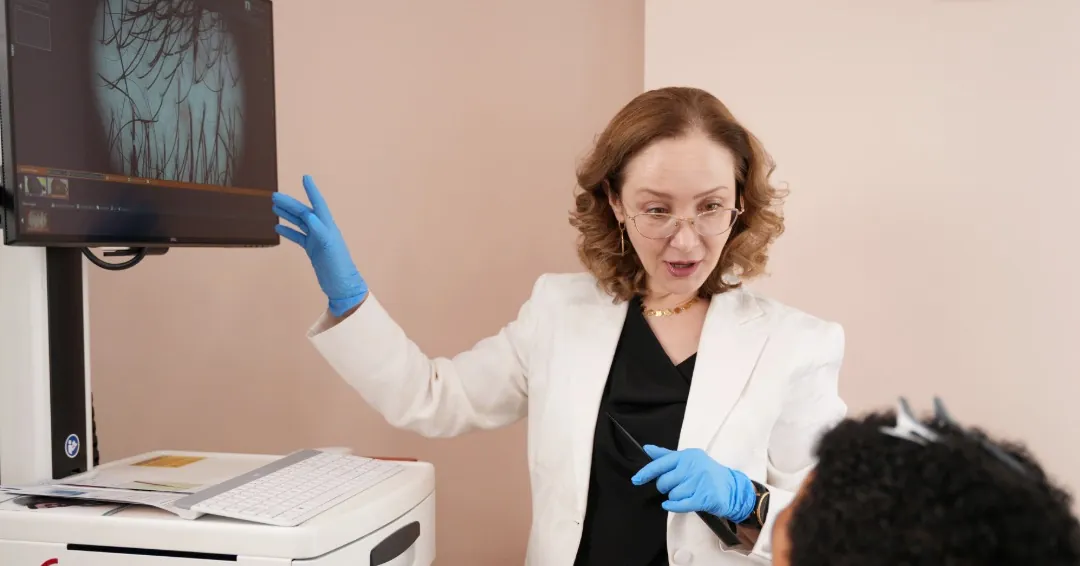
Clinical examination and digital trichoscopy can help identify follicular miniaturization, shaft-diameter diversity, inflammation and other findings that influence the diagnosis.
When Stronger DHT Suppression Is Not Automatically Better
Dutasteride may be more potent, but the best long-term medication is the one that provides an appropriate balance of:
- Clinical efficacy;
- Tolerability;
- Reproductive considerations;
- Regulatory status;
- Reversibility after discontinuation;
- Patient comfort with long-term treatment;
- Objective evidence that stronger suppression is actually needed.
A patient who is stable and satisfied on finasteride does not automatically need to switch to dutasteride. Likewise, a patient with continued miniaturization despite appropriate finasteride treatment may reasonably discuss whether stronger DHT suppression is justified.
Finasteride vs. Dutasteride: Choosing the Right Treatment for Your Hair Loss
Finasteride and dutasteride can both help treat androgenetic alopecia. Dutasteride may offer greater average improvement, while finasteride has a longer-established role in male pattern hair loss and leaves the body more quickly after discontinuation.
The most appropriate choice depends on:
- The correct diagnosis;
- Degree and location of miniaturization;
- Previous treatment response;
- Age and medical history;
- Reproductive plans;
- Potential side effects;
- Comfort with off-label treatment;
- Long-term treatment goals.
The goal is to preserve hair with a treatment plan that is effective, tolerable and appropriate for long-term use.
Confirming the diagnosis and documenting changes through standardized photography and digital trichoscopy can help guide treatment decisions over time.
At Dermatology Circle in New York City, a physician-led hair-loss consultation includes a detailed scalp assessment, digital trichoscopy and a discussion of medical and procedural treatment options.
Whether you are beginning treatment or reconsidering your current regimen, schedule a consultation with Dermatology Circle to develop a personalized plan based on your diagnosis, objective findings and goals.