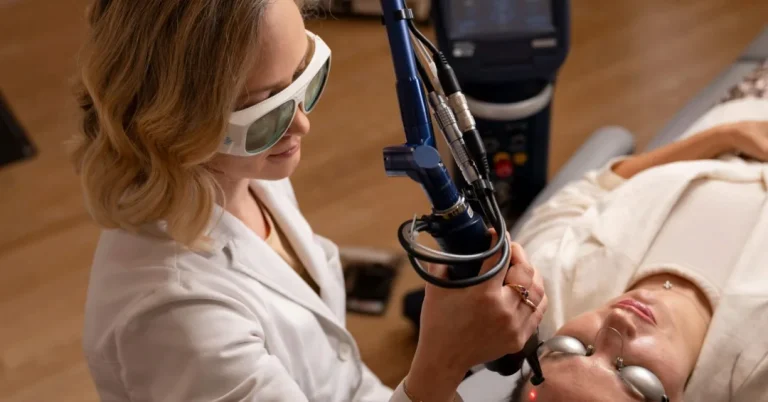
It is well known that the neck often ages faster than the face. Patients with signs of aging on the neck often ask whether they need neck Botox. Some patients certainly benefit from it, but it is not the answer to every neck concern, and it is not for everyone. The visible problem can come from several different anatomical structures.
An aging neck can show several different problems. A vertical cord that becomes stronger when the neck contracts is not the same problem as loose, crepey skin. A horizontal neck crease is different again. So are jowls, submental fullness and loss of jawline support. You can read more on our jawline contouring and neck rejuvenation pages.
This distinction matters because Botox for neck bands works almost exclusively on muscle activity.
BOTOX Cosmetic (onabotulinumtoxinA) now has a specific FDA-approved indication for temporary improvement of moderate-to-severe platysma bands associated with platysma muscle activity in adults. The FDA approved this indication on October 18, 2024.
That does not mean every aging neck is a Botox problem. The first question usually should not be “How many units do I need and what is the price of the procedure?” but rather “What anatomical structure is creating what I see in the mirror, and will Botox help me?”
What Causes Vertical Neck Bands?
The platysma is a broad, thin, superficial muscle extending across much of the neck and into the lower face. When it contracts, portions of the muscle can become visible as vertical cords running from the jawline toward the lower neck.
Platysmal bands may become more noticeable with facial expression, neck movement, stronger platysma contraction, changing skin elasticity, changes in lower-face support, and aging of the surrounding tissues.
They are not caused solely by aging. Some relatively young patients have naturally strong platysma activity and obvious bands when they contract the neck, while an older patient may have substantial neck aging with relatively little visible muscle banding.
That distinction strongly affects candidacy for neuromodulator treatment.
Dynamic vs. Resting Platysmal Bands
Not all neck bands behave the same way.
Dynamic Platysmal Bands
Dynamic bands are visible when the platysma contracts. These bands provide a relatively clear muscular target and typically respond well to Botox.
Bands Visible at Rest
A band that remains obvious when the patient is completely relaxed may represent more than muscle contraction alone.
Resting prominence can coexist with:
- Persistent muscle visibility;
- Skin laxity;
- Loss of surrounding tissue support;
- Lower-face aging;
- Structural changes.
This is important because weakening a muscle can address its muscle component without correcting every surrounding age-related change.
The more a neck concern is driven by muscle contraction, the more logically a neuromodulator can address that problem.
What Botox Actually Does to the Platysma
BOTOX Cosmetic contains onabotulinumtoxinA, a neuromodulator that temporarily reduces muscle contraction.
In simpler terms, Botox weakens selected platysma contraction so the vertical bands become less prominent when the muscle activates.
Two pivotal phase 3 trials showed significant improvement in moderate-to-severe platysma prominence compared with placebo, including improvement assessed at maximum contraction.
Is Botox FDA Approved for Neck Bands?
Yes, but the wording matters.
BOTOX Cosmetic (onabotulinumtoxinA) is FDA approved in adults for temporary improvement in the appearance of moderate-to-severe platysma bands associated with platysma muscle activity. This indication was added to U.S. labeling in October 2024.
The word “Botox” is often used conversationally for botulinum toxin treatments in general. But BOTOX Cosmetic is a specific product made by Allergan Aesthetics. We also use other brands of neuromodulators, but FDA indications cannot automatically be transferred from one product to another. That said, in practice we have used other neuromodulators in the neck with similar muscle-relaxing results.
The approval also does not mean BOTOX Cosmetic is FDA approved to correct every cosmetic concern involving the neck. The labeled concern is specifically platysma-band prominence related to platysma muscle activity.
Botox for Neck Bands vs. Loose Neck Skin
This is probably the most important concept for patients considering neck Botox. Botox does not directly tighten loose skin or rebuild substantial collagen that has already been lost.
A patient can easily have both conditions at the same time. For example:
- Botox may address strong vertical bands;
- A tightening treatment may address laxity;
- Resurfacing may address texture;
- SKINVIVE microdroplet injections may improve hydration and plumpness of the skin (use on the neck is off-label);
- Another injectable may address a separate structural or skin-quality problem.
Our broader guide to neck rejuvenation options explains why bands, laxity, wrinkles, pigmentation and décolletage changes should not automatically be treated as the same condition.
Vertical Neck Bands vs. Horizontal Neck Lines
Another common source of confusion is orientation. Vertical cords are typically related to platysma muscle prominence. Horizontal lines (sometimes called necklace lines) are skin creases running across the neck.
They are not the same anatomical problem.
Depending on the individual, horizontal lines may be approached with strategies involving:
- Skin-quality treatment;
- Resurfacing;
- Selected injectable correction;
- Collagen biostimulation;
- Tightening;
- Combination treatment (often works best).
Botox may occasionally contribute to a broader neck plan, but treating a horizontal skin crease should not be confused with treating an active vertical platysmal band.
Real Patient Neck Treatment Results
These cases illustrate why horizontal neck lines and vertical platysmal bands require different treatment strategies. The procedure should be selected according to the anatomical cause of the visible concern.
Case 1: Combination Treatment for Horizontal Neck Lines
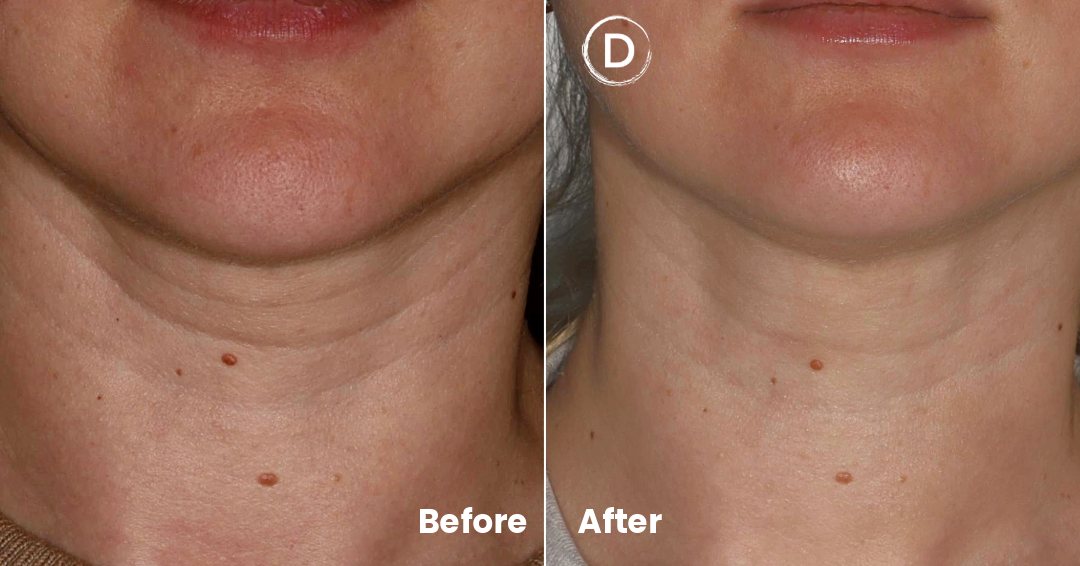
This patient’s horizontal neck lines were treated with a combination of Belotero Balance dermal filler, Skinvive by Juvéderm and two Ultra LaseMD laser sessions. Each treatment addressed a different component: line depth, hydration, skin texture and sun damage.
Case 2: Botox for Vertical Platysma Bands
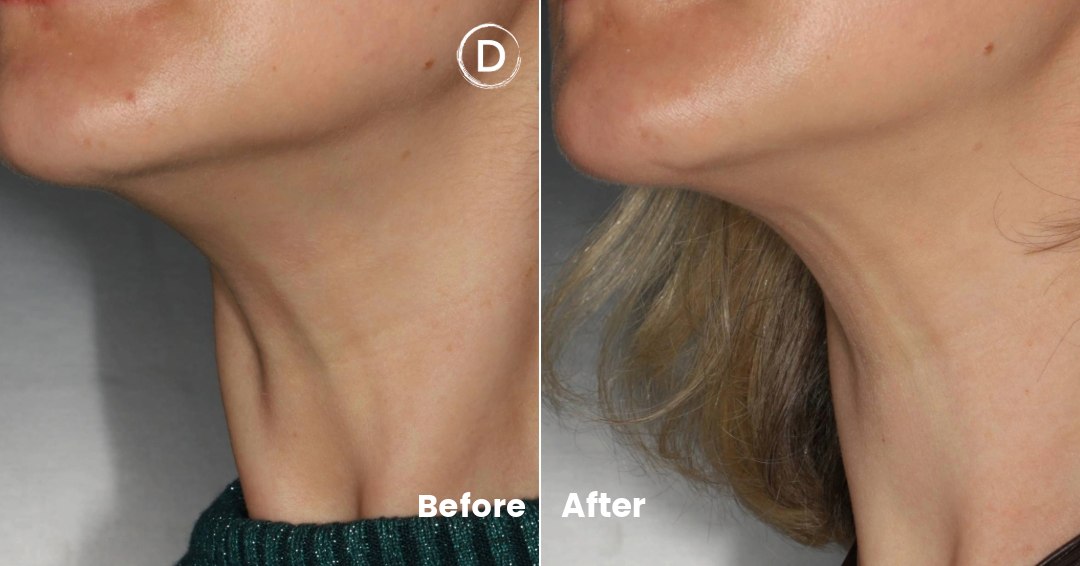
In this case, Botox was used to reduce visible platysma muscle activity, helping smooth the neck and improve definition. Patients with additional laxity, texture changes or structural concerns may need a broader combination plan.
Different Neck Concerns Require Different Treatments
| What the Patient Sees | Main Anatomical Component | Botox Role |
|---|---|---|
| Vertical neck bands | Platysma muscle activity | Often directly relevant |
| Blunted jawline partly from platysma pull | Muscle + other lower-face factors | May help selected patients |
| Loose or crepey skin | Skin laxity / collagen loss | Limited |
| Horizontal neck lines | Skin creasing | Not the same primary target |
| Jowls | Soft-tissue descent / structure / laxity | Limited as a stand-alone treatment |
| Submental fullness | Fat + anatomy | Does not remove fat |
This table explains anatomical principles; it is not a self-treatment algorithm.
Can Botox Improve the Jawline?
Sometimes, when platysma activity is contributing to the problem. The platysma extends into the lower face and exerts downward pull on portions of the jawline.
Reducing selected platysma activity may therefore improve the appearance of:
- Prominent neck bands;
- The neck-jawline transition;
- Jawline definition, including mild improvement of early jowls in selected patients.
A softened jawline may come from several structures simultaneously. Dermatology Circle’s approach to jawline contouring and jowl treatment separates muscle activity from volume, laxity, fat and structural support before choosing treatment.
Is Neck Botox the Same as a “Nefertiti Lift”?
The term Nefertiti lift is commonly used in aesthetic medicine for botulinum toxin treatment involving the platysma and lower jawline. The goal is usually to reduce downward muscular pull and soften visible platysmal prominence. While it works on the same principle as treating neck bands, different clinicians may use the phrase to describe different treatment patterns, which is another reason I prefer talking about platysma treatment and lower-face anatomy instead. The fancy title is less important than the evaluation of the anatomy and underlying problems.
Who Is a Good Candidate for Botox for Neck Bands?
Potentially suitable patients generally have a visible concern in which platysma activity plays an important role.
Clinical features may include:
- Clear vertical platysmal bands;
- Increased band visibility during contraction;
- Moderate or greater band prominence;
- Relatively preserved skin elasticity;
- Realistic expectations about a temporary muscular treatment.
Age alone tells us relatively little. A 38-year-old with very strong dynamic platysmal bands may be a more logical candidate than a 68-year-old whose main concern is extensive loose skin but minimal dynamic banding.
Who May Get Less Benefit?
Botox alone may be less satisfying when the main concern is:
- Substantial loose skin;
- Significant jowling;
- Pronounced submental fullness;
- Deep horizontal neck creases;
- Major photodamage;
- Significant structural volume loss.
If muscle activity is not the main problem, weakening the muscle cannot solve the entire neck concern.
That is why photographs labeled “neck Botox” online can be misleading when the viewer does not know what else was treated.
Botox vs. Sofwave or Other Skin-Tightening Treatments
Botox and skin-tightening treatments work on different anatomical targets. As discussed above, Botox primarily targets muscle activity. Tightening treatments (including Sofwave and biostimulators) primarily target skin and tissue remodeling.
Sofwave, for example, uses ultrasound energy to stimulate a collagen-remodeling response within the dermis and is used at Dermatology Circle for selected patients with early-to-moderate laxity.
Botox vs. Skin Tightening
| Feature | Botox for Platysma | Skin-Tightening Treatment |
|---|---|---|
| Primary target | Muscle activity | Skin/tissue laxity |
| Vertical bands | Direct treatment target | May not eliminate dynamic bands |
| Loose skin | Limited direct effect | Main treatment objective |
| Collagen stimulation | Not the primary mechanism | Yes, depending on technology |
| Result pattern | Muscle relaxation | Gradual tissue remodeling |
| Can they be combined? | Yes, in selected patients | Yes |
Neither category is inherently better. For patients whose main concern is skin laxity rather than muscle, our overview of non-surgical skin tightening in NYC is the more relevant starting point.
Botox vs. Fillers or Biostimulators for the Neck
Fillers
While filler can provide volume or focal structural correction in appropriate circumstances (for example, filling horizontal lines), it does not address muscle activity the way Botox does.
Collagen Biostimulators
PLLA (Sculptra) or CaHA (Radiesse) may be used in selected treatment plans to create longer-term tissue remodeling and address skin-quality or structural concerns. They are not substitutes for Botox, or for each other, simply because they are all injectables.
Our comparison of Sculptra vs. Radiesse collagen biostimulators explains why the material should be selected according to anatomy and treatment objective rather than brand popularity.
Can Botox, Sofwave and Biostimulators Be Combined?
They can be, but combination treatment should have a reason.
Consider a patient with:
- Visible platysmal bands;
- Early skin laxity;
- Declining collagen quality;
- Horizontal neck lines.
One intervention may not logically address all four components.
A combination plan might therefore assign each treatment a specific task. But this should not become “You have four concerns, so you need four procedures.” Sometimes one treatment addresses the priority sufficiently. Sometimes doing less produces a more elegant result. Each treatment should have a specific anatomical job.
When Do Results Begin?
Botulinum toxin does not produce its full effect immediately. Some patients begin noticing a change within the first several days, but the pivotal platysma trials used Day 14 as an important efficacy assessment point. Individual timing varies.
How Long Does Botox for Neck Bands Last?
The effect is temporary. Duration can vary according to:
- Muscle activity;
- Individual biology;
- Treatment pattern;
- Previous treatment history;
- Dose used.
A realistic expectation is several months (typically 3–6) rather than a permanent change.
What Happens as Botox Wears Off?
The muscle gradually regains activity. As that happens, vertical bands may progressively become visible again.
This does not mean:
- Botox stretched the skin;
- The platysma suddenly became stronger than before;
- The treatment permanently failed.
The pharmacologic effect simply diminishes over time. Patients who find the improvement worthwhile may consider repeat treatment when medically appropriate.
What Does Treatment Feel Like and Is There Downtime?
Neck treatment involves a series of injections. Short-term reactions can include:
- Small injection-site marks;
- Tenderness;
- Bruising;
- Localized swelling;
- Temporary discomfort.
Most patients do not require the type of recovery associated with ablative laser procedures or surgery. I would avoid calling this “zero downtime,” however. Bruising, visible injection marks or individual reactions can occur, especially on the thin skin of the neck.
Risks of Treating the Neck With Botulinum Toxin
The neck deserves more respect anatomically than many social-media demonstrations suggest. Beyond these minor reactions, the more important functional risks arise when toxin affects unintended muscles.
Rare but important side effects include:
- Unwanted neck weakness;
- Lower-face asymmetry;
- Altered movement;
- Dysphagia, meaning difficulty swallowing;
- Dysphonia, meaning voice change or difficulty producing a normal voice.
The current BOTOX Cosmetic prescribing information carries the botulinum toxin class boxed warning concerning potential distant spread of toxin effects, including swallowing, speech and breathing problems. These risks are quite rare but should be discussed accurately without suggesting that they are routine or common outcomes.
The overall safety profile was favorable in controlled trials.
Can Botox Prevent Neck Aging?
Botox can reduce selected muscle contraction while its effect is active. It should not be marketed as though it prevents the entire aging process of the neck. It may, however, reduce the muscle-related component over time and improve the appearance of the neck.
When Another Treatment Makes More Sense
A practical way to understand treatment selection is to identify the dominant anatomical concern.
Predominantly Dynamic Vertical Bands. Botulinum toxin may be particularly relevant.
Predominantly Loose or Crepey Skin. A tightening or resurfacing strategy may be more logical.
Predominantly Horizontal Neck Lines. Skin-quality, resurfacing or selected injectable approaches may be more relevant.
Structural Jawline Deficiency. Filler or another contour-support strategy may be considered.
Significant Jowling or Tissue Descent. Botox alone is unlikely to provide the desired correction.
Several Components at Once. A staged combination plan may be appropriate.
These are principles rather than a self-selection guide. At Dermatology Circle, this anatomy-first philosophy also guides our personalized cosmetic consultations.
The treatment should follow the anatomy, not the name of the procedure the patient searched for.
Anatomy-Based Neck Treatment Selection
| Main Concern | Treatment Category That May Be Considered |
|---|---|
| Dynamic vertical platysmal bands | Botulinum toxin |
| Neck laxity / crepey skin | Skin-tightening or resurfacing approach |
| Horizontal neck lines | Selected resurfacing or injectable approaches |
| Jawline structure | Filler or structural treatment where appropriate |
| Platysma pull + laxity | Combination plan |
| Significant jowls / surgical-level laxity | Non-surgical treatment may have substantial limitations |
A patient searching for “Botox for neck bands” may indeed be an excellent candidate for neuromodulator treatment, or may discover that the visible concern comes mostly from another anatomical layer.
If vertical neck bands are becoming more noticeable, a cosmetic consultation at Dermatology Circle can assess platysma activity, skin laxity, jawline structure and other components of the neck before deciding whether Botox, skin tightening or another approach fits the anatomy and treatment goals.