Hair-loss patients often arrive with pages of “normal” laboratory results—or with a list of 20 tests they were told online to request. Neither necessarily answers the most important question: What type of hair loss is actually occurring?
A woman with sudden diffuse shedding after major weight loss may reasonably need a different laboratory evaluation from a woman with slowly progressive widening of the central part. A man with classic temporal and vertex miniaturization may need very little laboratory testing. A patient with burning, perifollicular scale, and disappearing follicular openings may need evaluation for scarring alopecia—and possibly a scalp biopsy—more urgently than another vitamin panel.
A comprehensive hair-loss evaluation therefore works best in this order:
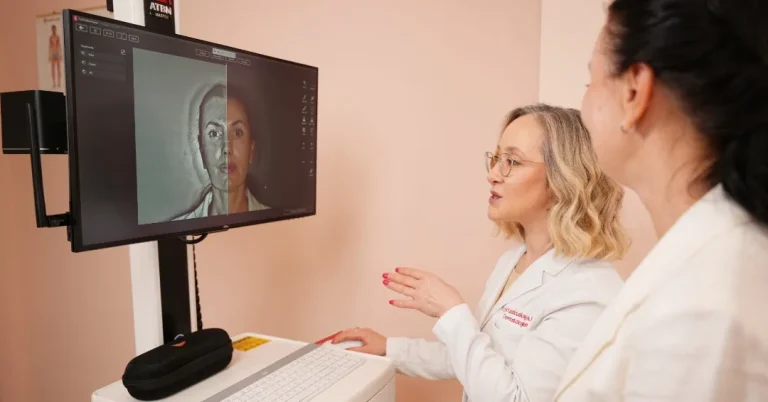
Hair-loss pattern → medical history → scalp examination and trichoscopy → targeted laboratory testing → diagnosis → treatment
A 2026 diagnostic review similarly emphasizes history, pattern recognition, trichoscopy, and selective testing, with a complete blood count (CBC), thyroid-stimulating hormone (TSH), and iron studies among commonly useful tests when clinically appropriate.
The American Academy of Dermatology also describes blood testing as something used when a dermatologist suspects a disease, nutritional deficiency, hormonal imbalance, or infection—not as a mandatory step for every person with thinning hair.
Do All Patients With Hair Loss Need Blood Tests?
No. Some hair-loss patterns can be highly characteristic based on the history, clinical examination, and trichoscopy.
Examples include:
- Classic male pattern hair loss;
- Female pattern hair loss with clear miniaturization;
- Alopecia areata;
- Traction alopecia;
- Inflammatory or scarring alopecia.
Blood work may still be useful when another contributor is suspected, but it does not necessarily establish the primary diagnosis.
Laboratory testing becomes particularly useful when the pattern raises a specific systemic question, for example:
- Unexplained diffuse shedding;
- Heavy menstrual bleeding;
- Restrictive diet;
- Major weight loss;
- Gastrointestinal disease or malabsorption;
- Thyroid symptoms;
- Signs of androgen excess;
- Systemic autoimmune symptoms.
A blood test should answer a question raised by the history or examination.
Which Hair Loss Blood Tests Are Most Commonly Useful?
Several tests come up repeatedly in hair-loss evaluation because they can identify common medical contributors. Depending on the clinical picture, these may include:
- Complete blood count, or CBC;
- Ferritin;
- Broader iron studies;
- Thyroid-stimulating hormone, or TSH;
- Selected vitamin or mineral tests;
- Selected endocrine testing when the history or examination suggests it.
This is not a universal checklist. The useful panel for diffuse shedding after bariatric surgery will not necessarily be the useful panel for classic pattern hair loss.
Ferritin and Hair Loss: Why Does This Test Get So Much Attention?
Ferritin is a protein commonly used as a marker of stored iron. A low ferritin level can provide useful evidence of iron deficiency, and ferritin can be particularly relevant in patients presenting with diffuse hair shedding when iron deficiency is clinically plausible. It is also an acute-phase reactant, so inflammation and other medical factors can complicate interpretation. A clinical review of ferritin in patients with hair loss discusses both its usefulness and its limitations.
Possible risk factors for iron deficiency include:
- Heavy menstrual blood loss;
- Pregnancy-related iron depletion;
- Restrictive eating;
- Low dietary iron intake;
- Gastrointestinal blood loss;
- Malabsorption;
- Previous iron deficiency.
What Ferritin Level Is “Good for Hair”?
This is where online advice often becomes much more confident than the evidence. You may see claims that ferritin must be above 70 for hair growth or that hair cannot regrow until ferritin reaches 100.
There is no universally accepted dermatologic hair-specific ferritin target that guarantees normal growth or predicts regrowth in an individual patient. A result should be interpreted alongside the laboratory’s reference range, the patient’s symptoms, CBC and iron-study findings, medical history, and the actual hair-loss diagnosis.
If Ferritin Is Low, Will Iron Automatically Regrow Hair?
Not necessarily. Correcting confirmed iron deficiency is medically appropriate, but iron deficiency may be only one layer of the clinical picture.
For example, a woman may simultaneously have:
- Iron deficiency from heavy periods;
- Female pattern hair loss with follicular miniaturization.
Iron replacement addresses the deficiency. It does not directly reverse the underlying androgen-sensitive miniaturization. Similarly, someone can have telogen effluvium after iron deficiency while also having an inflammatory scalp disorder.
Correcting a deficiency and treating the hair-loss diagnosis can be two separate parts of the same plan.
Thyroid Testing and Hair Loss
Both hypothyroidism and hyperthyroidism can be associated with changes in the hair cycle and diffuse shedding. TSH is commonly used as the initial thyroid-screening test when thyroid dysfunction is clinically relevant to the hair-loss evaluation. The current 2026 diagnostic literature includes TSH among the commonly useful targeted laboratory tests.
Clues that can increase the relevance of thyroid evaluation include:
- Fatigue;
- Unexplained weight change;
- Heat or cold intolerance;
- Bowel changes;
- Menstrual changes;
- Personal thyroid disease;
- Family thyroid history.
Not every patient with thyroid disease develops hair loss, and not every patient with hair loss has thyroid disease.
Vitamin D and Hair Loss: What Does the Evidence Actually Show?
Low vitamin D is frequently discussed in hair-loss clinics, and there is evidence of an association. A 2026 systematic review and meta-analysis found lower average vitamin D and ferritin levels in telogen effluvium groups than in controls. The authors also reported substantial variability among the included studies, and an association alone does not prove that a low level caused an individual patient’s hair loss.
A more accurate interpretation is:
Vitamin D deficiency may coexist with hair loss, and testing can be reasonable when the clinical context or deficiency risk makes the result useful.
Correcting a true deficiency is appropriate for overall health. Vitamin D replacement, however, should not substitute for diagnosing the hair-loss disorder.
Should Zinc Be Checked?
Severe zinc deficiency can affect hair growth. Testing becomes more clinically relevant when there are risk factors such as:
- Significant dietary restriction;
- Malabsorption;
- Gastrointestinal disease;
- Bariatric surgery;
- Prolonged inadequate nutrition;
- Other compatible clinical findings.
Routine zinc testing in every patient with straightforward pattern hair loss is much harder to justify. The American Academy of Dermatology recommends using zinc, iron, or biotin supplements for a demonstrated deficiency rather than taking these nutrients automatically for hair loss.
Hair Supplements Can Interfere With Blood Tests
This is a practical issue patients can easily miss. High-dose biotin, commonly found in products marketed for hair, skin, and nails, can interfere with certain laboratory immunoassays and produce falsely high or falsely low results.
The U.S. Food and Drug Administration continues to warn clinicians and patients that biotin in dietary supplements can cause significant interference with some laboratory tests.
Always tell the physician and laboratory which supplements you are taking before testing.
A single instruction such as “stop biotin for exactly 48 hours” is not appropriate for every situation. The interval may vary with the supplement dose, the assay being used, and the laboratory’s protocol. Follow the instructions of the ordering clinician and testing laboratory.
Do Women With Hair Loss Need Hormone Tests?
Not automatically. Female pattern hair loss can occur even when circulating androgen levels are normal. An expert multidisciplinary report on female pattern hair loss specifically cautions against interpreting isolated female pattern hair loss as evidence of biochemical hyperandrogenism.
Hormonal testing becomes more meaningful when the history or examination suggests androgen excess. Clues include:
- Hirsutism;
- Irregular menstrual cycles;
- Severe or persistent acne;
- Infertility or other features of polycystic ovary syndrome (PCOS);
- Rapid progression or signs of virilization.
Which Hormones Might Be Tested if Androgen Excess Is Suspected?
The exact workup depends on the clinical picture. Potential tests may include selected measurements such as:
- Total testosterone;
- Sex hormone-binding globulin (SHBG);
- Assessment of free androgen status;
- Dehydroepiandrosterone sulfate (DHEAS);
- Prolactin;
- Additional endocrine studies where indicated.
A woman with a widening part, regular periods, no hirsutism, and no acne does not necessarily need the same endocrine workup as someone with rapidly progressive hair loss, hirsutism, and irregular menstruation.
Do Perimenopause or Menopause Hair Changes Require Estrogen Testing?
Not routinely simply because hair thinning begins in midlife. Hormonal changes during the menopausal transition can influence hair biology, but menopause itself is not a hair-loss diagnosis. Single estrogen measurements can also be difficult to interpret during perimenopause because hormone levels fluctuate.
Read more about the diagnostic approach in Hair Loss During Perimenopause and Menopause.
Which Labs Are Useful for Telogen Effluvium?
Telogen effluvium is one of the main reasons patients search for “hair loss blood work.” But even when telogen effluvium is suspected, not every patient needs a large laboratory panel.
When the cause is unclear, shedding persists, or the history suggests an additional medical contributor, testing may include:
- CBC;
- Ferritin and/or iron studies;
- TSH;
- Selected nutritional testing based on actual risk factors.
The 2026 systematic diagnostic review supports CBC, iron studies, and TSH as commonly useful targeted investigations in the appropriate context. At the same time, a large 2026 retrospective analysis of laboratory testing in telogen effluvium found limited utility in broad, indiscriminate testing. Together, these findings support a selective approach rather than an automatic “everything” panel.
Trichoscopy vs. Blood Tests: They Answer Different Questions
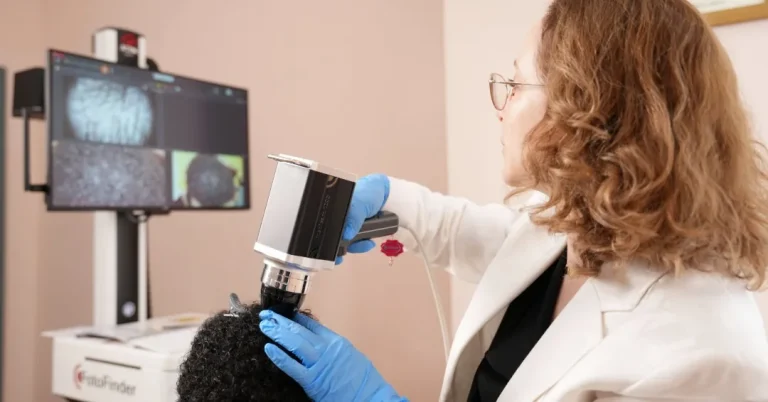
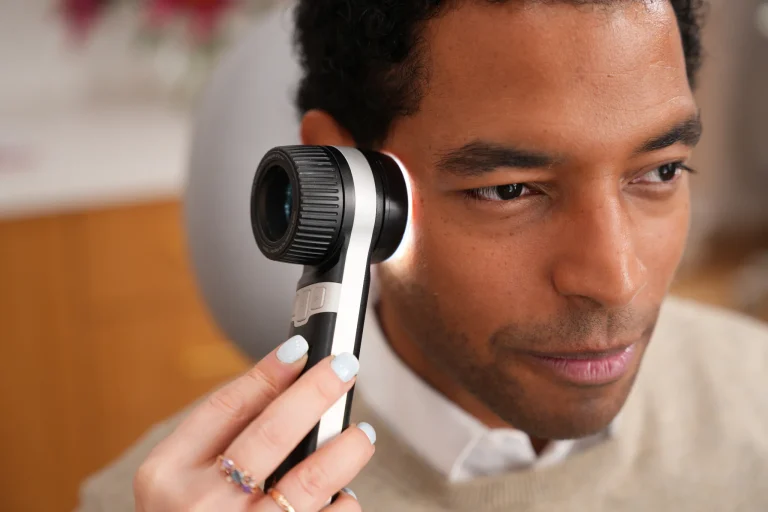
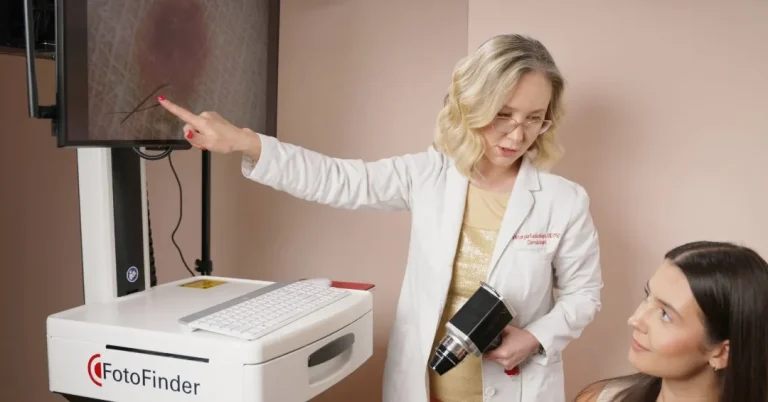
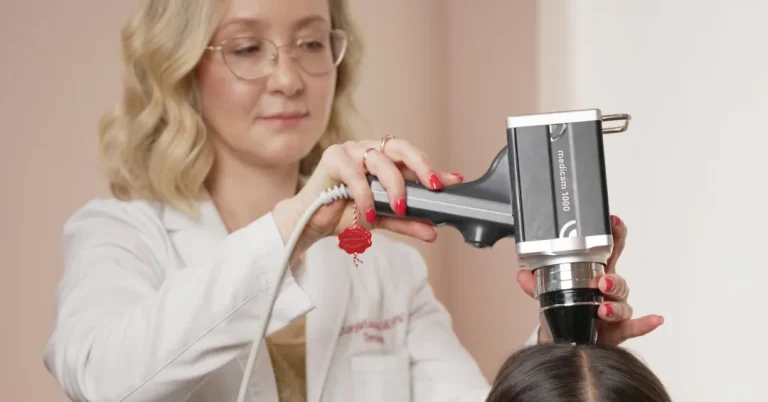
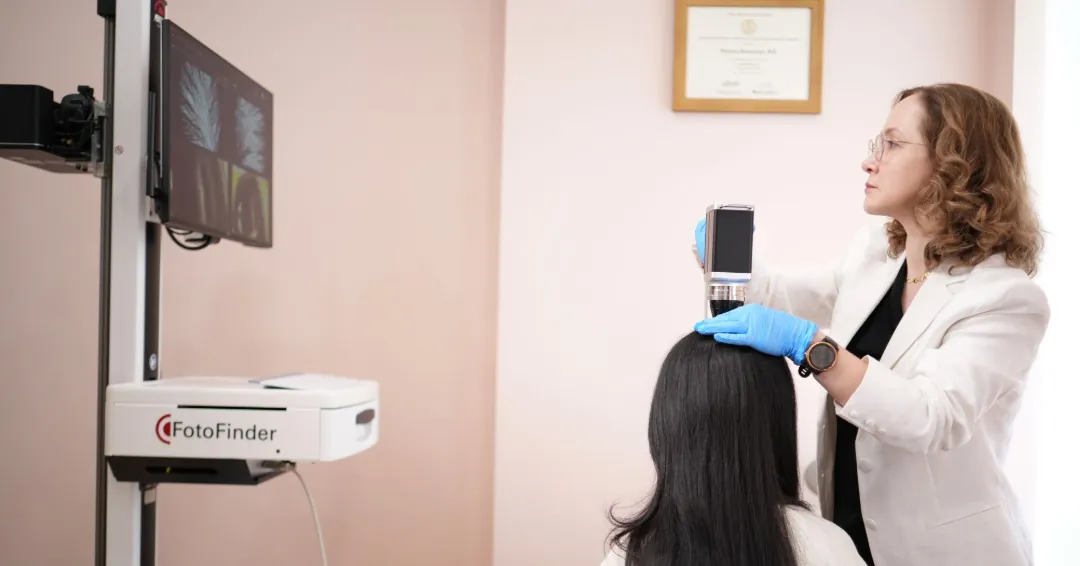
This is one of the most important distinctions in hair-loss evaluation. Blood tests evaluate systemic contributors. Trichoscopy evaluates the hair and scalp directly. Neither universally replaces the other.
| Question | Blood Tests | Trichoscopy |
|---|---|---|
| Is iron deficiency present? | Yes | No |
| Is thyroid dysfunction present? | Yes | No |
| Is follicular miniaturization present? | No | Yes |
| Is male or female pattern hair loss developing? | Indirect at best | Particularly useful |
| Is there perifollicular inflammation? | Usually not | Can show relevant signs |
| Are follicular openings disappearing? | No | Can help identify this |
| Could diffuse shedding have a systemic contributor? | May help | Helps characterize the hair-loss pattern |
| Can one replace the other? | No | No |
When Is a Scalp Biopsy More Useful Than More Blood Tests?
A scalp biopsy is not needed for routine, uncomplicated hair shedding. It becomes more useful when:
- Scarring alopecia is suspected;
- The diagnosis remains unclear;
- Inflammatory findings persist;
- Trichoscopy shows concerning follicular changes;
- Progression continues despite treatment that should have worked for the presumed diagnosis.
A biopsy samples the scalp and follicles so the tissue can be examined microscopically. That can provide information a serum test simply cannot. Dermatology Circle’s guide to understanding scalp biopsies explains this role in more detail.
The Bottom Line
Hair-loss blood tests are most useful when they are selected to answer a specific clinical question. CBC, ferritin and iron studies, and TSH are common starting points in the right context. Vitamin, mineral, or hormone tests may be appropriate when the history, symptoms, diet, medications, or examination create a reason to order them.
Normal blood work does not rule out a hair-loss disorder. Abnormal blood work does not automatically identify the full diagnosis. The best interpretation brings laboratory results together with the pattern of loss, the scalp examination, and trichoscopic findings.
This article is for educational purposes and does not replace individualized medical evaluation, diagnosis, or treatment.