A patient with darker skin may hear two completely opposite messages about laser treatment. One clinic says, “You cannot have laser treatment because your skin is too dark.” Another advertises a device as “safe for every skin tone.”
Neither statement is precise enough.
Many laser treatments for skin of color can be performed successfully. However, increased epidermal melanin changes how light energy interacts with the skin. This can narrow the margin between delivering enough energy to affect the intended target and unintentionally heating pigment in the surrounding epidermis.
This is why treating darker skin is not simply a matter of finding one supposedly “safe laser.”
Before starting treatment, I consider several questions:
- What condition are we treating?
- What tissue are we trying to target?
- How much epidermal melanin is present today?
- Has the patient developed post-inflammatory hyperpigmentation after acne, procedures or injury?
- Is the skin recently tanned, irritated or already inflamed?
- Which technology and treatment intensity create a reasonable balance between benefit and pigment risk?
A more conservative treatment does not necessarily mean undertreating the patient. It means creating enough biological effect to produce improvement without causing unnecessary epidermal injury and inflammation.
What Does “Skin of Color” Mean in Laser Dermatology?
“Skin of color” is a broad clinical term. It is useful when discussing pigment biology and disparities in dermatologic research, but it should not become a substitute for examining the individual patient’s skin.
Race and ethnicity do not precisely predict laser response.
Two patients who identify with the same ethnicity may have very different baseline pigmentation, tanning behavior, histories of post-inflammatory hyperpigmentation, melasma tendencies and previous responses to laser treatment.
The same is true in reverse: two people from different racial backgrounds may have similar skin phototypes and procedural risk.
What About Fitzpatrick Skin Type?
Dermatologists often use the Fitzpatrick skin-type scale as one part of the assessment.
Broadly:
- Types I–II are lighter phototypes;
- Types III–IV are intermediate phototypes;
- Types V–VI are more deeply pigmented phototypes.
However, the Fitzpatrick system was originally designed around how skin responds to ultraviolet exposure, particularly burning and tanning. It was not created as a complete laser-risk classification.
Race is not the same as Fitzpatrick type, and Fitzpatrick type is not the entire laser assessment.
It is one clinical clue among many.
Why Skin Tone Changes Laser Treatment Planning
Lasers work because particular structures in the skin absorb specific wavelengths of light. Different technologies may target:
- Melanin in pigmentation or hair;
- Hemoglobin in blood vessels;
- Water during resurfacing procedures.
More deeply pigmented skin contains more melanin in the epidermis. This epidermal melanin may absorb some of the same light energy intended for the actual treatment target.
Unwanted absorption can increase the risk of:
- Post-inflammatory hyperpigmentation;
- Temporary or persistent hypopigmentation;
- Burns or blistering;
- Prolonged inflammation;
- Uneven skin tone;
- Rarely, scarring.
This does not mean laser treatment is prohibited. It means that diagnosis, wavelength, settings, cooling, treatment density and aftercare deserve additional attention.
What Is Post-Inflammatory Hyperpigmentation After Laser Treatment?
Post-inflammatory hyperpigmentation, or PIH, is darkening that develops after inflammation or injury. Acne, eczema, burns, irritation and cosmetic procedures can all trigger it.
PIH can occur in any skin tone, but it is generally more common and may be more noticeable or persistent in deeply pigmented skin.
For some patients, pigmentation created by an overly inflammatory procedure can last longer and become more bothersome than the condition they originally wanted treated.
Hyperpigmentation Is Not the Only Pigment Risk
Most patients worry about becoming darker after treatment. Dermatologists must also consider unwanted lightening, or post-inflammatory hypopigmentation.
Hypopigmentation may develop when pigment-producing cells are injured or their activity is significantly disrupted. In some circumstances, it can be more difficult to correct than PIH.
Factors That Can Increase Pigment Risk
| Factor | Why It Matters |
|---|---|
| Higher epidermal melanin | Creates more competing absorption of light energy within the epidermis |
| Previous PIH | Suggests greater pigment reactivity after inflammation or injury |
| Recent tanning | Adds epidermal melanin and may narrow the treatment safety margin |
| Aggressive treatment intensity | Can increase inflammation and thermal injury |
| High fractional density | Increases the amount of treated tissue and cumulative inflammation |
| Multiple passes | Can increase total delivered energy and tissue heating |
| Active melasma | Inflammatory procedures may provoke rebound or worsening pigmentation |
| Active dermatitis or inflamed acne | The skin is already in an inflammatory state |
| Inadequate sun protection | UV and visible-light exposure can worsen post-procedure pigmentation |
These factors do not automatically exclude treatment. They change how treatment should be planned.
Why Wavelength Is Only Part of the Equation
Patients often hear that “1064 nm is safe for dark skin.” There is a useful principle behind this statement: longer wavelengths may interact less with epidermal melanin and penetrate more deeply.
But wavelength alone does not make a procedure safe.
Treatment response also depends on:
- The amount of energy delivered;
- Pulse duration;
- Spot size;
- Fractional density;
- Cooling;
- Treatment coverage;
- Number of passes;
- Anatomical area;
- Diagnosis;
- Current pigmentation;
- Recent sun exposure;
- Previous pigment response.
A theoretically appropriate wavelength can still cause complications if the parameters are inappropriate. Conversely, a technology that requires additional caution in more deeply pigmented skin may still be useful for a carefully selected patient.
There is no wavelength that removes the need for clinical judgment.
Laser Settings and Epidermal Melanin
The objective is not simply to use the lowest possible setting. A treatment that does not create the intended biological effect may provide little or no benefit.
The goal is to find an effective treatment intensity with an acceptable safety margin.
This is one reason copying another patient’s laser settings is medically meaningless. Two patients may have different skin tones, degrees of tanning, treatment targets, medical histories and responses to inflammation even when their concerns appear similar in photographs.
Why Cooling Matters
Some laser systems use epidermal cooling to help protect the skin surface. Depending on the device, this may involve:
- Contact cooling;
- Cryogen spray cooling;
- Cold air;
- Another integrated cooling system.
Cooling can reduce unwanted epidermal heating during selected treatments. However, it does not eliminate pigment risk, and stronger cooling should not be interpreted as permission to treat more aggressively.
Can CO2 Laser Be Used on Darker Skin?
Yes. Fractional CO2 laser resurfacing can be used in selected patients with darker skin tones. However, the risk-benefit calculation changes as pigment reactivity increases.
CO2 laser treatment creates controlled thermal injury and collagen remodeling. That can produce meaningful improvement in selected acne scars, wrinkles and texture concerns, but it also produces inflammation—the same biological response that may trigger PIH.
Clinical research comparing fractional CO2 resurfacing with microneedling in darker phototypes has illustrated this trade-off: CO2 may produce greater improvement in selected atrophic acne scars, while pigmentary complications can occur more frequently.
The lesson is not that the more intensive procedure is automatically inappropriate. It is that greater remodeling potential may come with greater inflammatory and pigment risk.
For a detailed explanation of recovery at different treatment intensities, see our guide to CO2 laser recovery and downtime.
Ablative vs. Non-Ablative Fractional Lasers
Fractional lasers treat microscopic columns of skin while leaving surrounding areas untreated to participate in healing.
Ablative Fractional Lasers
Ablative fractional technologies, including fractional CO2 and erbium lasers, remove microscopic columns of tissue. They may provide more intensive resurfacing and collagen remodeling, but generally create more inflammation and recovery.
Non-Ablative Fractional Lasers
Non-ablative fractional lasers heat microscopic treatment zones without vaporizing the skin surface in the same way. They often involve less recovery and may be incorporated into plans for pigmentation, pores, mild scarring and texture.
“Non-ablative” does not mean risk-free, just as “fractional” does not mean pigment-safe for every patient. Device selection still needs to account for wavelength, density, treatment intensity, diagnosis and individual pigment history.
Vascular Lasers in Darker Skin
Vascular lasers primarily target hemoglobin within blood vessels, but epidermal melanin still matters. As skin pigmentation increases, some of the energy intended for the vascular target may also be absorbed closer to the skin surface.
Pulsed dye lasers, including Vbeam, can be useful for selected vascular concerns in patients with skin of color. However, vessel size, depth, baseline pigmentation, wavelength, pulse duration and cooling all affect the treatment decision.
Published literature supports the potential benefit of pulsed dye laser treatment in Fitzpatrick IV–VI skin while also documenting the importance of hyperpigmentation, hypopigmentation and, less commonly, scarring as possible complications.
For patients comparing vascular technologies, our guide to Vbeam vs. IPL for facial redness explains how the mechanisms and clinical uses differ.
You can also read about our broader approach to rosacea and vascular laser treatment in NYC.
What About IPL in Darker Skin?
IPL is not technically a laser. Intense pulsed light emits a range of wavelengths rather than one specific wavelength.
Because broad-spectrum light can interact with epidermal pigment, IPL requires particularly thoughtful patient selection in patients with darker skin tones or pigment disorders.
IPL may be useful for selected concerns, but it is not a universal treatment for every brown or red area. The diagnosis and individual skin response matter more than the fact that a device has adjustable filters.
Melasma Deserves Extra Caution
Melasma is one of the clearest examples of why “brown pigment” should not automatically lead to a pigment-targeting laser.
Melasma is a chronic and biologically active pigment disorder. A procedure may temporarily lighten visible pigment without eliminating the skin’s tendency to produce it again.
A laser that successfully removes an isolated sunspot may not be appropriate for melasma.
In selected patients, fractional lasers or other energy-based treatments may become useful after the diagnosis has been confirmed, photoprotection established and active pigment production brought under better control.
For a more detailed treatment sequence, read Melasma and Lasers: Safer Treatment Choices.
Acne Scar Treatment in Skin of Color
Acne scars create another important trade-off. The dermatologist must balance how much remodeling a scar needs against how much inflammation the patient’s skin can reasonably tolerate.
Possible treatments include:
- Fractional CO2 resurfacing;
- Non-ablative fractional laser treatment;
- Microneedling;
- Radiofrequency microneedling;
- Subcision;
- TCA CROSS;
- Focal scar excision or elevation;
- Selected fillers or collagen biostimulators;
- Combination treatment.
Skin tone is only one part of the decision. Scar morphology still matters. A tethered rolling scar, narrow ice-pick scar and shallow boxcar scar do not have the same structure and should not automatically receive the same procedure.
Our acne scar treatment page explains how scar depth, shape, tethering, pigmentation and skin tone are evaluated before selecting treatment.
For a more detailed comparison, see Which Acne Scar Treatment Fits Your Scar Type?
Real Patient Laser Results in Skin of Color
These cases demonstrate how controlled laser treatment may be incorporated into a plan for pigmentation, texture, pores or photodamage in patients with more deeply pigmented skin.
They do not establish that the same device, settings or number of sessions will be appropriate for every patient. Individual results vary, and treatment planning should account for the diagnosis, skin tone, pigment history and desired level of recovery.
Case 1: Post-Acne Pigmentation and Textural Scarring
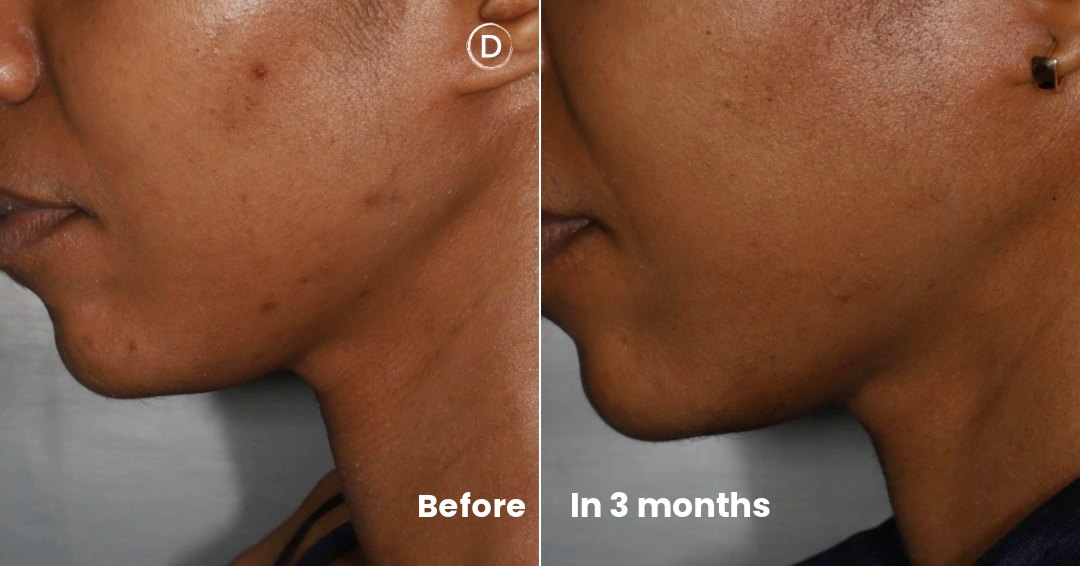
This patient had residual pigmentation and textural irregularity following acne. The treatment objective was not simply to remove brown marks. It was to improve discoloration and surface texture while limiting unnecessary inflammation in pigment-reactive skin.
The photograph taken at three months demonstrates a more even appearance and improvement in the visibility of post-acne changes. Continued skincare and sun protection remain important because laser treatment does not eliminate the biological tendency to develop pigmentation after new inflammation.
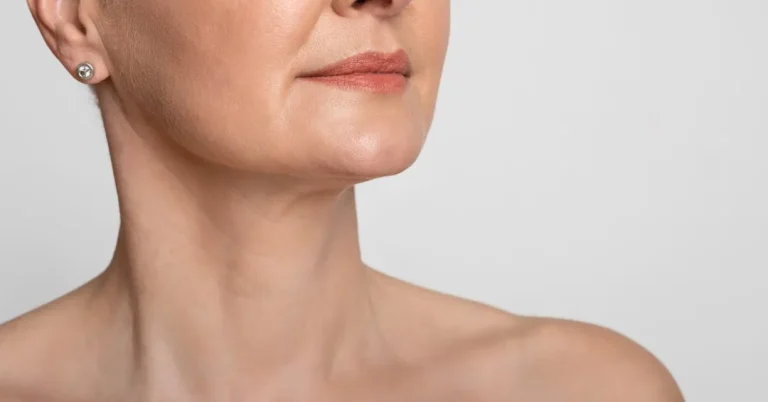
Case 2: Neck Brightening and Texture Improvement
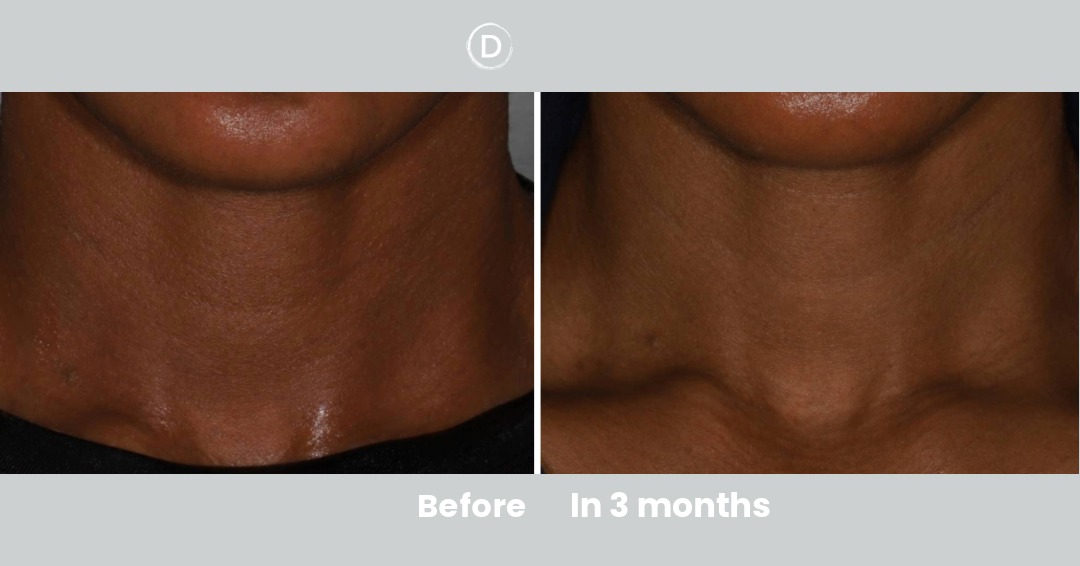
The neck requires additional caution because its skin is thinner and may heal differently from facial skin. In this case, the concerns included rough texture, dark discoloration and uneven tone associated with photodamage.
A gentle treatment strategy was used to improve pigmentation and texture without relying on highly aggressive resurfacing. The three-month result shows a brighter and more even appearance while retaining the patient’s natural skin tone.
Patients considering treatment below the jawline can also review our guide to neck and décolletage rejuvenation in NYC.
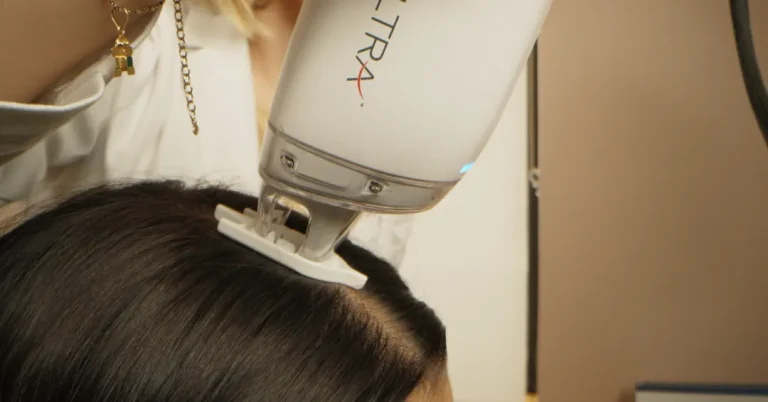
Case 3: Pore and Texture Improvement With Minimal Downtime
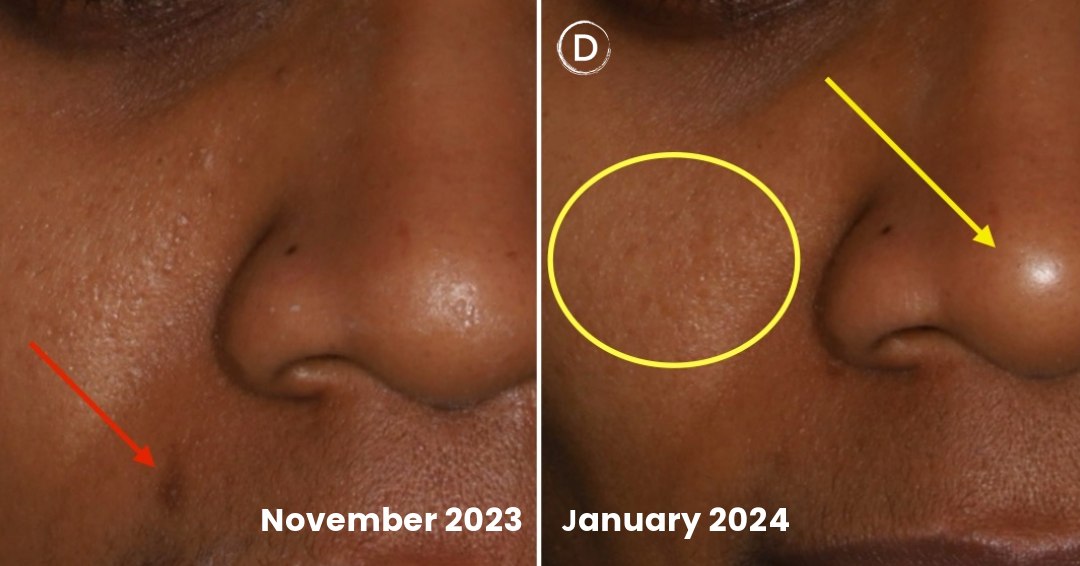
This case demonstrates a lower-downtime approach for a patient concerned about visible pores and uneven texture. Ultra LaseMD is a non-ablative fractional thulium laser that can be used at different treatment intensities according to the indication, skin characteristics and recovery goals.
Lasers cannot permanently remove pores, which are normal anatomical structures. However, selected fractional treatments may improve the surrounding texture and make pores appear less prominent.
Minimal downtime does not mean that a procedure is risk-free or appropriate for every skin tone. Even relatively gentle fractional treatment requires individualized settings, sun avoidance and appropriate aftercare.
Does Microneedling Automatically Make More Sense for Darker Skin?
No. Microneedling has a practical advantage because it does not depend on the absorption of light by epidermal melanin. This may reduce pigment-related concerns in selected situations.
But microneedling is not a universal substitute for laser treatment.
A deep, sharply edged or tethered acne scar may require a treatment that microneedling alone cannot adequately provide. Similarly, microneedling does not directly target a vascular lesion or discrete pigmented lesion in the same way as an appropriately selected laser.
The treatment should follow the diagnosis and tissue target—not simply the patient’s skin tone.
Learn more about physician-led microneedling for acne scars and skin texture.
Why Recent Tanning Matters
A patient’s lifetime skin tone is not the only pigmentation that matters. A tan means more epidermal melanin is present today.
This can change the safety margin even if the patient previously tolerated the same procedure without difficulty.
A patient may be a reasonable candidate for a procedure during winter and a less attractive candidate immediately after a sunny vacation. Treatment may need to be postponed until the tan has faded and the skin has returned closer to baseline.
Why Test Spots May Sometimes Be Useful
A test spot means treating a limited area and observing the response before treating a larger surface.
It may help assess:
- Immediate tissue response;
- Delayed pigmentation;
- Healing pattern;
- Tolerance to the proposed treatment approach.
A test spot can reduce uncertainty, but it does not guarantee that a full-face or higher-density treatment will produce exactly the same response. A small test area cannot reproduce every aspect of cumulative treatment coverage.
Does Pretreatment Reduce Pigment Risk?
Some patients may benefit from a dermatologist-directed pretreatment plan before laser therapy. Depending on the diagnosis and medical history, this may include:
- Rigorous broad-spectrum photoprotection;
- Tinted sunscreen containing iron oxides when visible-light protection is relevant;
- Temporary use of pigment-modulating topical medication;
- Treatment of active acne, dermatitis or irritation;
- Stopping products that are unnecessarily disrupting the skin barrier;
- Delaying treatment after tanning or significant sun exposure.
There is no universal “laser prep” routine. Pretreatment should be selected according to the procedure and the patient rather than copied from a generic checklist.
Post-Treatment Pigment Management
There is no single aftercare regimen that applies to every laser. Ablative CO2 aftercare is very different from the care required after a mild vascular or non-ablative fractional procedure.
Depending on the treatment, instructions may include:
- Gentle cleansing;
- Barrier-supportive moisturization;
- Strict photoprotection;
- Avoiding heat, friction and irritation during early recovery;
- Temporary adjustment of retinoids, exfoliating acids or other active products;
- Monitoring for prolonged redness, blistering, crusting or unexpected discoloration.
Aftercare should match the actual procedure and the expected degree of inflammation.
What If Pigmentation Develops After Laser?
PIH does not automatically mean permanent damage, but it should prompt reassessment.
Dermatologist-directed management may include:
- Strict photoprotection;
- Pigment-modulating topical treatment;
- Reducing additional irritation and inflammation;
- Postponing further energy-based procedures;
- Reconsidering the original diagnosis and treatment intensity.
A common mistake is to see post-laser pigmentation and immediately try to “laser the pigment away” again. Another procedure may eventually become appropriate, but adding more inflammation too early can make the problem worse.
Treatment Categories and Skin-of-Color Considerations
| Treatment Category | Potential Uses | Skin-of-Color Consideration |
|---|---|---|
| Vascular laser | Redness, visible vessels and selected vascular lesions | Epidermal melanin can compete with the vascular target; wavelength, cooling and parameters matter |
| Non-ablative fractional laser | Texture, selected scars, pores and pigmentation concerns | May create a lower inflammatory burden than ablative resurfacing, but PIH remains possible |
| Fractional CO2 or ablative resurfacing | Acne scars, wrinkles and more substantial texture changes | Greater remodeling potential with greater inflammation, recovery and PIH consideration |
| Pigment-specific laser | Selected pigmented lesions | Normal epidermal melanin may compete with pigment in the treatment target |
| 1064-nm Nd:YAG | Selected vascular, hair-removal and other indications | The longer wavelength may offer advantages in darker skin, but treatment is not risk-free |
| IPL | Selected redness, photodamage and pigmentation patterns | Broad-spectrum light requires careful selection because epidermal pigment may absorb treatment energy |
| Microneedling or RF approaches | Selected scars and texture concerns | Interaction with melanin differs from laser treatment, but these procedures are not automatically equivalent or risk-free |
Questions to Ask Before Laser Treatment
- What diagnosis are we actually treating?
- Have you treated this condition in patients with skin similar to mine?
- Why are you recommending this particular laser or energy device?
- What is my risk of post-inflammatory hyperpigmentation?
- Could the treatment cause hypopigmentation?
- Would a test spot be useful?
- Does my recent sun exposure or tanning change the plan?
- Do I need any pretreatment?
- What should I avoid during recovery?
- What should I do if pigmentation develops?
- Is there a less inflammatory alternative?
- How will you decide whether a future treatment should be stronger, the same or more conservative?
These questions are not intended to help patients choose their own laser settings. They help determine whether the proposed treatment plan is genuinely individualized.
Common Myths About Lasers and Darker Skin
Myth: People With Dark Skin Cannot Have Laser Treatments
Reality: Many laser and energy-based procedures can be performed successfully in patients with darker skin. Diagnosis, patient selection, technology and treatment parameters matter.
Myth: 1064-nm Nd:YAG Is Always Safe
Reality: Wavelength is only one part of the treatment equation. Pulse duration, fluence, spot size, cooling, diagnosis and operator experience still influence the result.
Myth: Fractional Means Risk-Free
Reality: Fractional procedures can still produce significant inflammation, PIH, hypopigmentation or other complications.
Myth: A Successful Test Spot Guarantees There Will Be No Pigmentation
Reality: A test spot can reduce uncertainty but cannot reproduce every aspect of a full treatment.
Myth: Lower Energy Is Always Better
Reality: Treatment still needs to create enough biological effect to accomplish the clinical objective. The goal is an effective treatment with an appropriate safety margin—not automatically the lowest possible setting.
Myth: One Laser Is Best for All Skin of Color
Reality: Skin of color is not one skin type, and pigmentation, vascular concerns, acne scars and texture changes are not the same treatment target. No single device is the answer to every concern.
How I Approach Laser Treatment in Skin of Color
I prefer to think about treatment as a sequence:
- Confirm the diagnosis. Determine whether the concern is PIH, melasma, a discrete pigmented lesion, vascular redness, photodamage, structural scarring or a combination.
- Assess current skin condition. Recent tanning, active inflammation, barrier disruption and current pigmentation can change the plan.
- Review previous reactions. Pigmentation after acne, injury or previous procedures provides useful information about pigment reactivity.
- Identify the treatment target. The intended target may be pigment, hemoglobin, water, collagen or scar architecture.
- Choose the technology. Device selection should follow the diagnosis rather than precede it.
- Adjust treatment intensity. Wavelength, energy, density, cooling, passes and coverage should be individualized.
- Plan recovery and pigment prevention. Sun protection and aftercare are part of the treatment, not an optional addition.
- Reassess the response. A good result does not automatically mean the next session should be stronger.
The aim is not to avoid every laser in darker skin or to promise that one machine is universally safe. It is to select the treatment whose expected benefit reasonably justifies its inflammatory and pigment risk.
Considering a laser procedure but concerned about hyperpigmentation or your skin tone? A personalized cosmetic consultation at Dermatology Circle can evaluate the diagnosis, previous pigment response, current skin condition, downtime tolerance and available treatment options before deciding whether laser, another energy-based procedure or a lower-inflammatory approach makes the most sense.