Patients comparing Vbeam (pulsed dye laser) vs IPL (intense pulsed light) often want a simple answer: “Which treatment works better for rosacea?”
The more useful answer depends on what is actually making the face look red. A few visible capillaries around the nose are different from persistent background redness. Both differ from episodic flushing, and redness accompanied by brown spots or sun damage. Some patients also have inflammatory rosacea with papules and pustules that cannot be addressed by a vascular procedure alone.
Vbeam and IPL can both improve vascular manifestations of rosacea, but they are not interchangeable technologies. Current evidence supports both pulsed dye laser (PDL) and IPL for rosacea-associated erythema, without establishing one universal winner for every patient.
The best starting point is therefore not “Which machine is better?” but “What type of redness are we treating?”
Why Rosacea Redness Is Not All the Same
“Redness” is a useful everyday description, but from a medical standpoint, it can represent several different findings.
A patient may have:
- Persistent background erythema (a more continuous red or pink color);
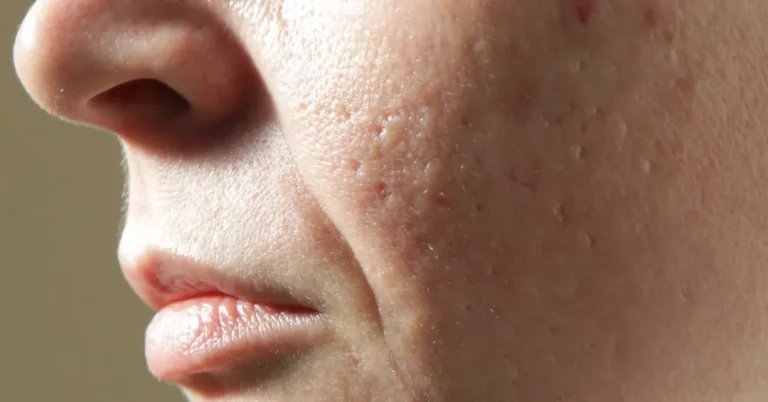
- Telangiectasias (individual superficial blood vessels that remain visible);
- Episodic flushing that appears and disappears;
- Inflammatory rosacea with red papules or pustules;
- Redness combined with brown pigmentation or sun damage;
- Several of these findings at the same time.
Rosacea itself may include flushing, persistent facial color, visible blood vessels, and acne-like breakouts. This distinction matters because a patient whose primary concern is a cluster of visible vessels may benefit from a different strategy than someone with generalized redness and photodamage.
In other words, the target should determine the device, but not the other way around.
How Dermatology Circle Approaches Rosacea Treatment
Rather than starting from “which laser do you want,” we start from diagnosis.
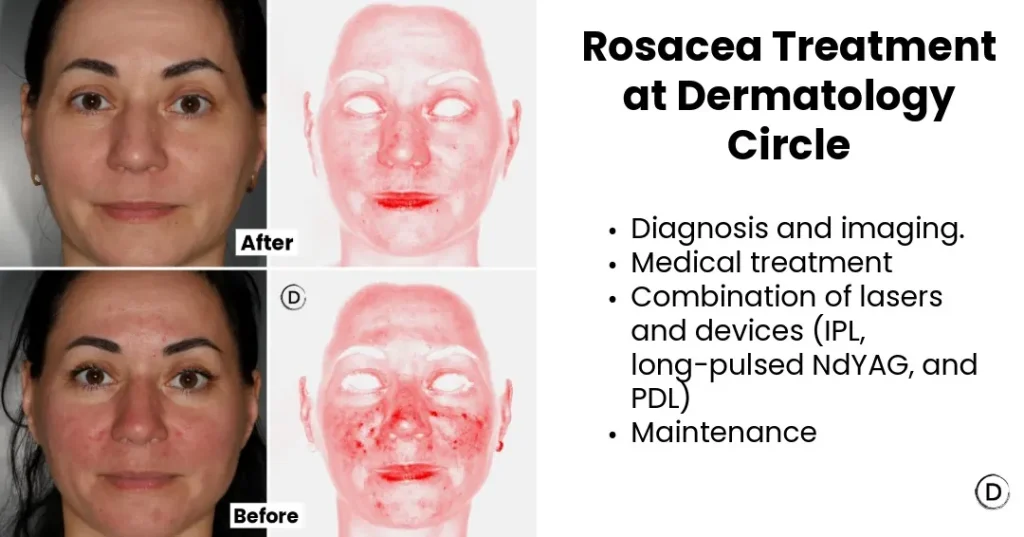
- Consultation and skin exam. We assess the pattern of redness — discrete vessels, diffuse erythema, flushing, pigmentation, or inflammatory rosacea — along with Fitzpatrick skin type, pigment history, and prior treatments.
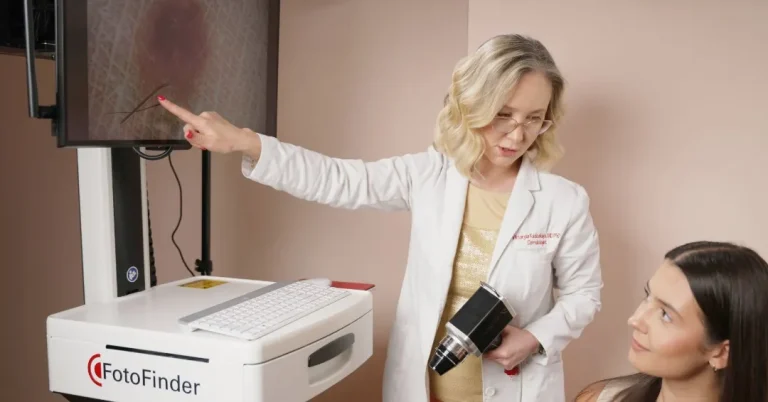
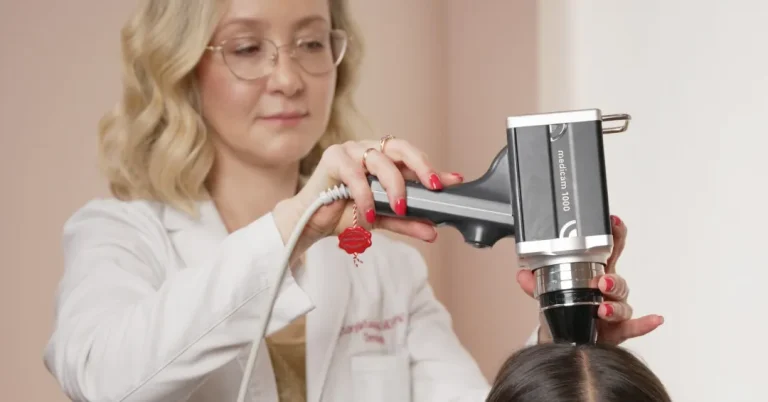
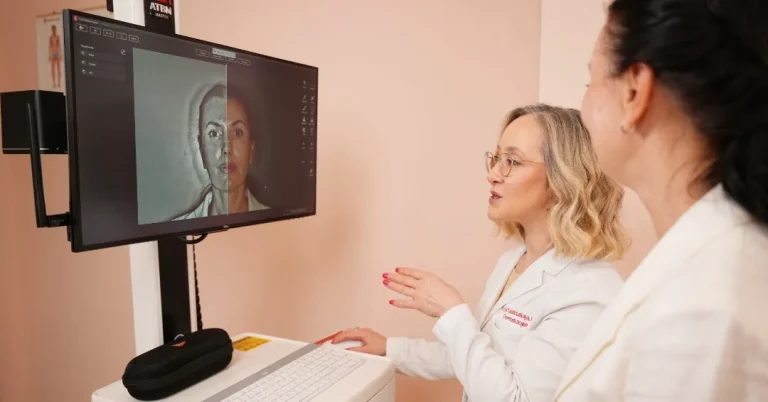
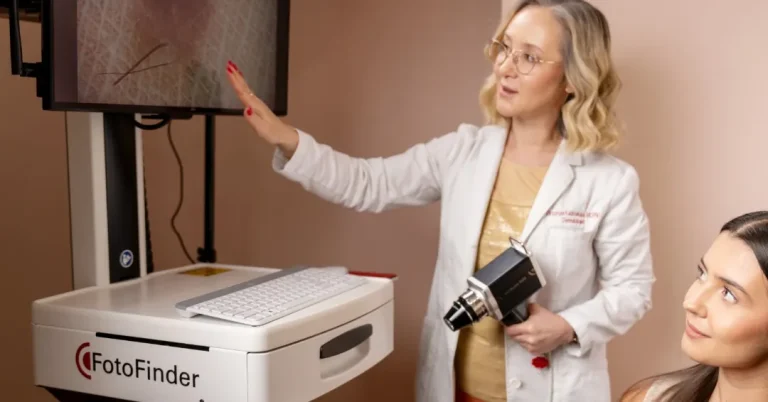
- Imaging to visualize vessels lets us see vessel size, depth, and distribution beneath the surface before choosing a device or setting, rather than treating from visual inspection alone.
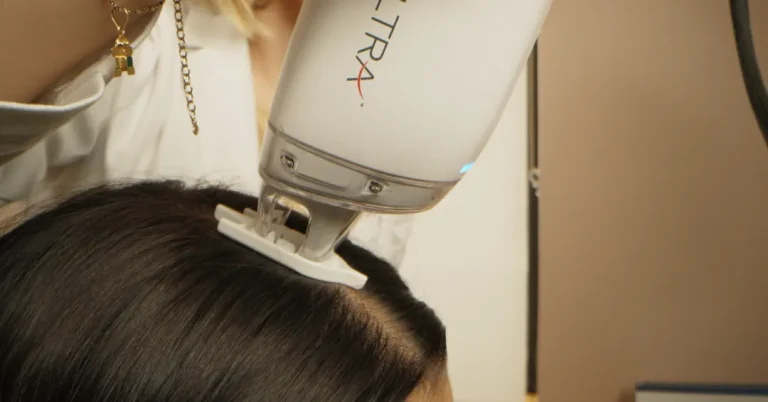
- Device selection from our three-laser toolkit. Depending on what the imaging and exam show, we choose between Vbeam (PDL), IPL, and long-pulsed Nd:YAG, or combine them across a treatment series.
- Medical therapy when indicated. Vascular lasers address visible vessels, not the inflammatory component of rosacea. When papules, pustules, or persistent background inflammation are present, we add prescription treatment alongside the laser plan: topical options such as metronidazole, azelaic acid, or ivermectin for milder inflammatory activity, and oral antibiotics (typically low-dose doxycycline or minocycline) for more significant or persistent cases. The medication addresses the inflammatory disease; the laser addresses the visible vessels. They work on different parts of the problem, which is why we often recommend both rather than either alone.
- Cosmeceutical and skincare recommendations. We recommend a barrier-supportive, trigger-conscious routine to extend results and reduce flare frequency between sessions, typically a gentle non-stripping cleanser to calm redness, a fragrance-free moisturizer to support the barrier, and daily mineral sunscreen, since UV exposure is one of the most common rosacea triggers and can undo laser progress.
- Maintenance plan. Because rosacea is chronic, we build a realistic maintenance schedule rather than treating it as a one-time fix.
What Vbeam / Pulsed Dye Laser Targets
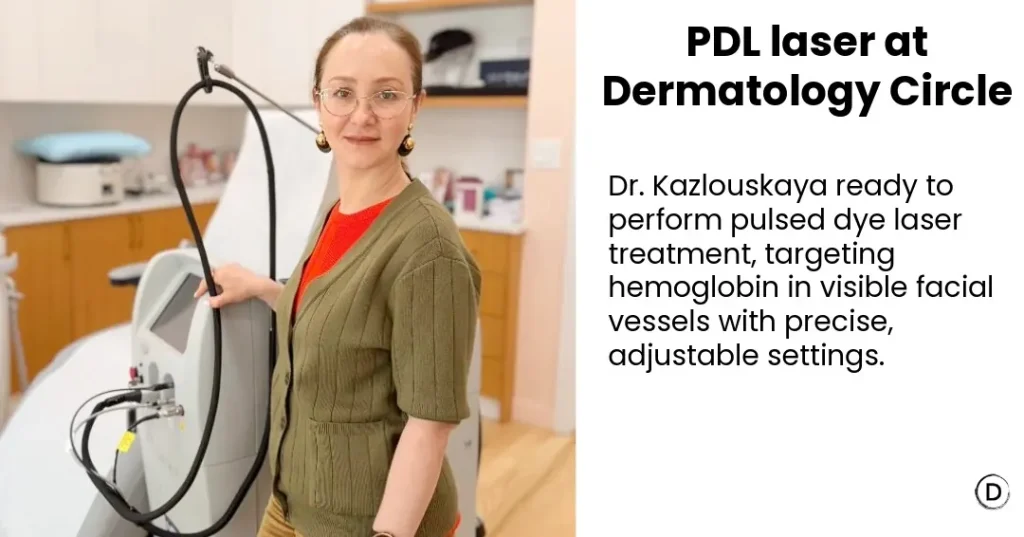
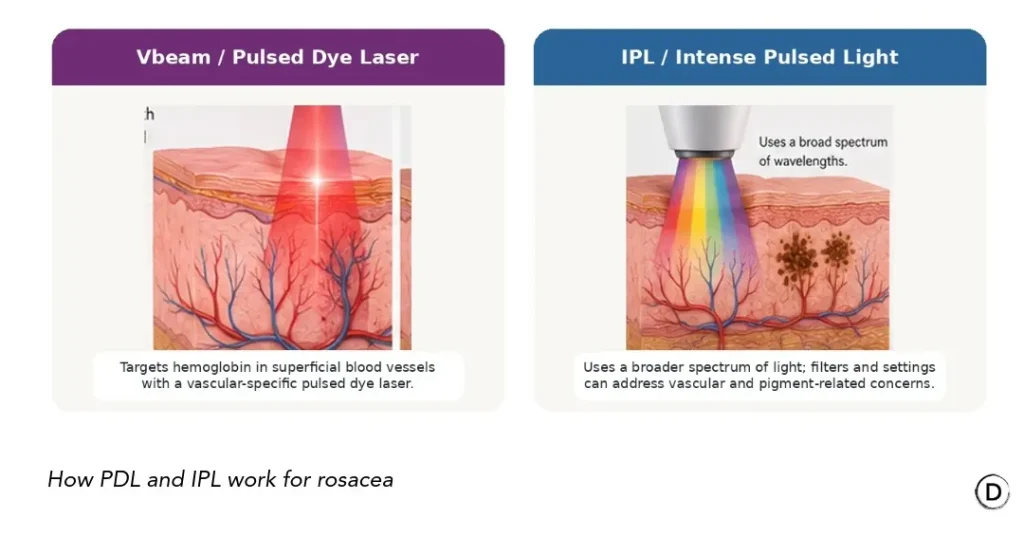
Vbeam is a pulsed dye laser, commonly referred to as PDL. It is a vascular-focused laser technology.
Its light is preferentially absorbed by hemoglobin within blood vessels. That allows energy to be directed toward vascular structures while minimizing unnecessary treatment of surrounding tissue.
Vbeam may be considered for:
- Visible facial capillaries;
- Telangiectasias;
- Persistent vascular redness;
- Selected vascular lesions;
- Rosacea-associated erythema.
PDL is one of the most established laser technologies for vascular rosacea, and clinical studies have documented improvement in facial redness after a treatment series.
Importantly, “Vbeam treatment” is not one fixed treatment. Parameters can be adjusted according to factors such as vessel size, location, skin characteristics, and the desired treatment endpoint. This is also why two patients treated with the same device may have very different experiences afterward.
What IPL Targets
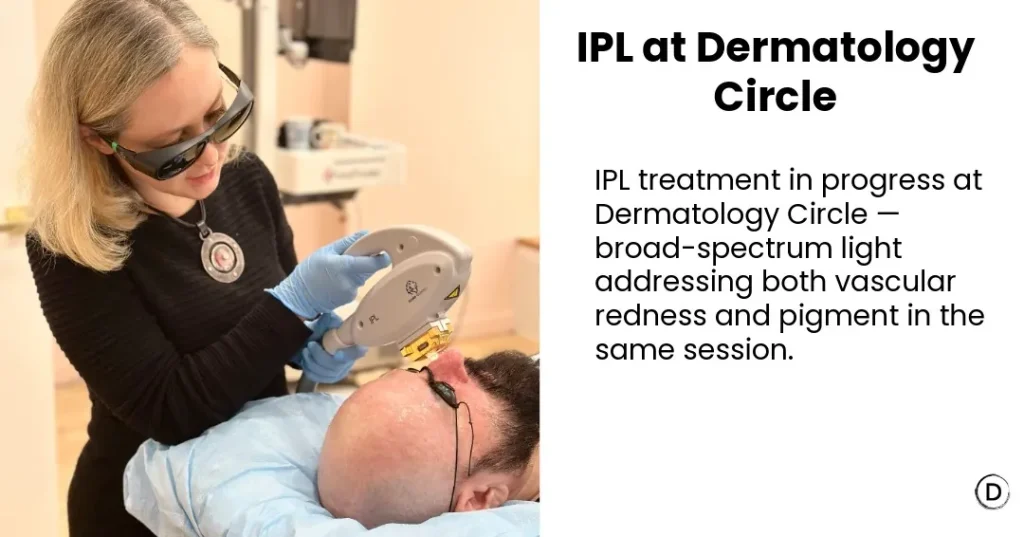
IPL, or intense pulsed light, is not technically a laser! Instead of delivering one laser wavelength, IPL produces a broader spectrum of light. Filters and treatment settings are used to select portions of that spectrum for different targets.
This gives IPL an important practical advantage in selected patients: it may address both vascular redness and pigment-related concerns as well as improving skin quality overall, all during the same treatment plan.
IPL may therefore be particularly attractive when facial redness occurs together with:
- Brown spots;
- Sun-related pigmentation;
- Uneven skin tone;
- Diffuse superficial vascular changes;
- Broader photodamage.
This does not mean IPL is simply a “weaker” or “broader Vbeam.” It is a different technology.
Research comparing IPL and PDL suggests that both can improve rosacea-associated erythema, while outcomes vary according to the specific IPL system, wavelengths or filters, treatment protocol, and patient population.
Vbeam vs. IPL for Visible Capillaries
When individual facial vessels — sometimes called “broken capillaries” — are the dominant concern, a vascular-specific laser such as Vbeam can be particularly useful.
But even visible vessels are not all alike.
Treatment response can depend on:
- Vessel diameter;
- Depth;
- Color;
- Location;
- Surrounding skin pigmentation;
- Treatment parameters.
A very superficial red vessel on the cheek is not necessarily treated the same way as a deeper or larger vessel around the nose. IPL can also improve superficial vascular changes, and studies have shown benefit from both IPL and nonpurpuric PDL in erythematotelangiectatic rosacea.
There are also other vascular laser wavelengths, including KTP and long-pulsed Nd:YAG-based technologies, that may be useful in selected situations. Vbeam and IPL should therefore not be viewed as the only two options available.
Several treatment sessions may be necessary, particularly when vessels are numerous, or rosacea is more extensive. Complete clearance should not be assumed.
Vbeam vs. IPL for Diffuse Facial Redness
Persistent background redness creates a slightly different treatment decision. Both PDL and IPL can improve facial erythema. The American Academy of Dermatology recognizes laser and light treatment as options for persistent redness and visible blood vessels associated with rosacea.
When vascular redness is the dominant problem, Vbeam may provide a highly targeted approach. When diffuse redness occurs together with brown pigmentation, uneven tone, or photodamage, IPL may offer an additional advantage because pigment and superficial vascular changes can potentially be addressed within the same treatment strategy.
This is where a term “red face” does not provide enough information to choose treatment. The distribution of redness, visible vessels, pigmentation, skin tone, and underlying rosacea activity all matter.
What About Flushing Without Permanent Redness?
Flushing is different from a fixed blood vessel. A patient may look relatively normal at baseline and become intensely red after exercise, alcohol, heat, emotional stress, spicy food, or temperature changes. These are recognized rosacea triggers, although individual triggers vary substantially.
Laser or IPL treatment may help selected patients, particularly when flushing coexists with persistent erythema or visible vascular changes. However, removing or reducing visible vessels does not necessarily eliminate the underlying physiological tendency to flush.
For that reason, a patient whose primary complaint is flushing should not be promised that a vascular procedure will permanently stop every episode. Trigger management and, in some cases, an appropriate medical treatment may still be important.
Can Vbeam or IPL Help Acne-Like Rosacea Bumps?
Rosacea can include both vascular and inflammatory components. Vbeam and IPL primarily make sense when vascular changes are part of the clinical problem. They should not automatically replace treatment for inflammatory papules and pustules.
Depending on the presentation, rosacea management may include:
- Prescription topical medications;
- Oral treatment when appropriate;
- Gentle skincare and barrier support;
- Sun protection;
- Identification of important triggers;
- Laser or light treatment for persistent vascular findings.
AAD guidance describes rosacea treatment as individualized and potentially combining skincare, trigger management, medication, and laser or light therapy.
At Dermatology Circle, this is also the philosophy behind a cosmetic consultation in NYC: the goal is to identify the problem first rather than begin with a predetermined procedure.
Skin Tone and Pigmentation Considerations
Skin tone matters whenever light-based treatment is being considered because melanin also absorbs light energy. This does not mean patients with darker skin tones cannot undergo vascular treatment. It means device selection, wavelength, settings, cooling, recent sun exposure, and physician experience become increasingly important as pigment-related risk rises.
Factors worth considering include:
- Baseline skin tone;
- Fitzpatrick skin type;
- Recent tanning or significant sun exposure;
- History of post-inflammatory hyperpigmentation;
- Melasma;
- Tendency to develop pigmentation after procedures;
- Medications or conditions that increase photosensitivity.
IPL deserves particular attention because its broad spectrum can interact with epidermal melanin. Pigmentary changes are a recognized risk, and appropriate wavelength selection and treatment parameters become especially important in more pigmented skin.
A history of melasma is also relevant, as IPL may worsen melasma. Treating visible redness without considering pigment biology can create a new cosmetic problem while trying to solve another one.
Bruising, Swelling and Downtime
Neither Vbeam nor IPL should automatically be described as a “zero-downtime” procedure.
Temporary effects can include:
- Redness;
- Swelling;
- Warmth or sensitivity;
- Temporary darkening of treated pigment after IPL;
- Bruising or purpura after some PDL treatments.
Purpura refers to the purple discoloration that occurs when treated vessels react strongly enough to produce visible bruising.
One useful feature of PDL is that treatment parameters can be adjusted. Some approaches are designed to minimize purpura, while other settings may deliberately produce a stronger vascular endpoint depending on the target and treatment goal.
Studies have shown that nonpurpuric PDL protocols can improve rosacea, while more intensive PDL protocols may produce temporary bruising.
The amount of downtime therefore depends on how the device is used, not simply which device name appears on the treatment room door.
Vbeam vs. IPL — Side-by-Side Comparison
| Feature | Vbeam / Pulsed Dye Laser | IPL |
|---|---|---|
| Technology | Pulsed dye laser | Broad-spectrum intense pulsed light |
| Primary strength | Vascular targeting | Vascular + pigment + overall skin quality target depending on settings |
| Visible capillaries | Often useful | May be useful |
| Diffuse redness | Often useful | Often useful |
| Brown spots / sun damage | Not its primary target | Can potentially treat simultaneously |
| Purpura / bruising | Possible depending on settings | Less characteristic |
| Pigment considerations | Important | Particularly important |
| Treatment series | Depends on severity and response | Depends on severity and response |
| Best candidate | Depends on vascular pattern and skin characteristics | Depends on vascular and pigment pattern |
Clinical studies and systematic reviews support both PDL and IPL for rosacea-associated erythema, which is why a rigid “Vbeam wins” or “IPL wins” conclusion is difficult to justify.
How Many Sessions Might Be Needed?
There is no universal number how many sessions of IPL or VBeam is needed.
Treatment frequency depends on:
- Severity of redness;
- Number and type of visible vessels;
- Diffuse versus localized involvement;
- Underlying rosacea activity;
- Treatment intensity;
- Skin characteristics;
- Previous response;
- The patient’s treatment goals.
Some patients notice meaningful improvement even after one treatment, while more extensive vascular changes may require a series. As a rule, initially, we recommend 3-6 treatments with further maintenance.
Rosacea is also a chronic condition. Even after a successful initial course, new vascular changes or redness can develop over time, so maintenance treatments are useful.
Real-world results can also differ considerably among patients. Dermatology Circle has examples of rosacea treatment with IPL and vascular lasers in which treatment was combined with skincare rather than relying on a device alone.
Why Rosacea Sometimes Needs Medical Treatment Plus Laser
One limitation of the question “Vbeam or IPL?” is that neither option necessarily treats the entire disease. Laser and light therapies primarily address visible vascular manifestations.
Rosacea management may also need to address:
- Papules and pustules;
- Sensitive or impaired skin barrier;
- Ocular symptoms;
- Recurrent flushing;
- Trigger-related flares;
- Inflammation associated with Demodex where clinically relevant.
AAD recommendations similarly emphasize that rosacea treatment is individualized and may involve medication, skincare, trigger management, and laser or light therapy in different combinations.
This is particularly relevant when someone has active inflammatory rosacea and significant vascular redness simultaneously. Treating the vessels may improve appearance without adequately controlling the inflammatory component.
So, Is Vbeam Better Than IPL for Rosacea?
Not universally. A recent meta-analysis of literature and studies on rosacea confirmed that the efficacy of both technologies is similar.
Vbeam is a vascular-specific pulsed dye laser and may be particularly useful when visible vessels or vascular redness are the dominant concern.
IPL is a broad-spectrum light technology and may be especially useful when redness is accompanied by pigmentation, sun damage, or uneven tone.
Both can improve rosacea-associated erythema in appropriately selected patients, and comparative evidence does not support treating every patient with the same technology. The right choice depends on the vascular pattern, skin tone, associated pigmentation, inflammatory rosacea activity, previous treatment response, and tolerance for downtime.
For patients considering Vbeam in NYC, the most useful way to start with the consultation. During the visit, an evaluation to determine whether Vbeam, IPL, another vascular technology, medical treatment, or a combination is most appropriate.
Schedule a personalized dermatology and cosmetic consultation to determine which approach best matches your type of facial redness.
Frequently Asked Questions About Vbeam vs. IPL
Is Vbeam better than IPL for rosacea?
Not for every patient. Vbeam is a vascular-specific pulsed dye laser, while IPL uses a broader spectrum of light. Vbeam may be especially useful when blood vessels and vascular redness are the primary concern, while IPL may offer additional benefit when redness occurs together with pigmentation or photodamage. Studies support both modalities for rosacea-associated erythema.
Is Vbeam or IPL better for broken capillaries?
A vascular-specific laser such as Vbeam may be particularly useful for discrete superficial vessels, but vessel size, depth, location, skin tone, and treatment parameters all affect the choice. IPL can also improve superficial telangiectasias. Other vascular lasers may occasionally be more appropriate.
Can IPL treat redness and brown spots at the same time?
Potentially, yes. Because IPL uses a broad spectrum of light and selectable filters, it can target both vascular and pigment-related changes in appropriately selected patients. This may be useful when rosacea-related redness coexists with sun spots or uneven pigmentation. Pigment history and skin tone need to be considered carefully.
Does Vbeam always cause bruising?
No. Purpura or bruising depends partly on treatment settings and the desired clinical endpoint. Vbeam can be used with nonpurpuric parameters, although temporary redness and swelling can still occur. More intensive vascular settings may produce visible bruising.
Can Vbeam or IPL permanently cure rosacea?
No. Rosacea is a chronic condition. Laser and IPL may substantially reduce visible blood vessels or persistent redness, but they do not eliminate every component of the disease or guarantee that vascular changes will never recur. Medical therapy, skincare, sun protection, and trigger management may remain important.
Can darker skin tones be treated with Vbeam or IPL?
Potentially, but treatment selection and settings require particular care because melanin can also absorb light energy. IPL-related pigment risk becomes increasingly relevant in more pigmented skin, and another wavelength or treatment approach may sometimes be preferable.
How many Vbeam or IPL treatments will I need?
There is no fixed number. The number depends on the extent of redness, type of vessels, treatment intensity, skin characteristics, and individual response.
Should I choose a clinic because it has Vbeam?
The device matters, but diagnosis and treatment selection matter more. Ideally, the physician should determine whether your main problem is visible vessels, diffuse erythema, flushing, pigmentation, inflammatory rosacea, or a combination. The most appropriate treatment may be Vbeam, IPL, another vascular device, medical therapy, or a combination.