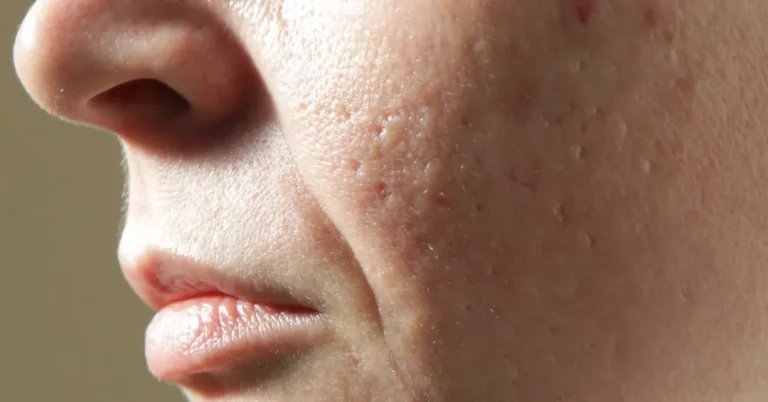
The term low-dose isotretinoin has become much more visible in conversations about adult acne. Patients may hear it described as “microdose Accutane”, often with the suggestion that taking less medication provides the benefits of isotretinoin without the inconvenience or risks of a traditional course.
The reality is more nuanced. Lower-dose isotretinoin can be a useful treatment strategy for selected patients, and research suggests that lower daily exposure may improve tolerability while still providing meaningful acne improvement in appropriate populations. At the same time, “low dose” is not one standardized prescription, treatment may take longer, relapse may happen more often, and important safety requirements do not disappear simply because the daily dose is lower.
It is also worth clarifying the terminology. Isotretinoin is the medication. Accutane was a former brand name that remains widely used conversationally. “Low-dose isotretinoin” describes a dosing strategy. “Microdose Accutane” is an informal consumer term, not a standardized medical dosing category.
The goal is not to find the smallest possible dose. It is to find a treatment strategy that makes sense for the patient’s acne, medical history, tolerance, relapse risk and long-term goals.
What Does “Low-Dose Isotretinoin” Actually Mean?
There is no single universally accepted definition or regimen of low-dose isotretinoin. “Low dose” describes a treatment strategy, not one universal prescription.
In practice, we choose our treatment regimen (conventional dose vs low-dose) based on:
- Acne severity;
- How quickly the acne is responding;
- Dryness or other side effects;
- Patient weight and medical history;
- Previous treatment experience;
- Laboratory findings where relevant;
- The goal of treatment;
- Whether new acne lesions are still developing.
This is also why the phrase “microdose Accutane” can be misleading. It can make isotretinoin sound like a very small, casual maintenance medication. It is still a systemic prescription retinoid with important medical and pregnancy-related precautions.
Patients should not divide doses, change schedules, intermittently restart leftover medication, or purchase isotretinoin online without physician supervision.
Low-Dose vs. Traditional Isotretinoin
Lower-dose and conventional-dose isotretinoin are not different medications. The distinction is primarily how the medication is used over time.
Some recent evidence is encouraging. A 2026 systematic review and meta-analysis of randomized trials found comparable acne improvement at 24 weeks between lower- and conventional-dose regimens in populations consisting predominantly of patients with moderate acne. Lower-dose treatment was better tolerated and associated with greater patient satisfaction, while conventional dosing appeared to produce a modestly faster early response.
| Feature | Lower-Dose Isotretinoin | Conventional-Dose Approach |
|---|---|---|
| Daily medication exposure | Lower | Generally higher |
| Dryness and mucocutaneous effects | May be less intense | May be more pronounced |
| Speed of response | May be more gradual | May be faster in some patients |
| Treatment duration | May be longer | Often shorter |
| Follow-up | Still required | Required |
| Laboratory monitoring | Individualized as clinically appropriate | Individualized as clinically appropriate |
| Pregnancy risk | Same medication risk applies | Same medication risk applies |
| iPLEDGE in the U.S. | Required | Required |
| Long-term relapse | Depends on regimen and patient factors | Depends on regimen and patient factors |
| Best approach | Individualized | Individualized |
Better tolerability therefore should not be confused with proven superiority.
Who Might Be Considered for a Lower-Dose Approach?
This is an individualized medical decision rather than a diagnosis patients can make based on the number of pimples they see in the mirror.
A lower-dose strategy may sometimes be considered in selected patients with:
- Persistent adult acne that tends to relapse after a short conventional course;
- Difficulty tolerating higher isotretinoin exposure;
- Substantial dryness or mucocutaneous effects with previous treatment;
- Long-standing acne with early scarring or persistent pigmentation;
- Acne whose impact is disproportionate to how dramatic it appears on a single examination.
The 2024 American Academy of Dermatology acne guidelines recommend isotretinoin particularly for severe acne and for patients who have failed standard oral or topical therapy.
That provides an important counterbalance to the social-media idea that anyone with occasional adult breakouts should simply “microdose.”
Is Low-Dose Isotretinoin Appropriate for Mild or Persistent Adult Acne?
Acne severity is not determined solely by counting inflammatory lesions on one particular day.
We also consider:
- How many years the acne has persisted;
- Whether it repeatedly returns after treatment;
- Scarring risk;
- Post-inflammatory pigmentation;
- Involvement of the chest or back;
- Previous therapies and adherence;
- Intolerance or contraindications to other medications;
- The patient’s quality of life.
A patient with relatively few lesions during an office visit may still have a long history of recurrent disease that has failed multiple appropriate treatments.
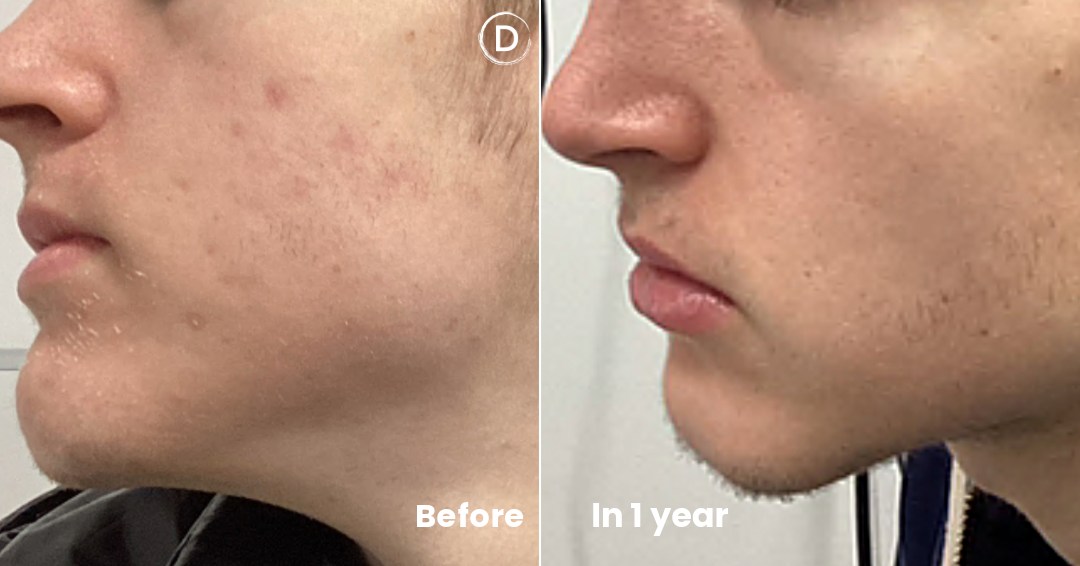
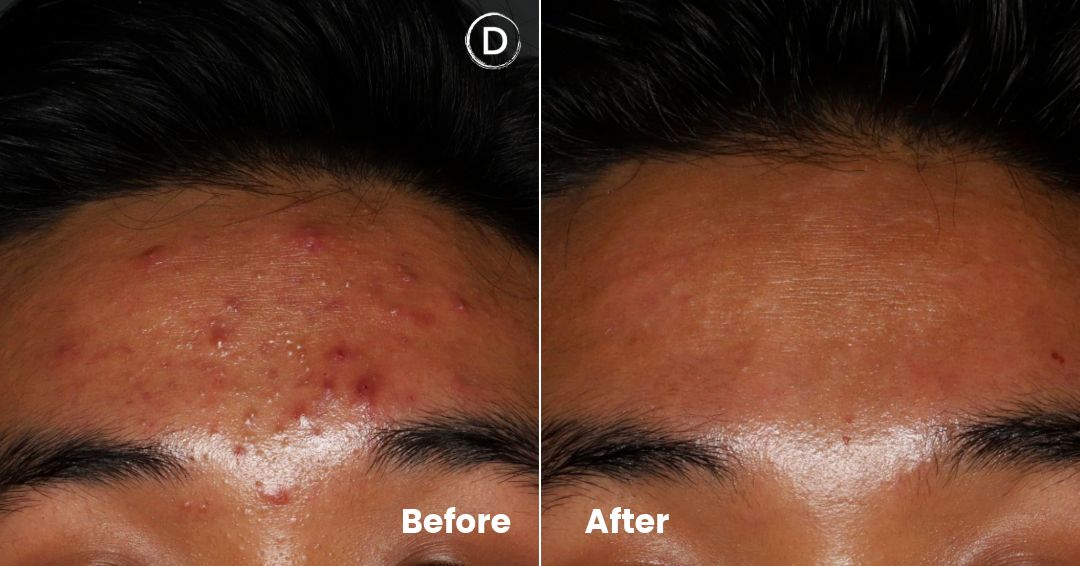
Dermatology Circle has, for example, documented a real case of persistent acne treated with low-dose isotretinoin. A clinical case, however, demonstrates what was appropriate for that individual patient, it does not mean the same approach is right for everyone.
The opposite extreme is also important: isotretinoin should not automatically replace simpler treatments when mild acne can be adequately controlled with safer topical or hormonal approaches.
For an overview of available therapies, see our acne treatment in NYC page.
Adult Female Acne and Hormonal Patterns
Persistent acne in adult women deserves particular attention because hormones can influence both acne behavior and treatment selection.
Clues that may raise the question of hormonal influence include:
- Recurrent lower-face or jawline breakouts;
- Menstrual flares;
- Irregular menstrual cycles;
- Increased facial or body hair;
- Scalp hair thinning;
- Other signs of androgen excess.
Jawline acne alone does not diagnose polycystic ovary syndrome (PCOS). In some patients, hormonal treatments such as spironolactone or combined oral contraceptives may be appropriate alternatives or components of a treatment plan. These medications may be also used in conjunction with the isotretinoin.
Our guide to natural approaches to acne treatment also discusses why underlying medical and hormonal conditions, including PCOS, sometimes need to be considered when evaluating persistent acne.
The presence of hormonal features does not automatically rule isotretinoin in or out. It changes the broader treatment discussion, particularly when planning for long-term control after treatment.
Advantages of a Lower-Dose Approach
The most practical potential advantage of low-dose isotretinoin is tolerability. Some isotretinoin side effects are dose related. Current FDA prescribing information specifically notes dose relationships for cheilitis and hypertriglyceridemia, and comparative studies generally find fewer mucocutaneous adverse effects with lower daily exposure.
This can matter to adults who previously stopped isotretinoin because the treatment became difficult to tolerate. It does not mean there are no side effects, no monitoring requirements, or no pregnancy precautions.
Limitations of Low-Dose Isotretinoin
Lower daily exposure also involves trade-offs.
Potential limitations include:
- A longer treatment course;
- Slower improvement, especially early in treatment;
- Ongoing medical follow-up for a longer period (monthly follow ups are obligatory in the USA);
- Continued possibility of side effects;
- Continued iPLEDGE and pregnancy requirements;
- Possible acne relapse after treatment (more common with the low dose);
- Variable quality of evidence across different low-dose regimens;
- Overall, the higher cost of treatments (monthly visits plus the cost of the medication if paid out of pocket).
Continuous lower-dose regimens generally appear better supported than intermittent “on-and-off” schedules in comparative studies, but definitions and protocols vary substantially across the literature.
Are Serious Side Effects Different at a Lower Dose?
Lower dosing should not be marketed as removing the important medical risks of isotretinoin.
Current prescribing information includes warnings regarding psychiatric symptoms, intracranial hypertension, pancreatitis, lipid abnormalities, hepatotoxicity, inflammatory bowel symptoms, musculoskeletal effects and ocular abnormalities, among others. Patients should report meaningful new symptoms rather than assuming that a low dose makes them unrelated to treatment.
At the same time, these warnings should not be turned into sensational claims that every reported association is inevitable or that every symptom is caused by isotretinoin.
For example, psychiatric and gastrointestinal concerns have generated considerable public discussion over many years. Good prescribing involves discussing labeled warnings, assessing relevant history and symptoms, and avoiding simplistic claims in either direction.
The purpose is informed consent and appropriate monitoring, not creating more fear.
Laboratory Monitoring: Why It Is Individualized
Two opposite claims circulate online:
“Everyone on isotretinoin needs an enormous blood panel every month.”
and
“Low-dose isotretinoin means you don’t need blood tests.”
Neither is a useful universal rule.
Current FDA prescribing information calls for baseline lipid and liver-function testing with follow-up monitoring, while the frequency and extent of testing in clinical practice may be adjusted according to a patient’s health, previous laboratory results and risk factors.
Factors that may influence monitoring include:
- Baseline lipid levels;
- Liver condition history;
- Other medications;
- Previous abnormal results;
- Dose and treatment course;
- Other medical conditions;
- Clinician judgment.
Pregnancy testing follows separate iPLEDGE requirements for patients who can become pregnant.
Pregnancy Prevention and iPLEDGE
This is the safety issue that does not become smaller simply because the isotretinoin dose is smaller.
Isotretinoin can cause severe embryo-fetal harm and is contraindicated during pregnancy. FDA-approved isotretinoin products are therefore distributed through the iPLEDGE REMS, a restricted-distribution risk-management program intended to prevent fetal exposure.
All patients receiving isotretinoin in the United States must participate in iPLEDGE according to their applicable patient category. For patients who can become pregnant, pregnancy testing and the program’s pregnancy-prevention requirements remain mandatory.
“Microdosing” isotretinoin does not make pregnancy exposure safe and does not exempt a patient from iPLEDGE.
How Long Can Low-Dose Treatment Take?
A lower daily dose often means accepting a longer treatment timeline. This introduces an important distinction between daily dose and cumulative exposure.
Daily dose describes how much medication is taken at a particular stage of treatment. Cumulative exposure describes the total amount received across the entire course.
Does Acne Come Back After Low-Dose Isotretinoin?
It can. Relapse occurs after isotretinoin treatment with both lower- and conventional-dose regimens. Long-term outcome is influenced by more than daily dose alone.
A large 2025 cohort study found that greater cumulative isotretinoin exposure was associated with a lower risk of relapse and repeat isotretinoin treatment, while daily dose itself appeared less important once sufficient cumulative exposure had been reached.
Comparative low-dose studies have also produced encouraging results, but systematic reviews repeatedly note that relapse is potentially more common with low dosage treatment.
This is why “Does low-dose Accutane work?” and “Will the acne stay away?” are two different questions.
Is Long-Term Very-Low-Dose Isotretinoin Safe?
Evidence for lower-dose therapy is growing, including recent randomized-trial meta-analysis, but long-term data are less standardized than short-term efficacy data and study regimens vary.
Long-term use should therefore remain a dermatologist-supervised treatment strategy rather than self-directed maintenance.
How We Approach Low-Dose Isotretinoin at Dermatology Circle PLLC
Dr. Kazlouskaya has been prescribing isotretinoin for over 20 years and has used essentially every dosing regimen described in the literature (conventional, low-dose, intermittent, and micro-dose protocols). In our Upper East Side practice, low-dose isotretinoin is a treatment we use regularly and with confidence, but we’re candid with patients about what it actually involves.
It works, but on a longer timeline
Where conventional dosing typically clears acne over 8–12 months, low-dose regimens more often require 12–24 months of treatment to reach the same endpoint. The lower daily dose isn’t a shortcut; it’s a slower, gentler path to the same destination, and for the right patient it gets there just as effectively.
The trade-off is cumulative dose, time, and cost
The strongest predictor of durable remission (avoiding acne recurrence after stopping treatment) is reaching an adequate cumulative dose of isotretinoin over the course of therapy, not how quickly you get there. Because low-dose regimens deliver less drug per day, reaching that same cumulative target simply takes longer.
In practical terms, that means more months of treatment, more follow-up visits, more lab monitoring, and a higher total cost over the course of therapy compared to conventional dosing.
Who tends to do well on low-dose regimens
Patients with mild-to-moderate acne, those who are more sensitive to side effects (dryness, mood changes, lab abnormalities), and patients who prioritize tolerability and are willing to commit to a longer course often do very well on lower daily doses.
For most patients, conventional dosing remains the more convenient option
Shorter overall treatment course, faster clearance, and a defined endpoint that’s easier to plan around. But it isn’t the right fit for everyone, and dosing isn’t one-size-fits-all.
At every isotretinoin consultation, Dr. Kazlouskaya reviews all dosing strategies (conventional, low-dose, and intermittent), and builds a regimen around each patient’s acne severity, tolerance for side effects, and lifestyle, rather than defaulting to a single protocol.
Frequently Asked Questions About Low-Dose Isotretinoin
Is low-dose Accutane the same as isotretinoin?
Isotretinoin is the generic medication. Accutane was a former brand name that is still commonly used when people talk about isotretinoin. “Low-dose Accutane” usually means a lower-dose isotretinoin treatment strategy rather than a different medication.
What does “microdose Accutane” mean?
There is no standardized medical definition of “microdose Accutane.” It is primarily a consumer and media term. Published low-dose isotretinoin studies use different regimens, so the phrase should not be interpreted as one established prescription.
Does low-dose isotretinoin work for adult acne?
It may work well for appropriately selected patients. Recent randomized-trial evidence suggests lower-dose regimens can produce meaningful improvement in moderate acne with better tolerability, although evidence in severe acne is less certain and treatment should be individualized.
Does low-dose isotretinoin have fewer side effects?
Some dose-related effects, particularly dryness, may be less pronounced with lower daily exposure. This does not mean the treatment is free of side effects or important safety considerations.
Do I still need blood tests on low-dose isotretinoin?
Potentially, yes. Baseline and follow-up laboratory monitoring may include lipids and liver function, with the exact schedule individualized according to medical history, treatment course and prior results. Low-dose treatment should not be interpreted as requiring no monitoring.
Do I still need iPLEDGE if I take a very small dose?
Yes. Isotretinoin remains subject to the iPLEDGE REMS in the United States regardless of whether a dermatologist uses a lower or conventional dosing strategy. A smaller dose does not make pregnancy exposure safe.
Does low-dose isotretinoin take longer to work?
It can. Conventional dosing may produce somewhat faster improvement early in treatment, while lower daily exposure may require a longer course. Response varies by acne severity and regimen.
Can acne come back after low-dose isotretinoin?
Yes. Acne can relapse after any isotretinoin regimen. Baseline severity, cumulative exposure, hormonal factors and individual acne biology can all influence long-term remission.
Is low-dose isotretinoin better for hormonal acne in adult women?
Not automatically. Some women with hormonally influenced acne may benefit from spironolactone, combined oral contraceptives or other therapies, while isotretinoin may still be appropriate in selected cases. Treatment should be based on the entire clinical picture rather than the location of breakouts alone.
Can I stay on very-low-dose isotretinoin indefinitely?
Prolonged lower-dose therapy is sometimes used clinically, but it should not become unsupervised maintenance. Continued treatment requires periodic assessment of benefits, side effects, monitoring requirements, pregnancy precautions and whether another maintenance strategy would be preferable.